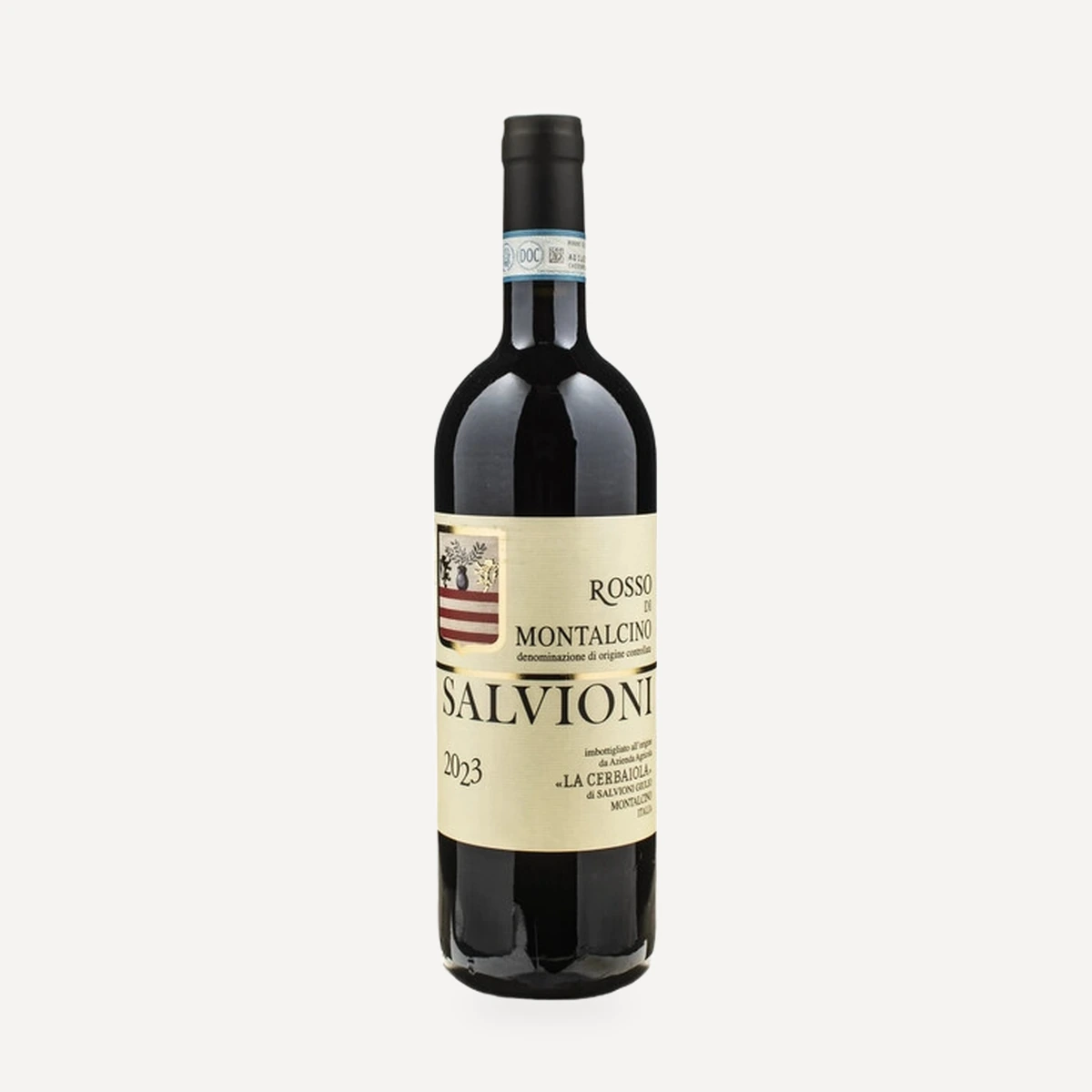
Questo vino
Vineyard and terroir
The vineyard is divided into three plots planted at different times: the oldest vines are approximately 25 years old, while the two younger parcels are around 15 and 10 years old. Situated southeast of Montalcino at approximately 420–440 m above sea level, the vineyards benefit from good ventilation and a favourable microclimate. Galestro-derived, pebbly soils and the elevation contribute softness and balanced acidity.
Planting density varies with the age of the parcels. The oldest vineyard has 3,000 vines per hectare and 3 m spacing; the youngest has 5,000 vines per hectare and 2.5 m spacing. Younger plantings are trained to a single spurred cordon, while double cordons are used where the distance between vines is greater.
Only one bud is retained during pruning. Green pruning is followed by a green harvest after flowering and fruit set, leaving each retained shoot to ripen a single bunch. Further passes through the vineyard continue during ripening to control bunch quality. Yields range from 25 to 40 quintals per hectare (2.5–4 t/ha), with substantial annual variation caused by weather and bunch thinning. Ripeness is monitored through frequent analysis, and harvest normally begins in late September or early October.
Grapes
100% Sangiovese grosso.
Vinification
Vinification takes place in the estate cellar beside the vineyards. Spontaneous fermentation begins in the days following harvest in 35–40 hl stainless-steel vats, and the overall vinification typically lasts 28–30 days depending on the vintage. The fermentation rooms are not temperature-controlled. When temperatures rise, the must is cooled through frequent pump-overs during the day and, often, délestage into other tanks.
After racking, the clean wine remains in stainless steel for several months and naturally undergoes malolactic fermentation. It is racked again once malolactic fermentation is complete and then transferred to oak.
Ageing
The wine matures for approximately 12 months in traditional 18–22 hl, medium-toast Slavonian oak casks. The older casks are kept in the cellar at the estate, while newer casks are housed beneath the family home in Montalcino’s historic centre. After a short period of bottle ageing, Rosso di Montalcino is released in the second year following harvest.
Technical data
Annual production ranges from 8,000 to 13,000 bottles in the years when Rosso di Montalcino is made.
Tasting profile
The bouquet combines intense forest-floor aromas with red berries and ripe cherry. The wine is marked by aromatic and palate elegance associated with its soils, elevation, exposure and microclimates. Its ruby colour varies considerably between vintages: the depth depends on skin ripeness and the extraction of anthocyanins during fermentation. Freshness supports the wine’s balance and versatility at the table.
Serving and pairing
Suitable for traditional Tuscan meat dishes, grilled meats and cheeses.
Vintage notes
Rosso di Montalcino is not produced every year. It is made when the harvest provides more fruit or when the wine’s characteristics are not considered suitable for Brunello. Consequently, both its availability and annual production are irregular.