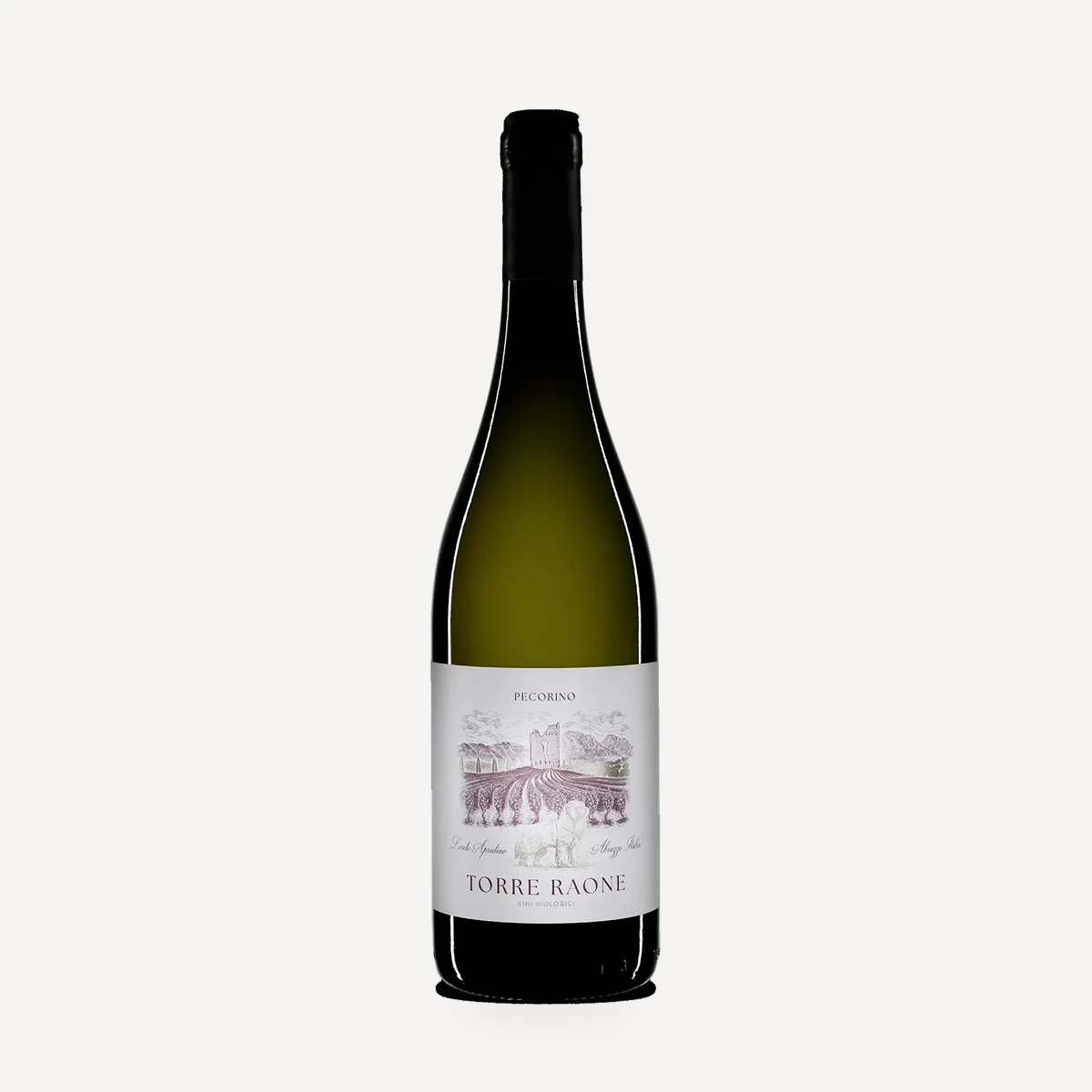
Questo vino
Vineyard and terroir
Pecorino from 3 ha in Loreto Aprutino at 350 m a.s.l. The vineyards face south and southeast and have clay-limestone soil. Guyot-trained vines are planted at 3,300 vines/ha, with an average production of 11,000 kg/ha. Harvest begins in early September and is carried out during the cool first hours of the morning.
Grapes
Pecorino from organic farming.
Vinification
The grapes undergo cryomaceration in the press at 6°C for 6–12 hours. The free-run must is then cold-settled at approximately 4°C so that fermentation begins with clear must separated from the gross lees. Fermentation proceeds at 15°C, followed by bâtonnage on the fine lees for several weeks.
Ageing
Four months in stainless steel followed by two months in bottle.
Technical data
Alcohol: 12.5% vol. Total acidity: 7.24 g/L. Residual sugar: 0.3 g/L.
Tasting profile
Clear, straw yellow tending toward gold, with greenish reflections. The intense, persistent and fine bouquet combines exotic fruit, citrus, flowers and aromatic herbs. Dry, moderately warm and supple on the palate, with pronounced freshness, savoury minerality and elegant notes of citrus, dried fruit, dates, apricot preserve and green botanical essences. The wine is notably persistent and can develop positively over time.
Serving and pairing
Suitable as an aperitif and with first courses. It is particularly suited to fish, especially raw preparations.
Label / history
The Abruzzese sheepdog on the label represents the faithful guardian accompanying shepherds and their flocks. The imagery also connects with the traditional account of the Pecorino grape’s name deriving from sheep.