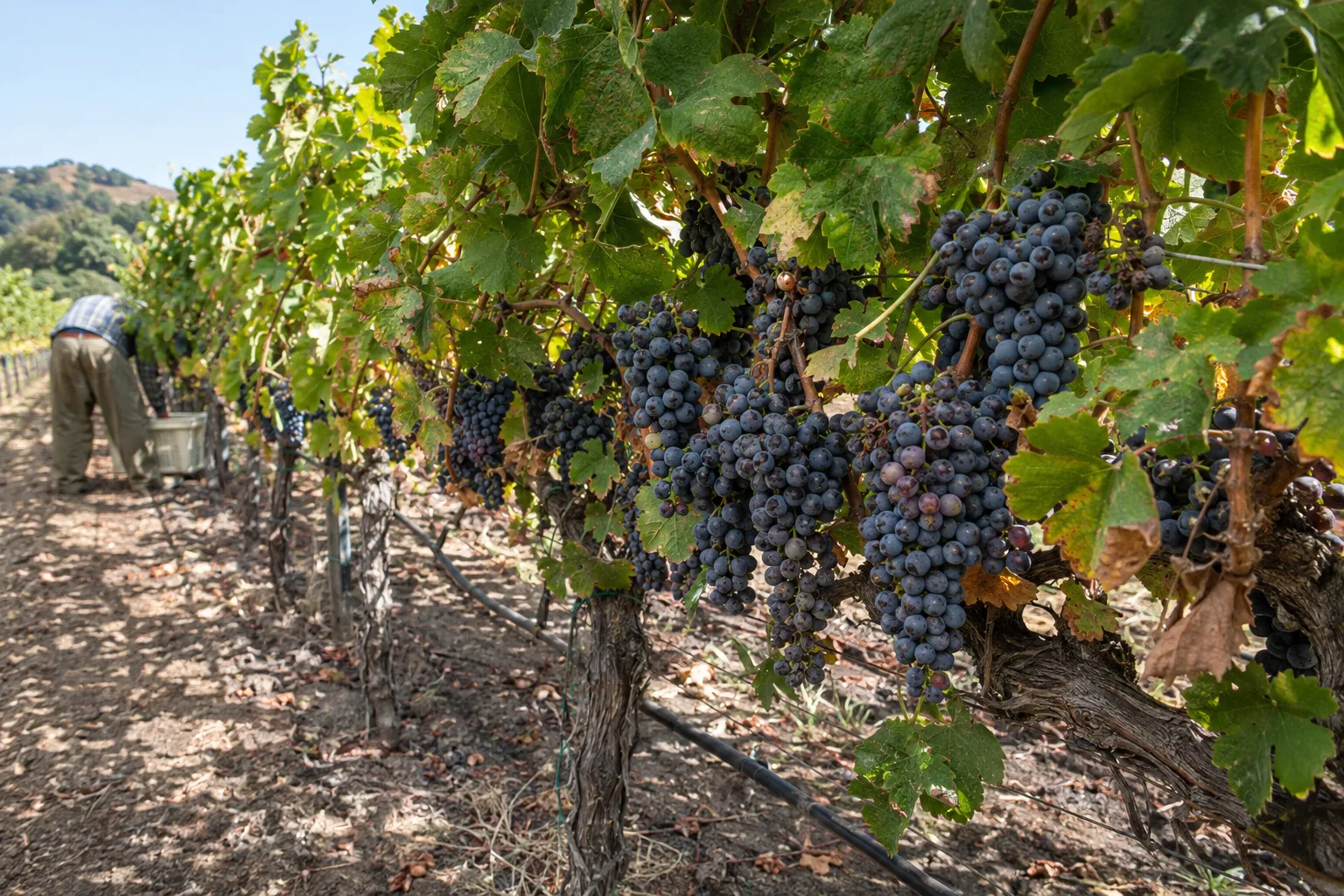
Argentina’s wine sector remains critical after 45 months
Coninagro’s 09/2026 regional-economy monitor kept wine and grape must in its most troubled category as grower prices lagged inflation and harvest, consumption and exports declined.
The longest-running crisis in the monitor
Argentina’s wine industry completed 45 consecutive months in critical condition in Coninagro’s Regional Economies Traffic Light for 09/2026. The national agricultural cooperative confederation again classified wine and grape must as red, its category for activities facing the greatest strain; the sector has held that status since 01/2023.1
Across the monitor’s 104-month statistical series, viticulture was red for 73% of the period, the highest proportion among the activities assessed. Rice followed at 67%, dairy at 65% and sweet citrus at 64%.1
Grower prices fall further behind
The average origin price in 09/2026 was ARS 331 per liter, only 8% above its level 1 year earlier, while inflation over the same period reached 33.4%. Coninagro identified weak grower prices as the wine chain’s principal problem, and growers said some operations were producing at a loss.1
In inflation-adjusted terms, the current price was 54% below the 5-year average of approximately ARS 721 per liter. The nominal increase therefore did not prevent origin prices from losing substantial ground against inflation and production costs.1
Coninagro’s text said growers received 18% of wine’s retail price in 09/2026, compared with a historical average of 23%. However, the accompanying chart appeared to indicate 17%, leaving a 1-percentage-point discrepancy between the report’s text and graphic. Under either figure, the grower share was below its customary level.1
The participation measure covered 11 products and activities. In 09/2026, producer shares for 9 of them were below their historical averages, with wine and yerba mate showing the largest shortfalls among regional products.1
Less wine produced and consumed
Argentina had 196,000 hectares of vineyards in the 2026 season. The latest harvest yielded 18.4 million quintals, an 8% decline from the preceding season.1
Domestic consumption stood at 15.7 liters per person in 2025, down 2% from 2024. It was also 27% lower than 10 years earlier, when annual consumption reached 21.6 liters per person.1
Foreign trade also weakens
During the preceding 12 months, wine exports were worth US$891 million, 9% less than in the prior period. Imports increased 8% to US$43 million. A separate 10-year comparison in the report likewise indicated weaker exports, although its figures were not fully consistent with the annual export total reported elsewhere.1
Excluding the grain complex, the wine chain generated 6% of exports from Argentina’s regional economies. Because wine is one of the country’s principal beverage exports, the prolonged pressure on margins, production and sales could constrain investment and supply decisions as well as international competitiveness; weaker origin returns can also make it harder for producers and exporters to maintain overseas volumes and pricing.1
Eight activities remain red
Across all sectors in Coninagro’s 09/2026 assessment, 5 activities were green, 6 yellow and 8 red. Horticulture recorded the principal monthly improvement by moving from red to yellow.1
The 8 activities still classified as critical were yerba mate, rice, wine and grape must, cotton, milk, cassava, forestry and sweet citrus.1
Sources
Written by the Dionysus editors from the sources above.