Aurélien Valance to lead Château Margaux from 1 December 2026
Aurélien Valance will succeed the retiring Philippe Bascaules as managing director of Château Margaux, while Bascaules will remain an adviser on major winemaking decisions. Valance takes charge as the estate confronts climate pressure, low yields and a difficult fine-wine market.
From a 1996 tasting to the managing director’s office
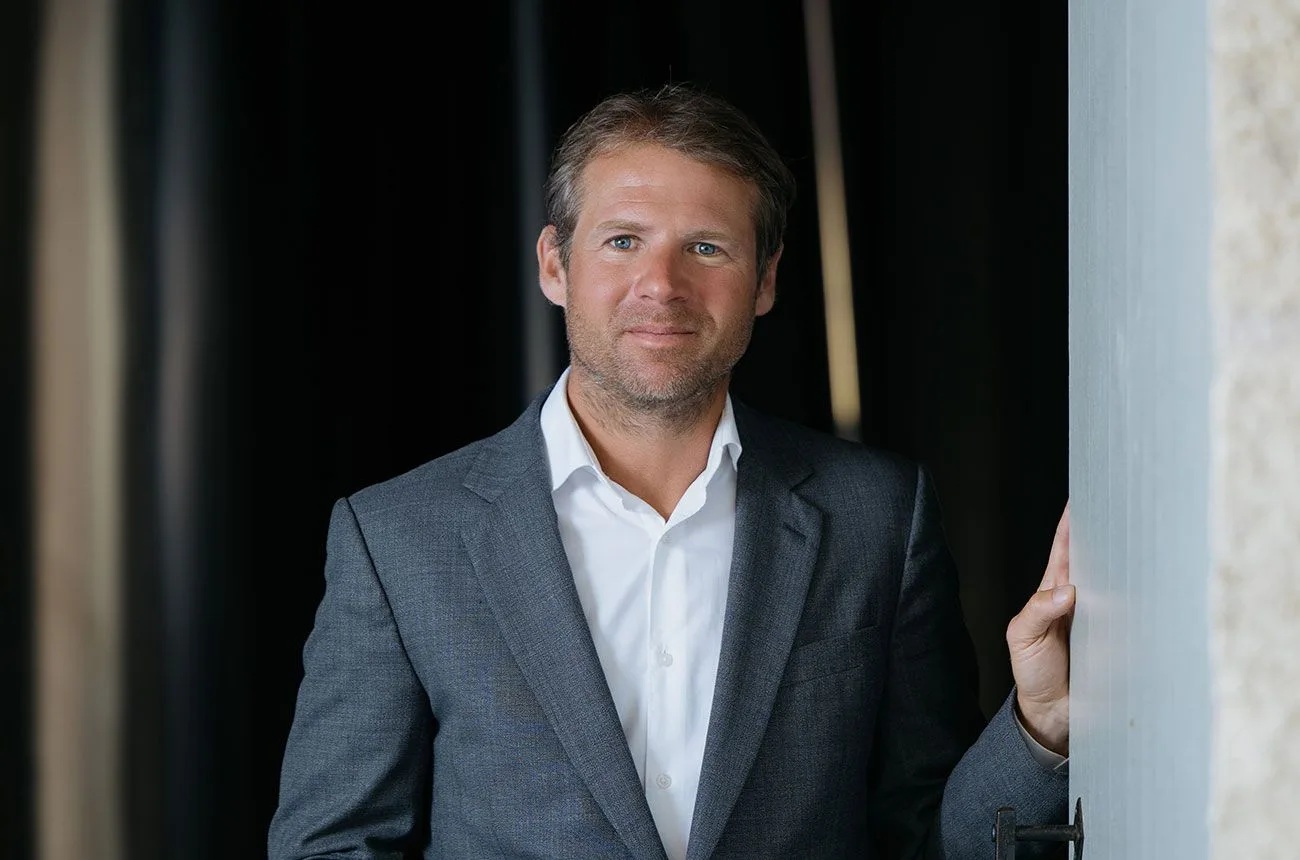
Aurélien Valance will become managing director of Château Margaux on 1 December 2026, 25 years after joining the Bordeaux 1st growth as an intern in 2001. He succeeds Philippe Bascaules, who is retiring but will continue advising the estate on important winemaking decisions. Valance became commercial director in 2006 and has served as deputy managing director for sales and operations since 2016.1
The wine that prompted Valance to seek that internship was Château Margaux 1996. While president of the wine club at HEC Paris, he invited Château Margaux chief executive and co-owner Corinne Mentzelopoulos to present wines to students. After the 1996 was served at the end of the tasting, he asked her directly for an opportunity to work at the estate.1
Wine had already been present in Valance’s family life: during gatherings, his grandfather paid him 5 francs to crawl through a difficult-to-access underground cellar and retrieve bottles. Valance nevertheless did not initially plan a wine career when he enrolled at HEC Paris. A vertical tasting of Côte de Brouilly showed him how ageing and climate could alter wine from the same vineyard and grape variety, and he became wine-club president in his 2nd year.1
His promotion comes amid a generational change at Château Margaux. Corinne Mentzelopoulos retired as chief executive of the estate’s holding company around 3 years earlier and transferred responsibility to her children. Benjamin Vimal became technical and operations director in May 2026. Valance is 46, Vimal is 35, and co-owner and chief executive Alexis Leven-Mentzelopoulos is 33.1
Adapting the vineyards to a hotter climate
Climate change is among Valance’s main concerns after a 2026 growing season affected by drought and record heat. Château Margaux’s research and development department, established by the late managing director Paul Pontallier, holds more than 10,000 experimental bottles and is studying genetic diversity within the estate’s vineyards as well as additional grape varieties.1
Experimental plantings include Malbec, Carménère and Castets Noir. Castets, which may be used under specified conditions as a variety of interest for adaptation, currently appears the most promising of the 3 to Valance. In 2026 it reached full ripeness at 12% alcohol despite the hot conditions. He found spice reminiscent of Petit Verdot, along with density and other distinctive traits, but said Castets would probably represent less than 1% of a final blend if ultimately adopted.1
Cabernet Sauvignon nonetheless remains fundamental to the estate. Valance points to the vines’ improving adaptation compared with the hot 2003 season, the options offered by different rootstocks, and the variety’s many genetic variations. During the winter, Château Margaux plans to replant 1 plot with 6 rootstocks in a repeating sequence and then vinify the resulting lots separately on a small scale to assess drought resistance.1
The estate is also looking for Cabernet Sauvignon massal selections or clones that can combine phenolic maturity with acidity and restrained sugar, and therefore alcohol. The objective is to retain the floral aroma and soft texture associated with Château Margaux; Valance considers complete phenolic ripeness necessary to preserve that texture.1
Reputation, en primeur and older vintages
A weak fine-wine market and difficult economic conditions form the other major challenge. Valance advocates judging the situation within longer market cycles and regards reputation, after terroir, as the estate’s most important asset. In his view, excessive discounting or less rigorous grape selection could damage that standing.1
In 2025, 37% of the harvest was selected for the Château Margaux grand vin. Decanter critic Georgie Hindle, tasting it en primeur, regarded it as clearly among the vintage’s leading wines. Château Margaux remains committed to the Bordeaux en-primeur system and generally releases 70%–80% of each new vintage worldwide. Valance said the estate could adjust if buyers eventually lost interest, but believes the system currently functions.1
Valance also expects unsold stock to find buyers later and acknowledges that Château Margaux occupies a relatively privileged position. Through Bordeaux’s La Place distribution network, the estate is recording demand for the strongest vintages of the 1990s and 2000s, still greater demand for wines from the 1980s and 1970s, and interest in bottles older than those. He plans to visit markets, chiefly in Asia, while Alexis Leven-Mentzelopoulos travels to the US.1
The 2026 vintage
The team is due to assess the 2026 vintage in January. Quality is considered very promising, although the average yield is expected to remain low at about 24 hectolitres per hectare, slightly above the 22 hl/ha recorded in 2025. The 2025 crop produced the smallest volume of Château Margaux grand vin since 1856.1
Blind tasting and Atlantic fishing
Beyond his work at Château Margaux, Valance is a French blind-tasting champion. His advice is to disregard surrounding distractions and, before identifying a wine, allow whites to warm sufficiently to disclose a broader range of aromas. He also fishes for tuna on the Atlantic coast.1
Sources
Written by the Dionysus editors from the sources above.