Copa-Cogeca forecasts EU wine output to fall 4% in 2026/2027
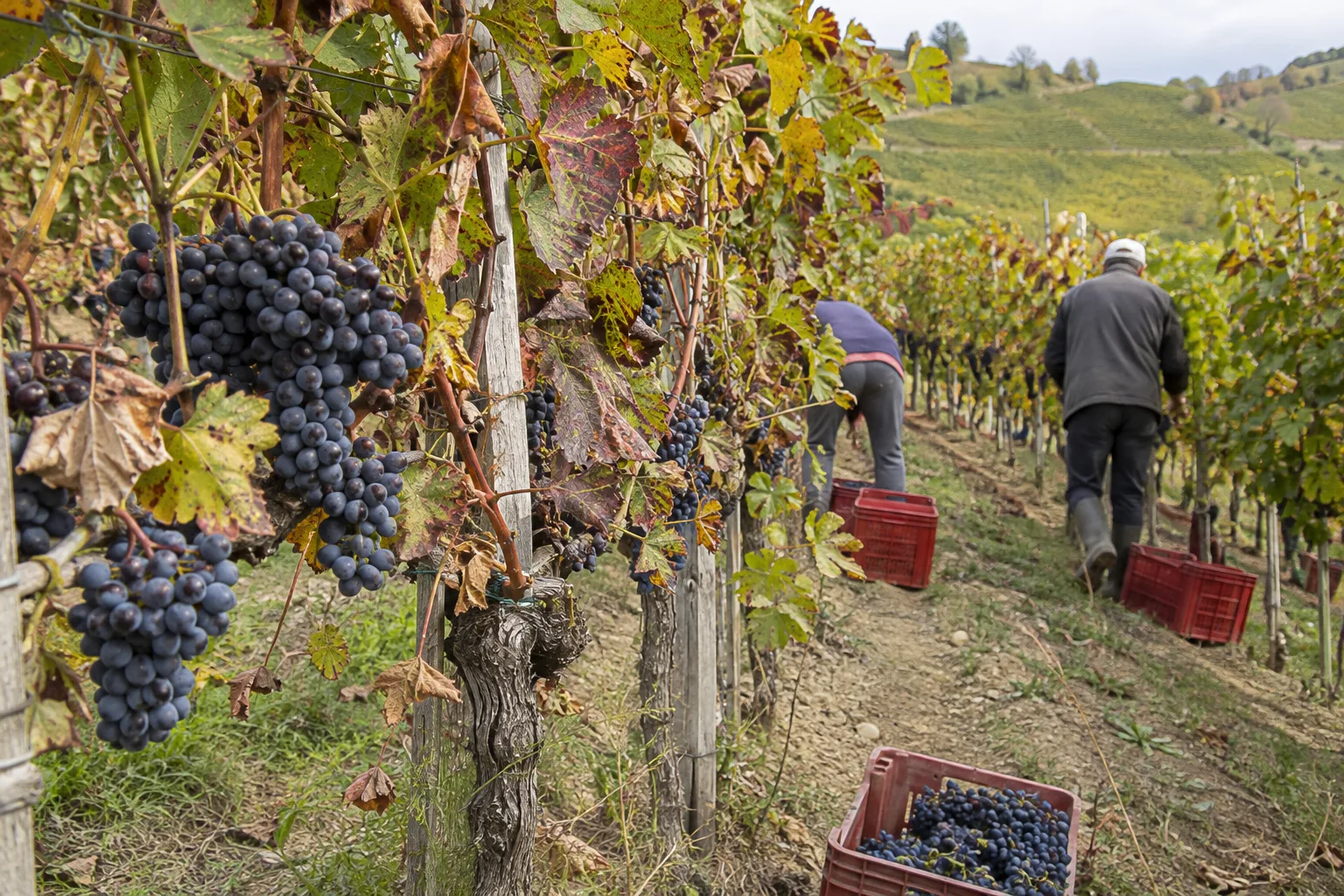
EU wine and must production is expected to reach 133.6 million hectolitres in the 2026/2027 campaign, about 8% below the five-campaign average, as adverse weather coincides with weaker consumption and exports.
Output falls below recent averages
Copa-Cogeca expects European Union wine and must production to total 133.6 million hectolitres in the 2026/2027 campaign, 4% less than the previous harvest and roughly 8% below the average of the past five campaigns. Its estimates, released on November 12, place the new season against a backdrop of declining output, subdued demand and weaker exports.1
Italy, Spain and France remain the EU’s three largest producers and together represent about 82% of its wine and must production. Italy accounts for 30% of output, Spain for 27% and France for 25%.1
The organisation attributed lower and increasingly variable yields to repeated droughts, prolonged heat waves, spring frosts and hailstorms across numerous European regions. It identified climate instability as a major influence on viticulture and on the widening fluctuations between annual harvests.1
EU wine production averaged approximately 157 million hectolitres a year between 2020 and 2025, according to Copa-Cogeca. Output has generally declined since the 2020/2021 harvest, indicating that reduced production in some areas is becoming part of a broader sectoral adjustment rather than remaining a short-lived disruption.1
Consumption reaches a three-decade low
Copa-Cogeca estimated global wine consumption at 221 million hectolitres, its lowest level in more than three decades. Consumption expanded from 1996 to 2007 and was comparatively stable until 2017, when a sustained contraction began; the decline has accelerated since 2022 both within the EU and in important markets elsewhere.1
The EU’s share of worldwide wine consumption has fallen from nearly 60% in 2000 to about 48% today. Lower demand has reduced traded volumes and prices throughout the value chain, with red, rosé and base wines among the most affected categories.1
Growth in newer markets has not compensated for shrinking consumption in countries with established wine-drinking traditions. Copa-Cogeca said the imbalance is intensifying pressure on growers, cooperatives, bottlers and exporters already contending with higher costs.1
Exports lose value and volume
EU wine exports to non-EU countries were worth €15.4 billion between September 2025 and August 2026, a year-on-year decline of 6.8%. Export volume fell 3.3% to 27.5 million hectolitres over the same 12-month period.1
Exports of protected designation of origin wines decreased by 7.6%, varietal wines by 6.7% and protected geographical indication wines by 4.9%. Wines without a geographical indication were the only major category to remain relatively stable.1
Performance also differed by packaging and format. Bulk-wine exports rose 5% and bag-in-box shipments increased 3.4%, while bottled-wine exports declined 7.5% and sparkling-wine exports fell 6.2%. The weakness therefore extended into higher-value segments.1
Shipments to the United States dropped 15.3%, while exports to Canada fell 11%, Switzerland 9.2% and the United Kingdom 3.9%. Russia and Hong Kong were among the few expanding destinations, recording increases of 17.5% and 10.9%, respectively.1
Trade within the EU weakened as well, falling 9.8% in value and 13.4% in volume, although average unit values continued to increase. Consequently, higher prices for some products did not fully offset the reduction in volumes.1
Producers face overlapping pressures
Luca Rigotti, president of Copa-Cogeca’s Wine Working Party, said producers are operating under increasingly difficult conditions. He cited unpredictable weather, rising production costs associated with conflicts and geopolitical tensions, a structural decline in wine consumption, and new obstacles affecting trade and market access.1
Rigotti said the European wine industry continues to demonstrate resilience and an ability to adapt. He argued that it must keep investing in innovation, sustainability and the promotion of quality, while diversifying its range, seeking new markets and rebuilding stronger relationships with consumers, particularly younger generations.1
The combined pressure from smaller harvests, weaker demand and softer export sales leaves producers and traders with less capacity to absorb further weather or commercial shocks. It may also affect purchasing, inventories and commercial planning among distributors, retailers and beverage companies exposed to premium bottled and sparkling wine sales.1
Sources
Written by the Dionysus editors from the sources above.