France’s 2026 vines were about 13 days ahead by harvest after record heat
An exceptionally hot, dry growing season accelerated vine development and altered grape composition, leaving French wineries to manage smaller fruit, uneven production prospects, high sugar and lower acidity.
Heat, drought and uneven vineyards
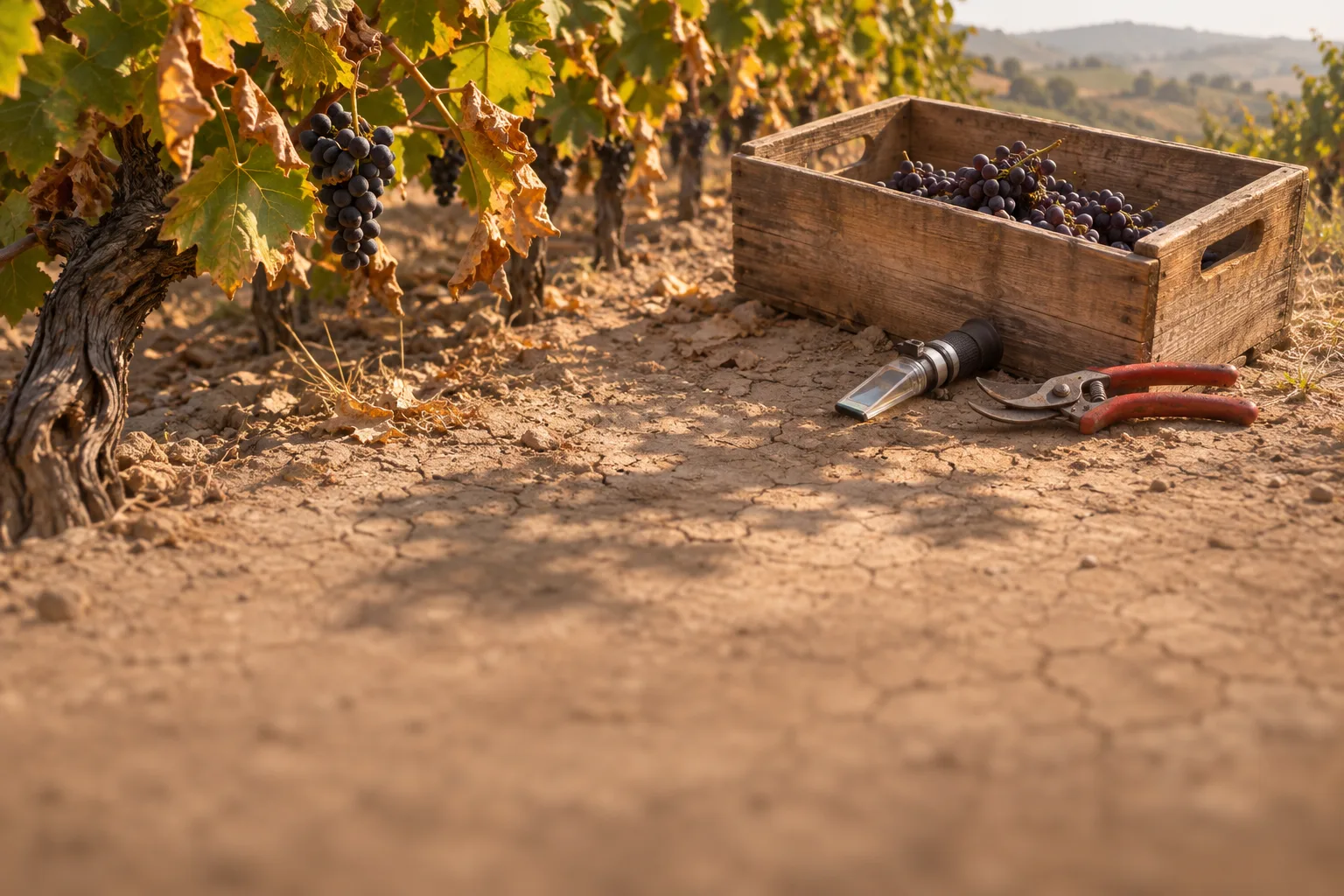
France’s 2026 grape harvest was arriving earlier after an exceptionally hot and dry season. On 29 October, the Institut Français de la Vigne et du Vin said growers and wineries might need to revise picking schedules and cellar practices to safeguard quality.1
June and July were France’s hottest such months on record, while average rainfall deficits reached 45% in June and 65% in July. The effects differed among regions and individual plots according to soil depth, water reserves, rainfall timing, plant material and vineyard management.1
Vine development had been accelerated since the season began: the average advance was about 10 days at veraison and 13 days by harvest. The institute also observed smaller berries and fewer bunches, suggesting lower national production potential, although prospects varied among regions, soils and grape varieties.1
A different balance in the grapes
Technological maturity—the relationship between sugar and acidity—was unusually misaligned with phenolic maturity, which concerns tannins and color compounds. Many grapes had high sugar, higher pH and lower acidity, a combination capable of changing wine style and complicating production choices.1
Higher sugar and reduced acidity can produce more alcoholic, less fresh wines. Managing such fruit may also raise winery costs through additional cooling, tighter fermentation supervision, yeast nutrition and measures to adjust alcohol.1
The institute advised keeping harvested fruit as cool as possible because hot grapes face greater risks of oxidation, early fermentation and unwanted microbial growth. Picking in the coolest hours, including at night, can help; hand harvesting can improve control of fruit deliveries and allow morning pressing. Cooling during transport or at the winery is another option, but requires more energy and expense.1
Fermentation and microbial control
Spring drought can restrict nitrogen uptake by vines and leave must without enough nutrients for yeast, particularly when high sugar makes fermentation more demanding. Available nitrogen also depends on the grape variety, rootstock, growing conditions and environment. A confirmed shortage can be corrected promptly in the winery, while recurring deficiencies warrant examination of soil balance and function as well as vineyard nitrogen fertilization.1
Careful fermentation-temperature management is essential: excessive heat can kill yeast and impair aromas, whereas overly low temperatures can slow fermentation. Wineries were advised to monitor temperature, density and fermentation speed closely so that fermentable sugar is consumed and sluggish or stuck fermentations are avoided.1
Bioprotection offers another way to limit oxidation and undesirable microbes by introducing selected microorganisms early, before or after pressing. Certain non-Saccharomyces yeasts also consume oxygen, which can be useful for white and rosé juice, especially during settling. The method can replace sulfiting in some applications, but depends on a sufficient, timely addition and conditions that let the selected organisms become established.1
For high-sugar, low-acid fruit, bioacidification with selected yeasts may improve balance. Lachancea thermotolerans, part of grapes’ natural microflora, converts some sugar into lactic acid rather than alcohol, increasing acidity without additives. Because performance varies by strain and production conditions, the institute recommended trials in a smaller service tank to avoid excessive acidity in the main vessel.1
Alcohol management and longer-term adaptation
Desugaring can lower potential alcohol by using membrane processes, separately or together, to remove a sugar-rich concentrate from must. It cannot be combined with certain enrichment operations and rules out later alcohol correction for wine made from that must. Finished wine can instead undergo correction by vacuum evaporation, membrane contactors or distillation, with a permitted reduction of up to 20% of its initial alcohol content. The institute distinguished this from partial dealcoholization, covering wines from 0.5% vol. to 9% vol., and total dealcoholization, covering wines from 0% vol. to 0.5% vol.1
The recommendations form part of a wider climate-adaptation program. Led by the institute and funded by CASDAR since 2022, VITILIENCE involves more than 20 partners and demonstration sites across 12 wine regions. The network tests locally tailored measures involving plant material, vineyard work, machinery, farm strategy and oenology; supporting resources include an adaptation map and technical sheets explaining operation, conditions of use, effectiveness and implementation costs.1
Sources
Written by the Dionysus editors from the sources above.