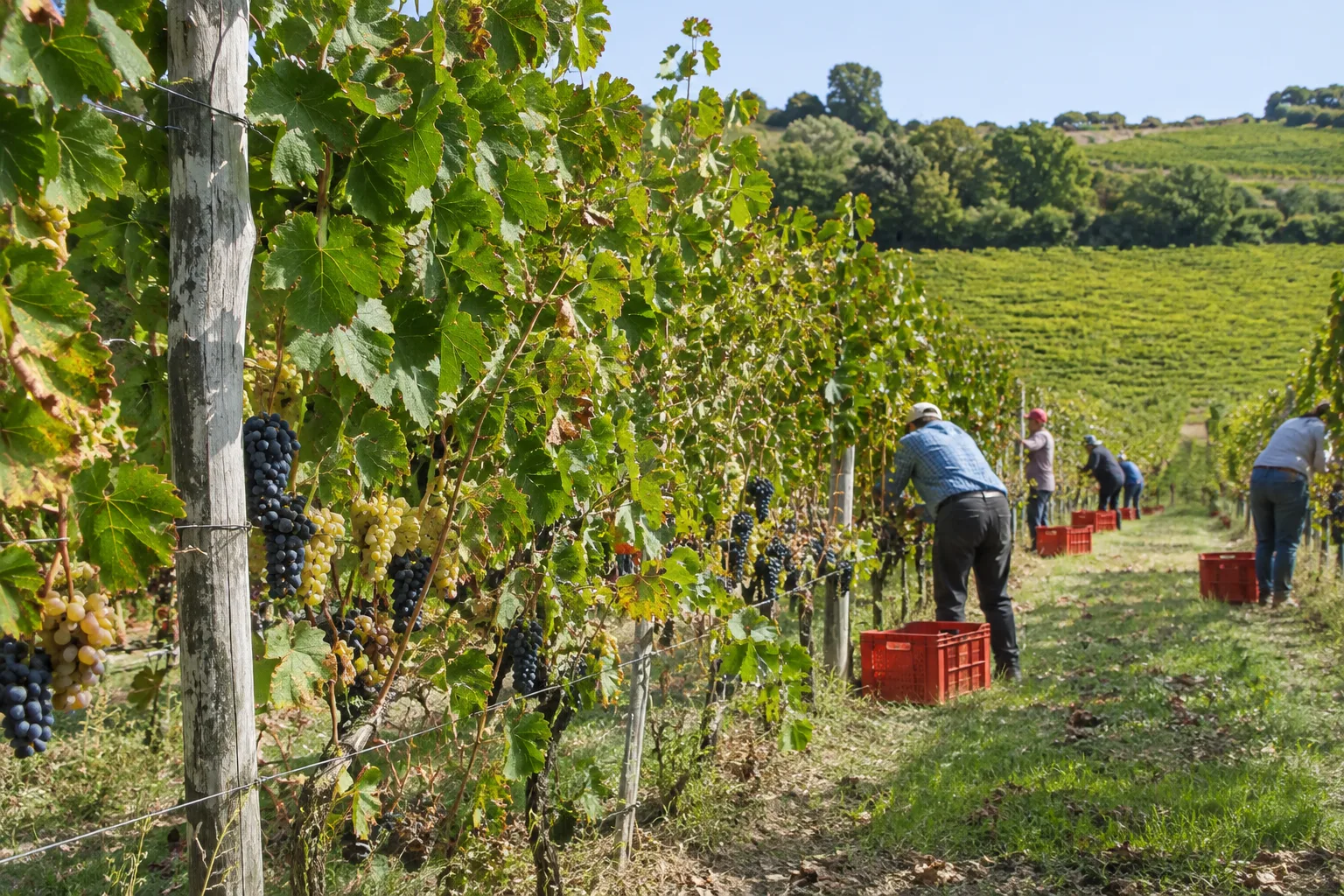
Gérard Bertrand expects a standout Languedoc vintage after years of drought
Abundant winter rain and a summer without extreme temperatures have improved the outlook for the region’s vineyards, while Bertrand’s group continues to rely on biodynamic practices and other measures designed to strengthen soils and help vines withstand heat and drought.
A more favorable season
After several years of drought, Gérard Bertrand said conditions this year brought some relief to southern vineyards. He cited plentiful winter rain and a warm summer without excessive temperatures, and said he expects a vintage that will be especially memorable.1
Bertrand said the drought years had taught his team a great deal. Its responses include spraying herbal infusions against heat, retaining leaves to shade the grapes and looking for grape varieties suited to changing conditions.1
From organic farming to biodynamics
Bertrand’s business has grown over 30 years into a group with annual revenue of €200 million and exports to 175 countries. Across 16 estates, it owns nearly 1,000 hectares of biodynamically farmed vineyards, described as the world’s largest wine-growing area managed under biodynamics.1
Inspired by pioneering colleagues and prompted in part by a health problem, the former rugby player adopted biodynamics in 2002. The approach was set out in 1924 by Austrian philosopher Rudolf Steiner and remains scientifically controversial because it uses special composts and may also follow celestial cycles.1
Speaking at Château l'Hospitalet, Bertrand said the objective is to develop life in the soil. He regards organic cultivation as an initial stage and said that, to express the climatic character of a vintage, it is preferable for vine sap not to contain chemical products. In his account, biodynamic preparations stimulate plants and soils and have produced wines with greater acidity, freshness and aging potential.1
Preparations in the vineyard
At a facility among the vines, the group stores a 600-liter herbal-infusion vessel and bags of thyme, used as an insect repellent, and horsetail, used as a fungicide. Gilles de Baudus, the group’s biodynamics specialist, presented preparation 500: a dark compost made from manure placed in cow horns, buried for 6 months and sprayed in spring to contribute, in his words, to the soil’s reawakening.1
The group was also preparing to apply preparation 501, made from horn silica and reputed to help vine shoots heal when the leaves fall. De Baudus described the work as a long learning process requiring extensive observation and said that the soil ultimately determines how the wine is formed in the vineyard.1
Evidence and adaptation
Scientific studies remain limited. Research by the Inrae institute in Burgundy and Alsace found better soil microbiological quality under biodynamic management than under conventional or organic farming. Lionel Ranjard, a researcher who authored the study, cautioned that it is difficult to determine whether the result comes from the preparations or from the expertise of biodynamic practitioners. Bertrand said his group would have stopped if the system had not worked and confirmed that it also uses an astronomical calendar.1
The estates also add organic matter to retain water, maintain ground cover before working the soil to improve porosity, and practice agroforestry. Bastien Gaillardon, deputy director of the estates, said he spends considerable time discussing drought and disease resistance with Inrae.1
A change in outlook
Bertrand, a 61-year-old winemaker’s son, described biodynamics as an agricultural philosophy connected with nature, biodiversity and a broader way of life.1
Christophe Sournies, from a local wine-growing family, joined the group in 2019. The 54-year-old estate manager said conventional farming had involved more systematic routines and that he had not previously given the same consideration to passing on healthy soil. He recalled that his father, born in 1920, observed the moon and examined the soil; Sournies said his own move into biodynamics opened an unfamiliar field in which he continues to learn every day.1
Sources
Written by the Dionysus editors from the sources above.