INAO backs regulated irrigation framework for AOC vineyards
France’s appellation authority has supported replacing the general prohibition on irrigation in AOC vineyards and its annual exemptions with a regulated authorization system that would require training and measurement of water use while allowing appellations to retain stricter rules.
INAO supports a new authorization system
On Wednesday, November 25, the National Institute of Origin and Quality (INAO) national committee responsible for wine, alcoholic-beverage and spirits appellations supported a new irrigation framework for AOC vineyards. The proposal would replace the prevailing general ban, under which irrigation can be permitted through exemptions renewed annually, with regulated authorizations.1
INAO linked the reconsideration to climate change in French vineyards. According to the institute, shifting climatic conditions have changed how water availability relates to wine quality, prompting regulators to reassess restrictions intended to preserve the defining character of appellation wines.1
Training and measured water use
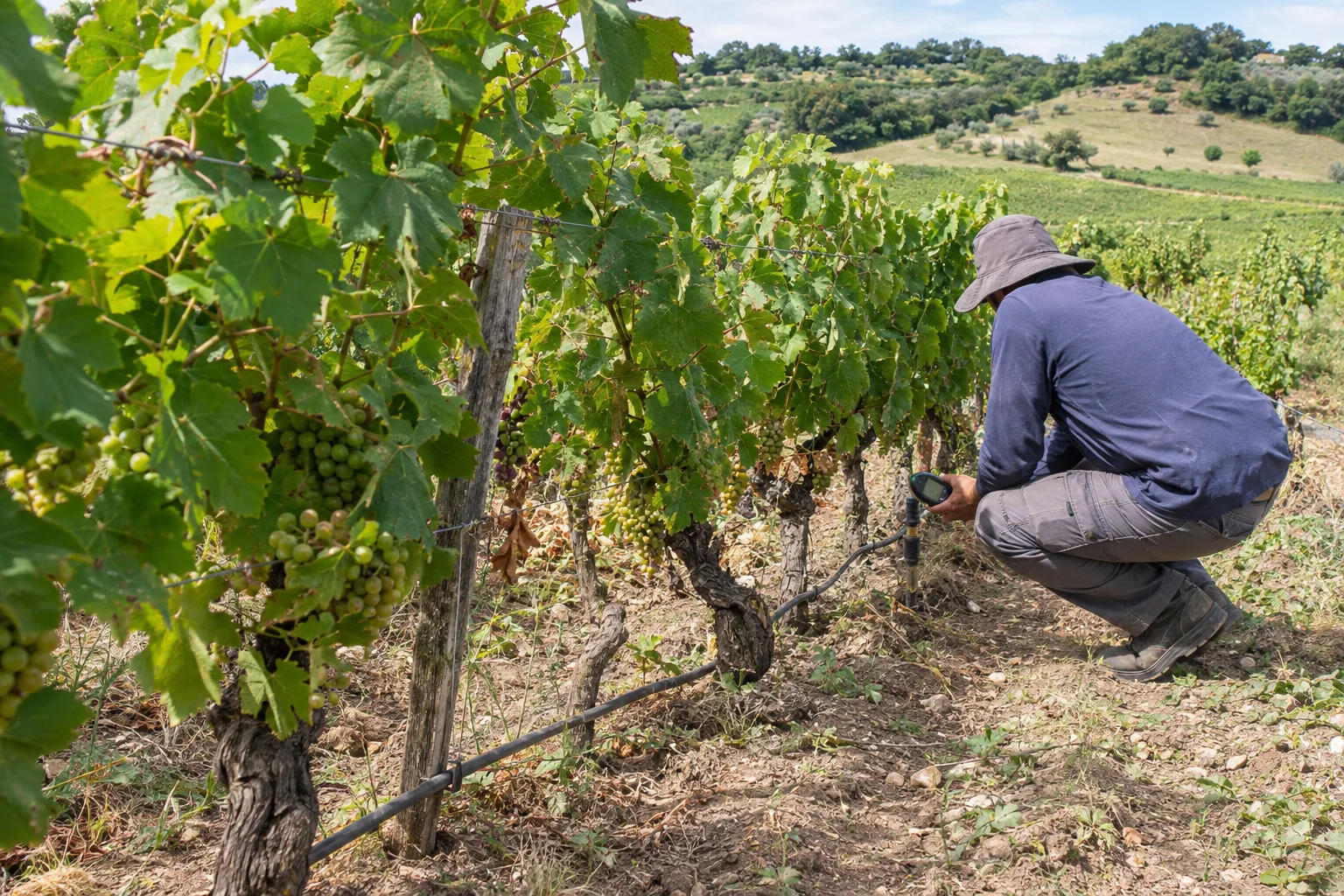
Under the proposed system, winegrowers would have to undertake mandatory instruction in efficient water use and the agronomic management of irrigation. Actual water volumes would also be monitored. INAO presents these controls as a way to support climate adaptation while managing water resources carefully.1
The national framework would not make irrigation rules uniform across all appellations. Each AOC could establish tighter provisions in its specifications, including a complete irrigation ban when deemed necessary by the relevant local authorities. The reform would therefore authorize controlled irrigation nationally without removing regional or product-specific restrictions.1
Legal work continues into 2027
The framework has not yet been finalized. INAO said implementation requires an amendment to France’s rural code, with regulatory work continuing in 2027 and publication of the new rules targeted before May 2027.1
If adopted as planned, a permanent authorization system could shape decisions about vineyard equipment, water infrastructure and production methods in areas experiencing hotter and drier growing conditions. It could also alter costs and long-term planning for estates that currently depend on exceptional waivers or cannot irrigate.1
Appellation standards and climate adaptation
The additional flexibility would leave producers and regulators responsible for demonstrating that irrigation does not erode appellation requirements or place excessive demands on local water supplies. Retaining stricter local rules is intended to reconcile adaptation with the principle that AOC wines should express their place of origin.1
The proposal comes amid recurring heat and drought across European wine regions, where harvest dates, yields and grape-ripening patterns have changed. In France, these developments have sharpened debate over whether regulations devised for cooler, more stable conditions remain suitable. INAO’s position points toward controlled management of irrigation instead of a blanket prohibition.1
The issue also extends beyond vineyard regulation. AOC wines are central to the French beverage sector and contribute substantially to exports, investment and brand value, giving changes to their production framework broader economic significance.1
Sources
Written by the Dionysus editors from the sources above.