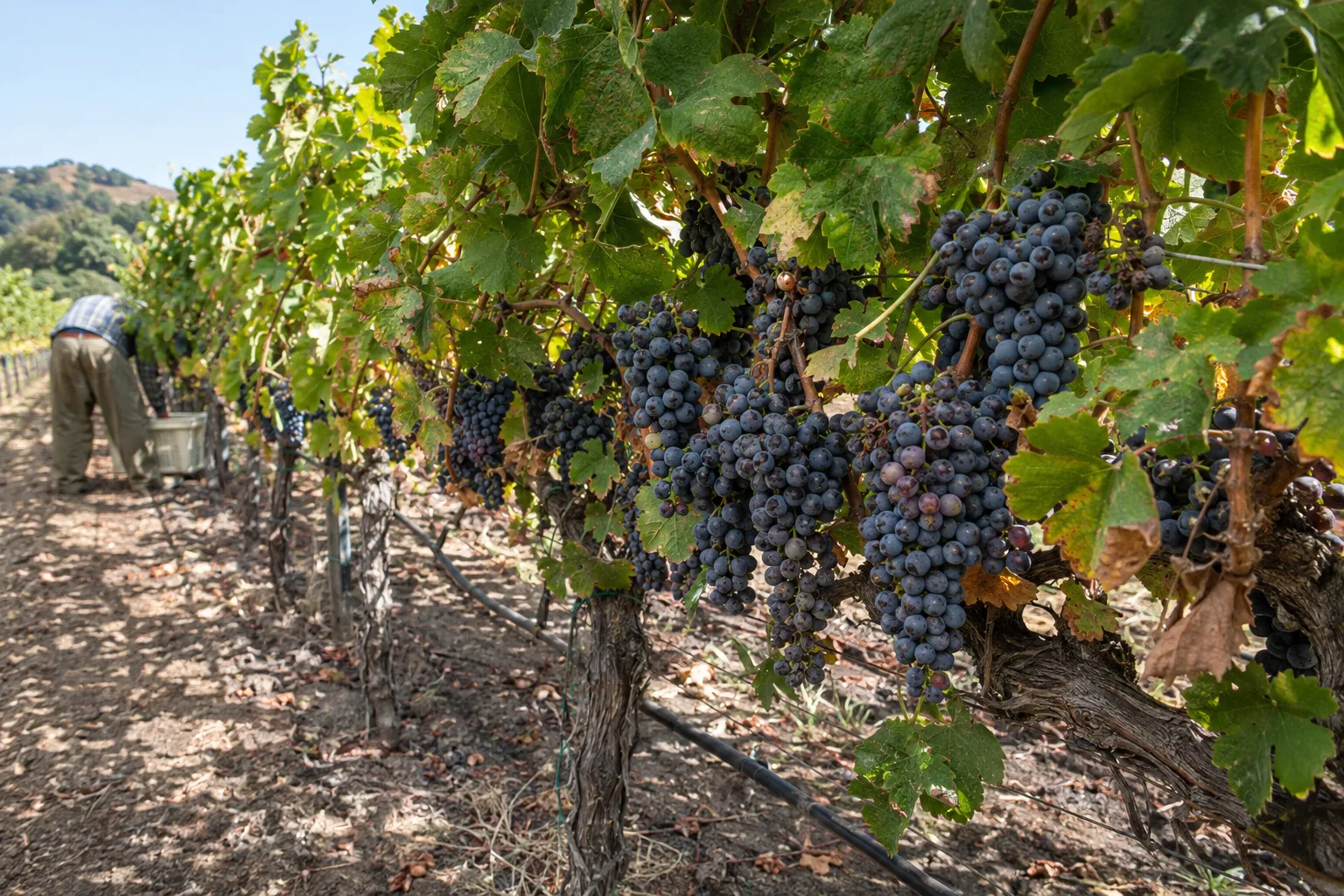
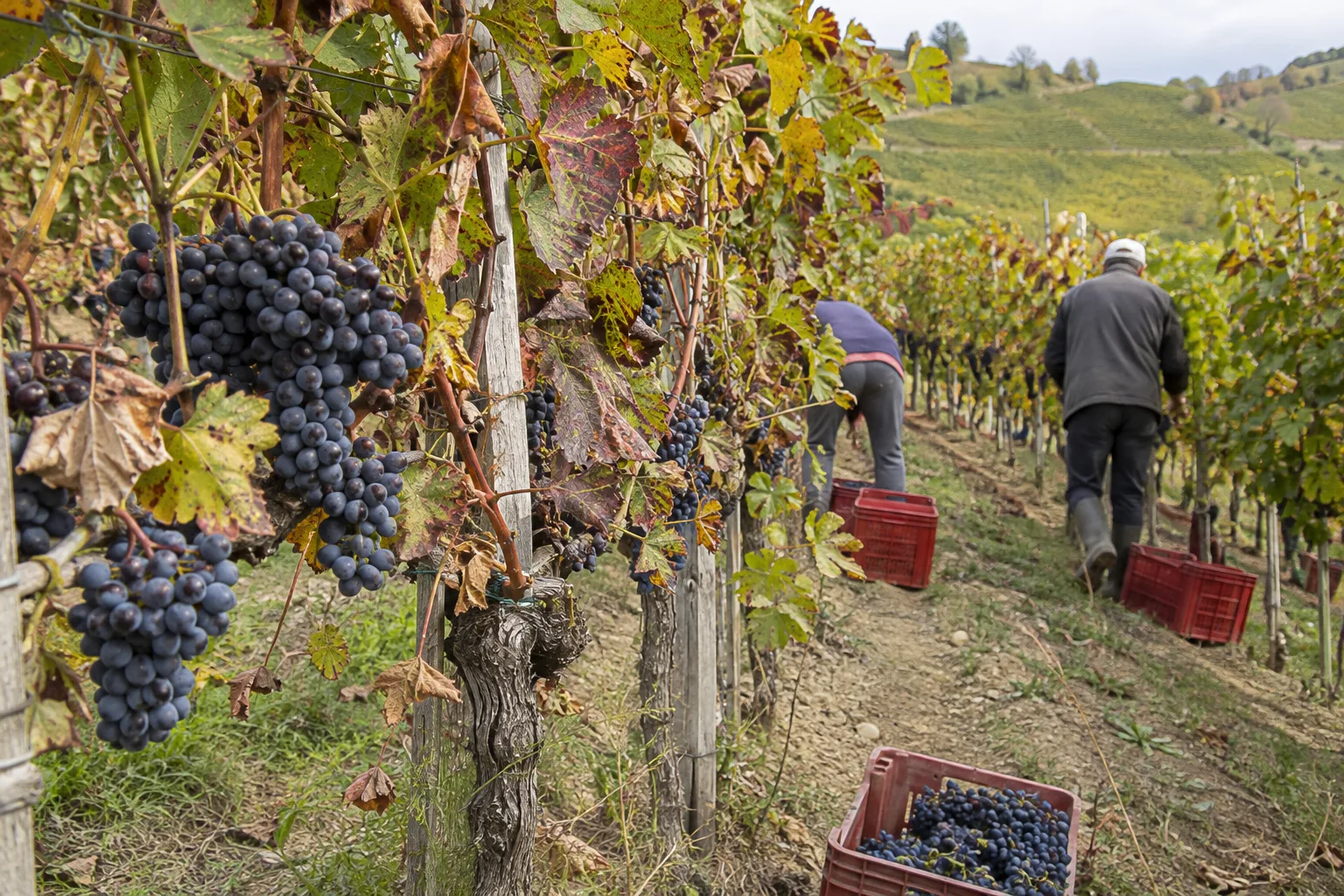
Maison François Martenot reports an unusually early 2026 Burgundy harvest
Cellar master Serge de Bucy says the 2026 season was unlike anything he had encountered in more than 30 years of winemaking, with grapes for Crémant de Bourgogne picked from 10 August as potential alcohol rose rapidly.
Hospices de Beaune selections
Ahead of the Hospices de Beaune auction, Grand Chais de France marketing director Anne-Laure Rayne Helfrich said the group would participate for the 11th consecutive year. She described it as the auction’s 2nd-largest buyer by volume and said it intended to pursue longstanding selections including the Beaune Premier Cru cuvées Nicolas Rollin and La Charité, subject to prices established as bidding began.1
The wines were tasted in advance by the company’s oenologists with Olivier Poussier, named the world’s best sommelier in 2000, to advise clients about how their profiles might develop during maturation. Poussier awarded more than 97/100 to Corton Grand Cru Bressande Cuvée Charlotte Dumay, a choice also favored across the teams. Helfrich said the aim was to offer such exceptional wines to clients at prices that remained coherent, rather than inexpensive.1
Maison François Martenot in 2026
Helfrich acknowledged a difficult commercial environment but said Burgundy’s range allowed Maison François Martenot to serve different markets, from grands crus to wines intended for everyday drinking. She credited growth in Crémant de Bourgogne and the company’s work on regional appellations, while emphasizing that the house operates not only as a négociant but also as a grower and winemaker seeking a distinct style for each appellation.1
An atypical vintage and early Crémant harvest
De Bucy called 2026 atypical and extraordinary, saying that in more than 30 years of making wine he had never experienced a season like it. He considered 2020 somewhat comparable but less extreme, and said the pace of developments required close timing.1
Maison François Martenot produces a large volume of Crémant de Bourgogne and began picking grapes for it on 10 August, although de Bucy said harvesting might have started 1 week earlier. Potential alcohol climbed quickly. Some partner growers achieved large yields, and their musts at between 9 and 10 helped reduce the overall average.1
The house also incorporated lower-alcohol reserve wines from 2024 and 2025 that were released for use in October. Because the new wines frequently lacked acidity, the team carried out reacidification.1
The team nevertheless retained its practice of allowing malolactic fermentation to proceed. De Bucy said blocking it could preserve more acidity but would alter the house’s Crémant profile; he also feared that malolactic fermentation might begin after bottling, which he regarded as potentially disastrous.1
Savigny among the still wines
Among Maison François Martenot’s 2026 still wines, de Bucy singled out Savigny, particularly its silky, velvety reds. Acidity was corrected where necessary to produce fruit-driven, balanced wines.1
The team also avoided excessively long macerations because elevated alcohol makes tannins easier to extract. De Bucy said the concentrated grapes did not require heavy extraction.1
Sources
Written by the Dionysus editors from the sources above.