Rhône appellations widen their specifications to include white wines
Vinsobres has secured official approval for white AOC wine from the 2026 vintage without enlarging its appellation area. Beaumes-de-Venise and 11 named Côtes-du-Rhône-Villages are pursuing comparable changes, although publication of their measures in France’s official journal is still pending.
Vinsobres approved within its existing area
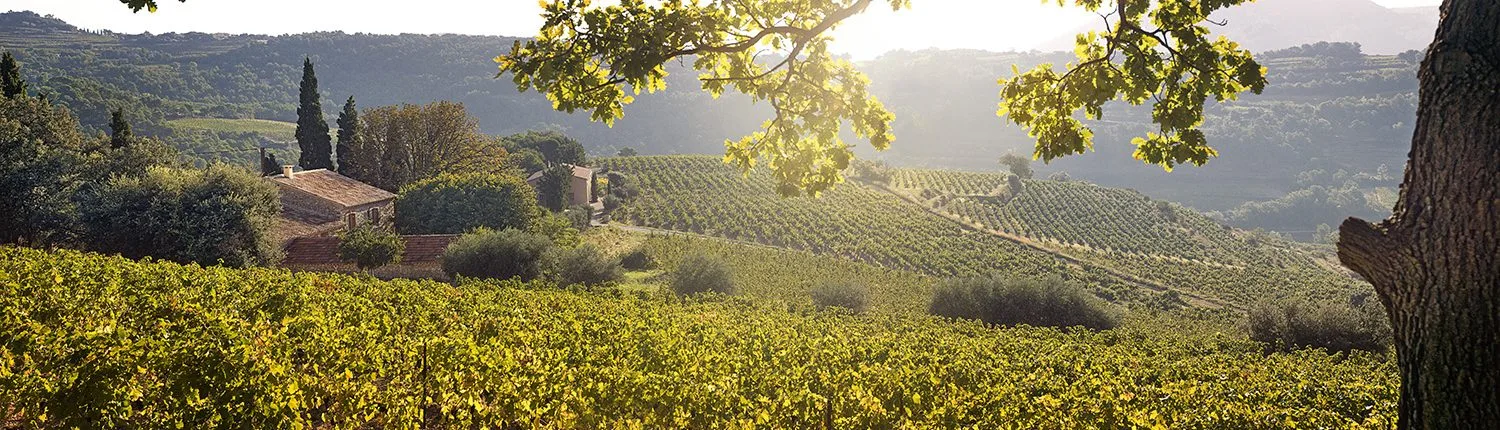
The approval for white AOC Vinsobres was formalized in June 2026. Production will remain within the appellation’s existing 1,375-hectare parcel delimitation, with no expansion requested by growers. White varieties currently occupy 50 hectares under the same vineyard-management requirements, representing estimated potential production of 350 to 500 hectolitres. Some growers have ordered vines so that their plantings can qualify in future years.1
The principal varieties are Clairette Blanche, Grenache Blanc, Marsanne, Roussanne, Viognier and Bourboulenc. Clairette Rose, Grenache Gris, Piquepoul, Vermentino and Ugni are permitted as accessory varieties. The standard maximum yield is 40 hectolitres per hectare, with an allowance up to 44 hectolitres per hectare.1
Richard Jaume of Domaine Jaume, who oversaw the application, said the 2026 growing season was well suited to introducing the white category. Despite the heat, he described the vintage as very good, with strong acidity; the vines avoided scorching and remained green until August 15. He said white wine had been the missing element for Vinsobres.1
Beaumes-de-Venise awaits official publication
Beaumes-de-Venise, recognized for Muscat natural sweet wine since 1945 and for still red wine since 2005, is also preparing to use its appellation for white wine, but publication in the official journal remains outstanding. The proposal was formalized in 2012. As in Vinsobres, white production will use the same delimited area as red production, covering 600 hectares. White wines made with Muscat à Petits Grains have previously been sold under an IGP designation.1
Muscat à Petits Grains will remain part of the wines but cannot be the majority variety. Éloïse Bouzid, communications manager for the appellation’s governing organization, said Muscat is integral to the area’s identity and has been present since Greek times. It must account for 10% to 30% of vineyard plantings and 5% to 30% of the blend, distinguishing the rules and varieties for white and red wines. The principal white varieties are Bourboulenc, Clairette, Grenache, Marsanne, Roussanne and Viognier. Red- or white-berried Muscat à Petits Grains are complementary varieties, while Piquepoul, Ugni Blanc and Grenache Gris are accessory varieties.1
Eleven named Côtes-du-Rhône-Villages prepare white wines
Eleven named Côtes-du-Rhône-Villages that have not previously been able to claim white wine are moving toward adding it to their specifications. Publication in the official journal is still awaited. Vincent Dessalles, vice-president of the Syndicat Général des Côtes du Rhône, attributed the initiative to a policy pursued by the syndicate’s president, Damien Gilles. The national opposition procedure ended on September 19; once the decree is signed, its effect is expected to apply retroactively to all the villages concerned. The first cuvées are scheduled to reach the market in spring 2027, but projected volumes have not been stated.1
A broader Rhône objective
The changes follow earlier authorization of white wines in Gigondas and Laudun. They also support the Rhône interprofessional organization’s objective of doubling white-wine volumes across the region.1
Sources
Written by the Dionysus editors from the sources above.