SosTain Sicilia launches data portal and expands focus on regenerative farming
The foundation presented a platform for tracking winery resource use and collective sustainability indicators at its Palermo forum, alongside figures for its 2025 program and results from a lighter-bottle project.
A shared framework for Sicilian wine
At the SosTain Forum in Palermo, titled “Sustainable Interactions: Understanding Change, Cultivating the Future,” foundation president Alberto Tasca said climate, environmental, economic and demographic pressures require responses rooted in local conditions and cooperation across the wine sector. The event, supported by the Sicilia DOC Consortium, Assovini Sicilia and the Sicilian Regional Government, brought together producers, researchers and other stakeholders.1
The initiative involves the Sicilia DOC Consortium, chaired by Alessio Planeta, and Assovini Sicilia, led by Gabriella Favara of Donnafugata. Participating wineries named in the report include Tasca d’Almerita, Donnafugata, Planeta, Cusumano, Cottanera, Settesoli, Girolamo Russo, Graci, Occhipinti, Palmento Costanzo, Pellegrino, Rapitalà, Pietradolce, Baglio del Cristo di Campobello, Feudo Maccari and Zisola.1
The scale of the sector and the program
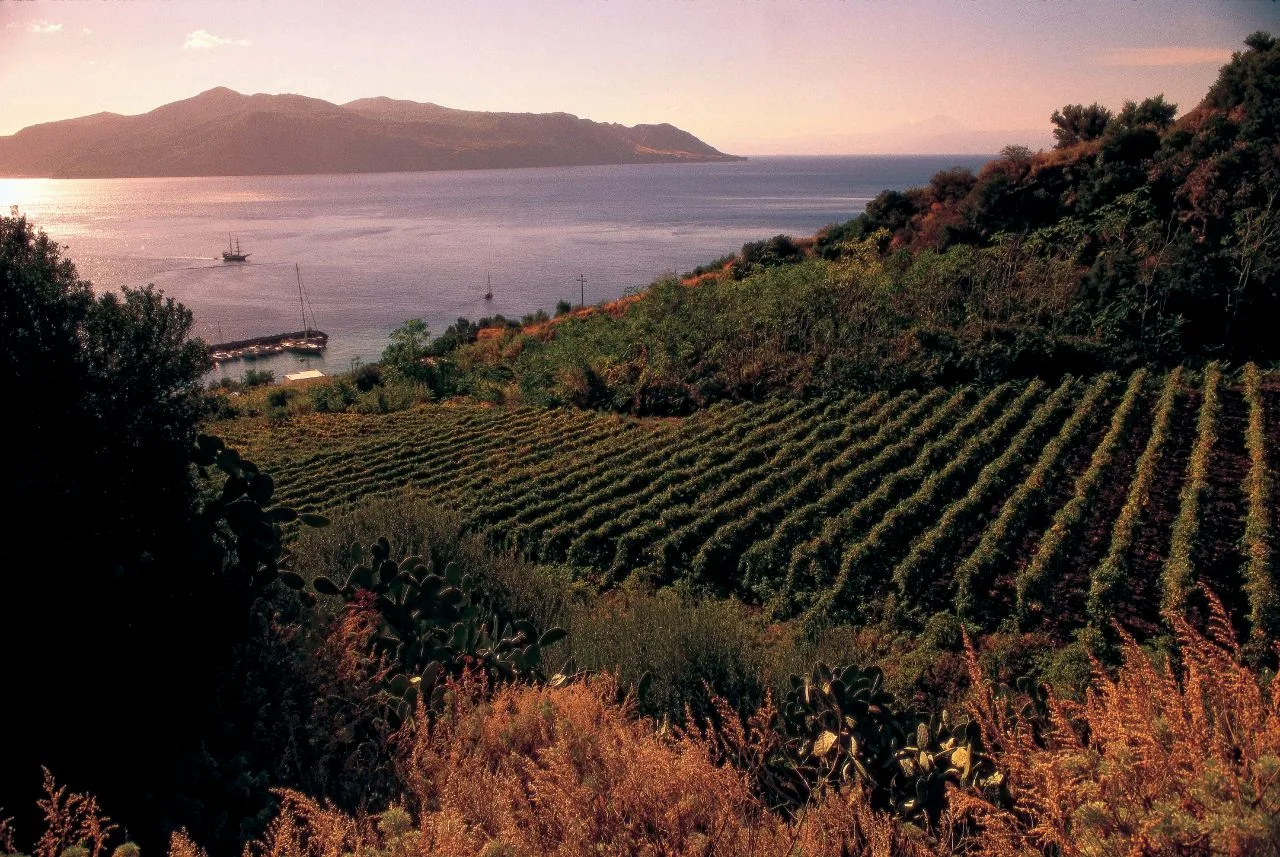
Sicily produced approximately 2.6 million hectoliters of wine in 2025, making it Italy’s 4th-largest wine-producing region. The island had 97,000 hectares of vineyards, while 80% of production belonged to PDO or PGI categories. Forum speakers described a shift away from volume and toward quality, appellations, indigenous grapes and territorial identity.1
SosTain Sicilia describes its model as a shared improvement system based on a scientific protocol and verifiable indicators across environmental, social and economic responsibilities. Its figures for 2025 comprised 45 member companies, 6,350 hectares of participating vineyards and more than 20 million SosTain-certified bottles.1
Portal and regenerative agriculture
The new SosTain portal is designed to collect company consumption data, calculate indicators covering the foundation as a whole, monitor progress and reveal further opportunities for improvement. Tasca said the platform strengthens a model built around data, impact measurement, shared expertise and the conversion of knowledge into practical action.1
The foundation is also extending its work into regenerative agriculture, with attention to soil health, biodiversity and the ability of agricultural ecosystems to respond to climate change. Agronomist Adriano Zago argued that regenerative agriculture should be understood as a family of approaches rather than a single method: organic farming, biodynamics, agroecology and regenerative practices can all contribute to soil fertility, agroecosystem vitality, resilience and the expression of terroir.1
Lighter bottles and local glass
The forum reviewed the CentoPerCento Sicilia bottle initiative, developed with glass manufacturer O-I. Through lighter designs, local production and glass collected and recycled in Sicily, the project seeks to lower packaging impacts and shorten the supply chain.1
Since the project began in 2023, it has produced 15 million bottles and reduced their weight from 410 grams to 360 grams. The foundation reports that the resulting bottles are 18% lighter than the market average and estimates savings of 500 tonnes of CO₂. Local production saved a further 300 tonnes by reducing transport and related emissions, bringing the calculated total to 800 tonnes of CO₂, based on the Greenrouter Tool.1
Climate adaptation and Sicilian identity
Sicilian Regional Councillor for Agriculture Luca Sammartino said Sicily leads Italy in organically farmed vineyard area. He cited regional investment in integrated water systems, farm reservoirs, storage basins and small desalination plants in response to drought, while identifying biodiversity as a central source of climate resilience.1
Favara said Sicily must make the identity and diversity of its wine heritage more recognizable and competitive internationally through territory, culture, innovation, sustainability and collective work. Planeta framed the challenge as a broader environmental crisis involving climate, natural resources and patterns of production and consumption, requiring winegrowers to share responsibility through sustainable farming and responsible resource use.1
Planeta pointed to vineyards moving to higher elevations; space being made for drought-tolerant olives, almonds and pistachios; and the selection of heat-resistant grapes including Inzolia, Zibibbo, Frappato and Nero d’Avola. He also cited cover crops used as green manure, kaolin applications and new tree planting to cool vineyards and protect soils. Since 2020, the SosTain protocol has promoted shared tools for measuring and improving vineyard practices, drawing on agricultural knowledge inherited from Arab, Greek and Carthaginian traditions while also supporting landscapes and tourism.1
How regenerative outcomes should be measured
Ettore Capri of the Opera Research Centre and DiSTAS at the Catholic University of the Sacred Heart in Piacenza, together with Lucrezia Lamastra, coordinator of the SosTain Foundation’s Scientific and Technical Committee, compared 4 agricultural frameworks. Organic farming is a regulated production system; integrated farming optimizes inputs; sustainable agriculture addresses environmental, economic and social dimensions together; and regenerative agriculture aims to restore soil health and ecosystem functions.1
Capri and Lamastra identified overlap in cover cropping, organic-matter management, reduced soil disturbance, biodiversity protection, resource efficiency and water objectives. They cautioned that results depend on the combination of practices, soil and climate, and conditions on each farm, while uneven geographic evidence limits broad transferability. Organic and integrated farming have more established governance structures, whereas sustainability and regeneration standards remain less uniform.1
They concluded that regenerative agriculture can extend sustainability instead of necessarily competing with it. Credible assessment requires clear baselines, dependable indicators and long-term monitoring that separates the adoption of practices from demonstrated benefits, while accounting for trade-offs among environmental, productive, economic and social performance. In their view, agricultural quality should be judged through integrated techniques and verifiable results rather than labels alone.1
Sources
Written by the Dionysus editors from the sources above.