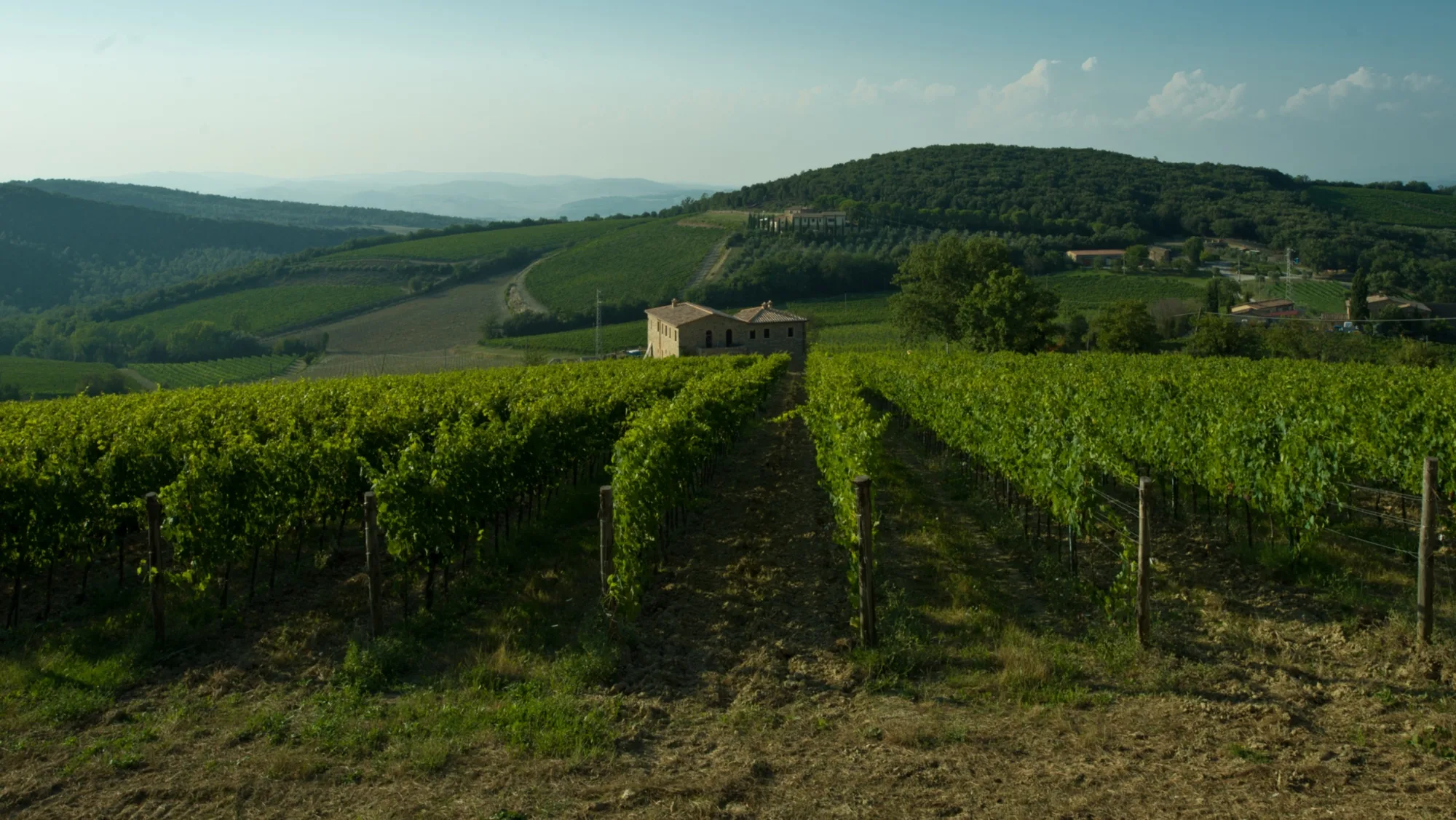
Symington releases seven 2024 Vintage Ports from five Douro houses
Symington Family Estates has presented the 2024 Vintage Ports from Warre, Dow, Graham, Cockburn and Quinta do Vesuvio, including the limited Graham’s Stone Terraces and Capela da Quinta do Vesuvio. Wine Anorak’s scores range from 95 to 98 points, with Capela receiving the highest rating.
A classic, balanced growing season
Charles and Harry Symington presented seven newly released 2024 Vintage Ports in a tasting that moved upriver through Warre, Dow, Graham, Cockburn and Quinta do Vesuvio. Charles Symington said 7 years had passed since the previous general Vintage Port declaration, one of the longest intervals; the preceding gap of the same length came before the 1945 declaration and included a world war. He linked the latest interval to climate change and a succession of unusual vintages.1
The 2024 season followed a more conventional pattern. Rain beginning in October 2023 produced the highest soil-moisture levels observed by the end of November, and they persisted into early spring. Rather than arriving in large storms, the rain was distributed more evenly. Flowering and veraison occurred at their usual times during a relatively mild growing season.1
This was a departure from recent seasons in which the cycle had advanced, pushing ripening into August heat and sometimes bringing periods of 10–12 days above 40°C. Temperatures did not exceed 32°C in the second half of August 2024 or 30°C in September. Pronounced differences between daytime and nighttime temperatures helped balance sugars and phenolic development, while dry conditions allowed late-ripening Touriga Franca to mature. Charles described that variety as the Douro’s counterpart to Merlot because its tannins are rounder than those of Touriga Nacional.1
Varieties and cellar practices
The wines combine elegance, precision and pronounced aromatics and are unusually approachable for young Vintage Ports, reflecting both the harvest and changes in winemaking. Symington is increasing its use of Sousão and Alicante Bouschet: both contribute fruit, freshness and color, while Alicante also supplies structure. The varieties had been overlooked during Douro selections in the 1980s, but the family has revived both. Tinta Barocca, a regional mainstay 30 years ago, had repeatedly underperformed as the climate changed and is being replaced by Alicante.1
All grapes are destemmed. Charles said this removes uncertainty over green stalks, which can impart aggressive characteristics and make young Vintage Port less approachable. Modern destemming equipment also rejects raisined fruit that could create overripe or jam-like flavors. Excess sugar can raise volatile acidity in both Port and table-wine musts: in table wine, volatile acidity peaks near 7–8% alcohol before yeast consumes some of it, whereas Port undergoes the production phase without the later reduction, potentially diminishing freshness.1
Fortification is normally performed after separating the wine from the skins, depending on the fermentation, although adding brandy while skins remain is also common, particularly for Vintage Port. The musts are often acidified at grape reception and again after the brandy addition, which shifts pH; the target is approximately 3.65.1
Warre
Harry described Warre as the most elegant of the house styles. Its principal sources are Quinta da Cavadinha, a 30-hectare estate opposite Noval in the Pinhão Valley, where 20% of the vines are old and elevations reach 440 m; the 15-hectare Netas above it, rising to 530 m; and Bom Retiro in the Rio Torto Valley, where 33% of the vines are old and some stone-backed terraces date from the 19th century. Newer plantings at Telhada in the Douro Superior also contribute. The blend comprises 38% Touriga Franca, 34% old-vine field blend, 17% Touriga Nacional and 11% Sousão.1
Discussing old field blends, Charles said their concentration is particularly valuable in fertile, high-yielding regions. He compared average yields of 9 tonnes per hectare in the Northern Hemisphere and 12 tonnes per hectare worldwide with only 3.5 tonnes per hectare in the Douro. In established mixed vineyards, vines yielding 300–600 g each tend to reach maturity more uniformly and can often be picked earlier. A newly planted field blend may initially be less synchronized—for example, young Touriga Franca might yield 1.5 kg per vine against 1 kg for Touriga Nacional—so growers may need to wait for the vineyard to settle.1
Warre’s Vintage Port 2024, Douro, Portugal, 20% alcohol — 95/100. Opaque and highly aromatic, it combines very sweet blackberry and black-cherry fruit with savory spice. The concentrated palate has firm tannins, a salty note, substantial structure and a dry, dusty finish. Wine Anorak judged it built for a long future.1
Dow
Dow is among the family’s driest styles, at 99 g/l residual sugar, although Cockburn is now drier. Most fruit comes from Quinta do Bomfim in Pinhão and Quinta da Senhora da Ribeira, 24 km upriver in the Douro Superior, with smaller contributions from the privately owned Santinho and Cerdeira properties. The blend is 40% Touriga Franca, 35% Touriga Nacional, 15% old-vine field blend and 10% Alicante Bouschet.1
Dow’s Vintage Port 2024, Douro, Portugal, 20% alcohol — 97/100. Black cherry and blackcurrant aromas are joined by smoke, pepper, olive, tar and spice, with ginger emerging on the finish. It is lush and brooding, with sweetness, spicy tannins, floral fruit and vibrant concentration. Although it initially seemed richer than expected for Dow, it appeared drier on the second day. Its approachability and structure suggest potential at young, middle and mature stages, with added weight expected to develop in bottle.1
Graham
Graham’s flagship estate, Malvedos, lies between the Cima Corgo and Douro Superior and has 90 hectares of vines; nearby eucalyptus can give the wines a mint-like note. Other sources are Tua, with 22 hectares and many old vines; Rupert Symington’s Vila Velha in the Cima Corgo; and the family-owned Vale de Malhada in the Douro Superior. The blend contains 55% Touriga Nacional, 30% Touriga Franca, 9% field blend and 6% Sousão. Harry characterized Graham as rich and opulent and called it one of the harvest’s standouts.1
Graham’s Vintage Port 2024, Douro, Portugal — 96/100. The alcohol is presently noticeable beside floral black-cherry and blackberry aromas. Vivid, supple fruit, tannic structure and a lightly sappy green accent create balance without excessive weight. It is already approachable but needs time to integrate; Wine Anorak found less immediate impact than in some peers but strong prospects for elegance with age.1
Graham’s Stone Terraces was conceived in 2011 to preserve tiny lots of exceptional wine that would otherwise disappear into larger blends. The 2024 comes from Malvedos’ original vineyards and is a co-fermentation of 3 blocks whose vines average 0.5 kg of fruit each. Touriga Nacional predominates, with some Sousão, and production totals 520 cases.1
Graham’s Stone Terraces Vintage Port 2024, Douro, Portugal — 97/100. Floral cherry and blackberry aromas meet spice and exotic mango and apricot notes. It is concentrated, deep and sweet-fruited, with a grainy structure, elegance and composure rather than extreme power or tannin. Despite present accessibility, it is intended for extended aging; the review likened its subtle profile more to Burgundy than Bordeaux.1
Cockburn
The Symingtons acquired Cockburn’s property in 2006 and the brand in 2010 and are working to restore the house’s former reputation after a period centered on affordable Special Reserve rather than top Vintage Port; no Cockburn Vintage Port was made in 1977. The principal estate is Canais in the Douro Superior, supplemented by Vale Coelho and Charles Symington’s Cachão de Arnozelo, also in the Douro Superior. Canais has a large share of Touriga Nacional, a variety whose revival was associated with a Cockburn winemaker in the 1930s. The traditional house signature also includes a firm finishing grip.1
At 95 g/l residual sugar, Cockburn is the driest of these Ports. Asked how its image could change, Harry said the house needs more declarations like 2024 and opportunities for people to taste it beside Graham, Dow and Warre. Charles said the previous multinational owner had taken what he called the “Ferrari” of Port houses but produced the equivalent of ordinary cars instead.1
Cockburn’s Vintage Port 2024, Douro, Portugal — 96/100. Floral scents, spice, tar and meaty black cherry lead to a dense, tannic palate that retains an attractive fruit character. Sour cherry, olive and orange-peel notes appear on the finish. Touriga Nacional makes up 63% of the blend and shows in its savory meat-and-olive character and exotic floral fruit. The wine has the substance required for long aging.1
Quinta do Vesuvio
Quinta do Vesuvio is a north-facing estate in a warmer part of the Douro. Its 400 hectares include 140 hectares of vines at elevations from 100 to 500 m; Symington also owns Senhora da Ribeira across the river. Only 4% of Vesuvio’s production entered this blend, allowing rigorous selection. It consists of 47% Touriga Franca, 30% Touriga Nacional, 13% Alicante Bouschet and 10% Sousão. Harry called its combination of power and elegance one of the highlights of 2024.1
Quinta do Vesuvio Vintage Port 2024, Douro, Portugal, 20% alcohol — 96/100. Floral black cherry, raspberry and spice introduce a ripe, rich and sweet palate. Grippy, grainy tannins counter concentrated raspberry, cherry and blackberry fruit, with abundant spice and slight salinity. Its intensity, concentration and long tapering finish support a prolonged, graceful evolution despite its immediate appeal.1
Capela da Quinta do Vesuvio
Capela, first produced in 2007, is a super-selection from Vesuvio. Its prototypes explored the roles of Alicante Bouschet and Sousão as Symington considered bringing the varieties back. The 2024 is drawn from Vesuvio’s 3 best old-vine plots and is only the 6th release because the wine is not made every year.1
Capela da Quinta do Vesuvio Vintage Port 2024, Douro, Portugal — 98/100. The tasting’s highest-scoring wine combines exceptional concentration with black cherry, blackberry, crushed-rock and spice aromas, alongside floral notes, dried lavender and thyme, and cured meat. Structured tannins balance the sweetness and taut black fruit. Although approachable, its brooding weight and intensity make it a Port to cellar for a considerable period before opening.1
Sources
Written by the Dionysus editors from the sources above.