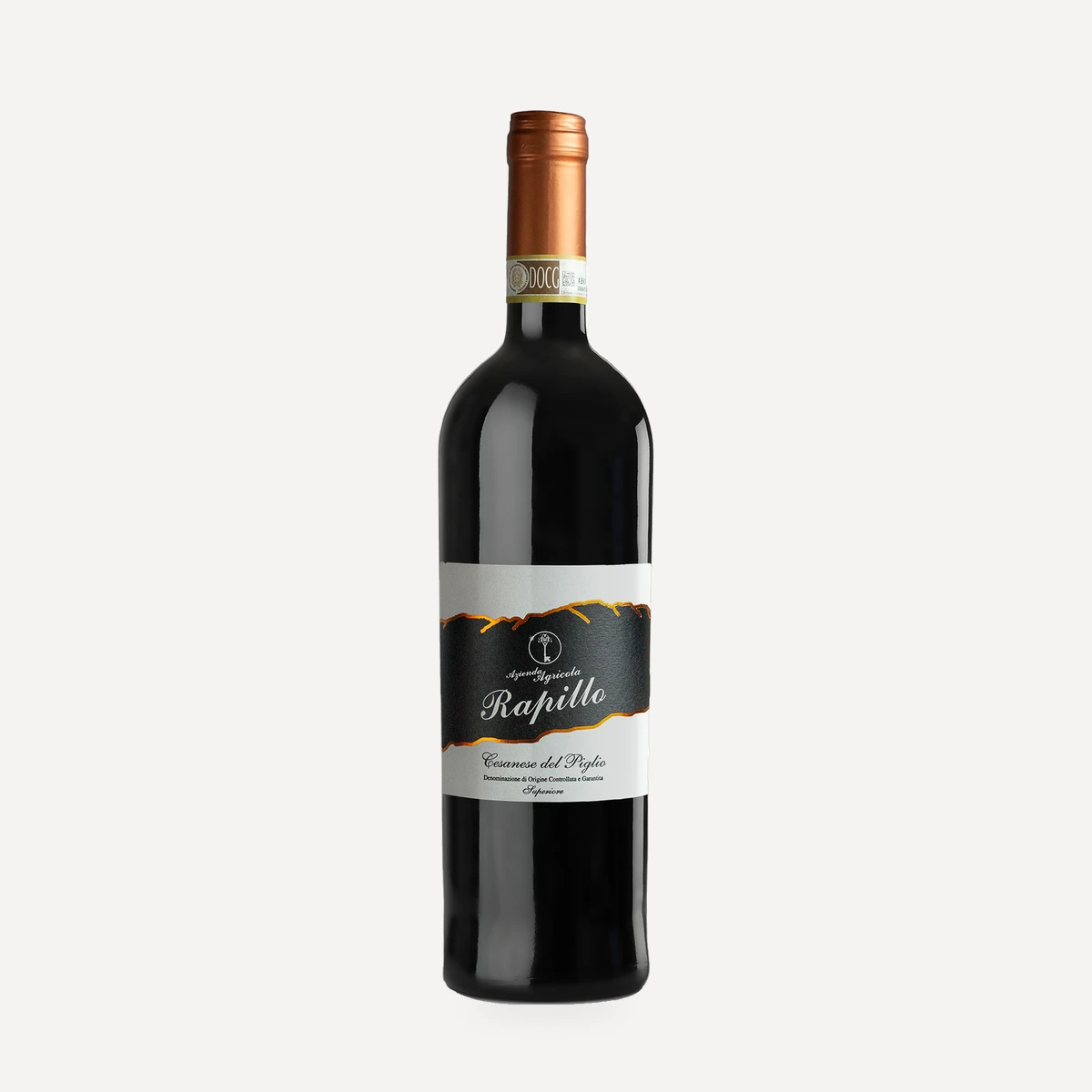
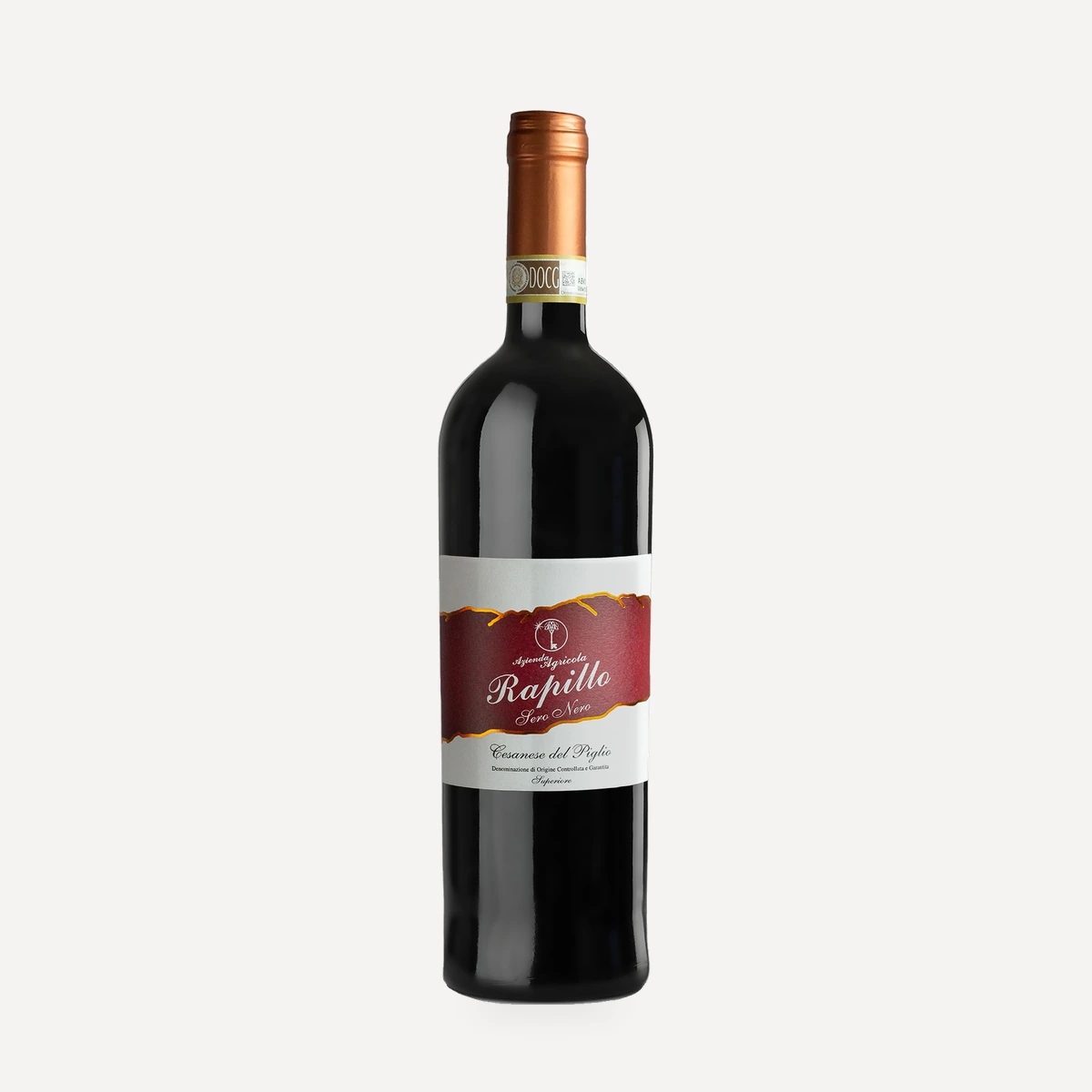
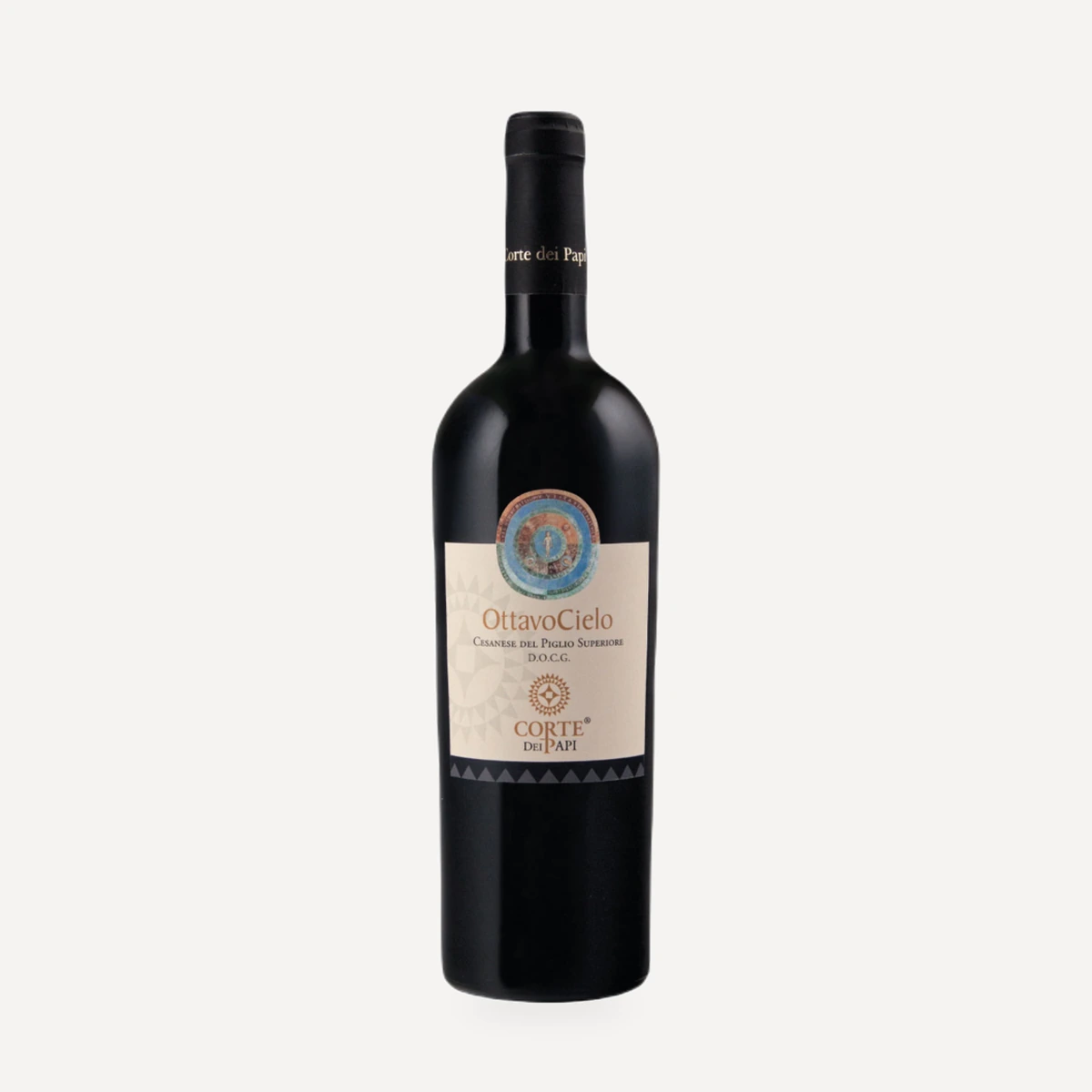
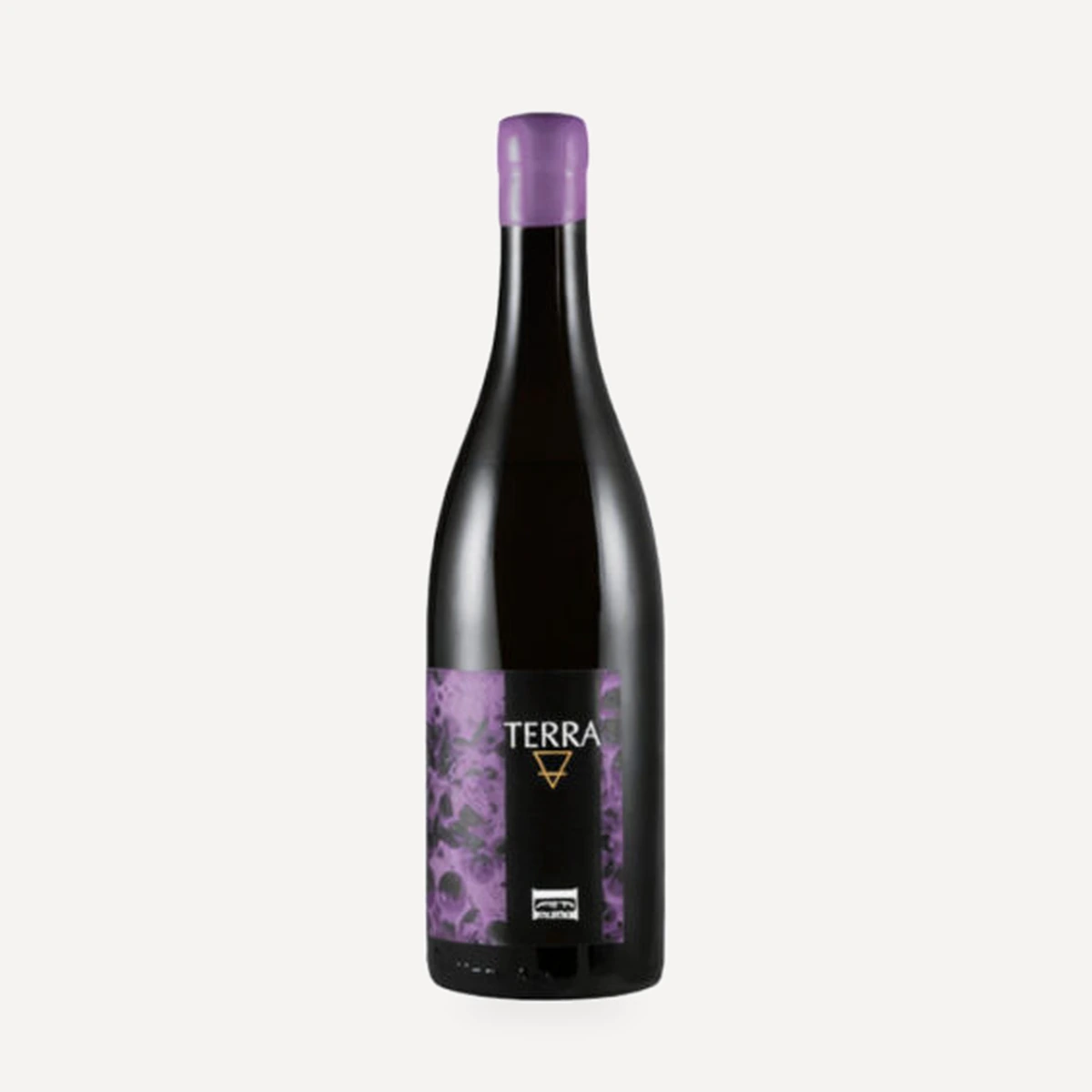
About this wine
Vineyard and terroir
The Cesanese vineyards lie at Le Cimate near Paliano, in the hills of Alta Ciociaria. Their south-facing slopes rise to 350–400 metres and have red-clay soils. The site is surrounded by olive trees, laurels and old local apple varieties. The vines are trained to Guyot and have been certified organic since 2025. Yields are 45–50 quintals per hectare. Grapes are picked by hand into small crates around the middle of September.
Grapes
Cesanese.
Vinification
The grapes are destemmed and crushed. Fermentation begins spontaneously with indigenous yeasts, followed by ten days of maceration in stainless steel. Total sulphur dioxide is approximately 30 mg/L.
Ageing
The wine matures for ten months, divided between stainless steel and regenerated third-use barriques, then spends approximately six months in bottle.
Tasting profile
Intense ruby red. The bouquet combines violet and red rose with sour cherry, dark cherry, plum and other red fruits. Pepper, clove and cardamom add spice, while balsamic, Mediterranean-scrub and lightly toasted nuances contribute complexity. The palate is enveloping and harmonious, with velvety, well-integrated tannins, balanced freshness, gentle savouriness and a persistent finish.
Serving and pairing
Suitable both on its own and with Roman pasta dishes, vegetarian timbales, red ragù, chicken cacciatore, braised beef with Cesanese, mature cheeses, and sautéed or baked vegetables.
Label / history
The wine is dedicated to Donna Vittori’s horse, symbolising strength and freedom. Edoardo Bernardi designed the label. The Cesanese tradition of the area is linked to the Benedictine monks of Subiaco, who preserved the variety through the centuries.