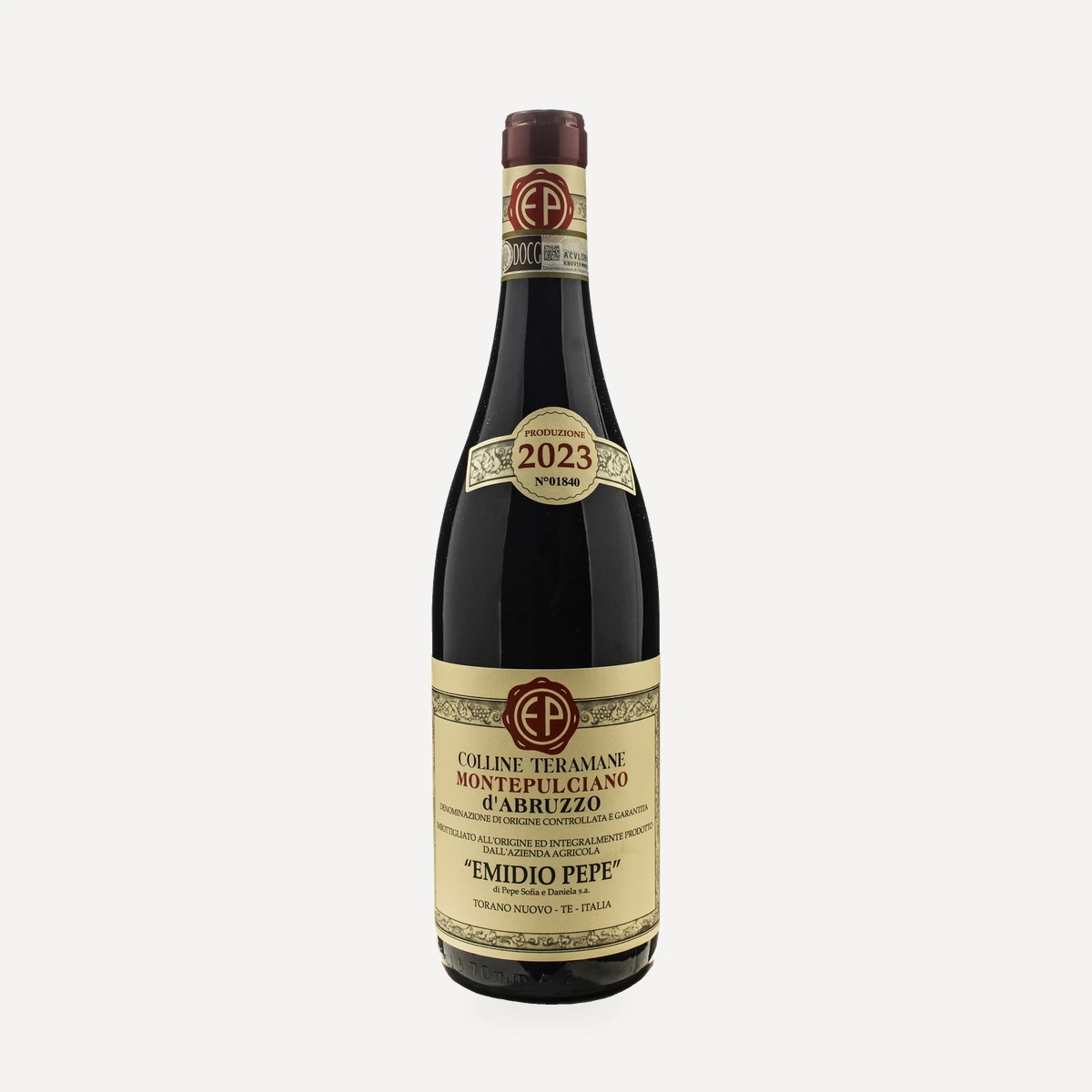
About this wine
Vineyard and terroir
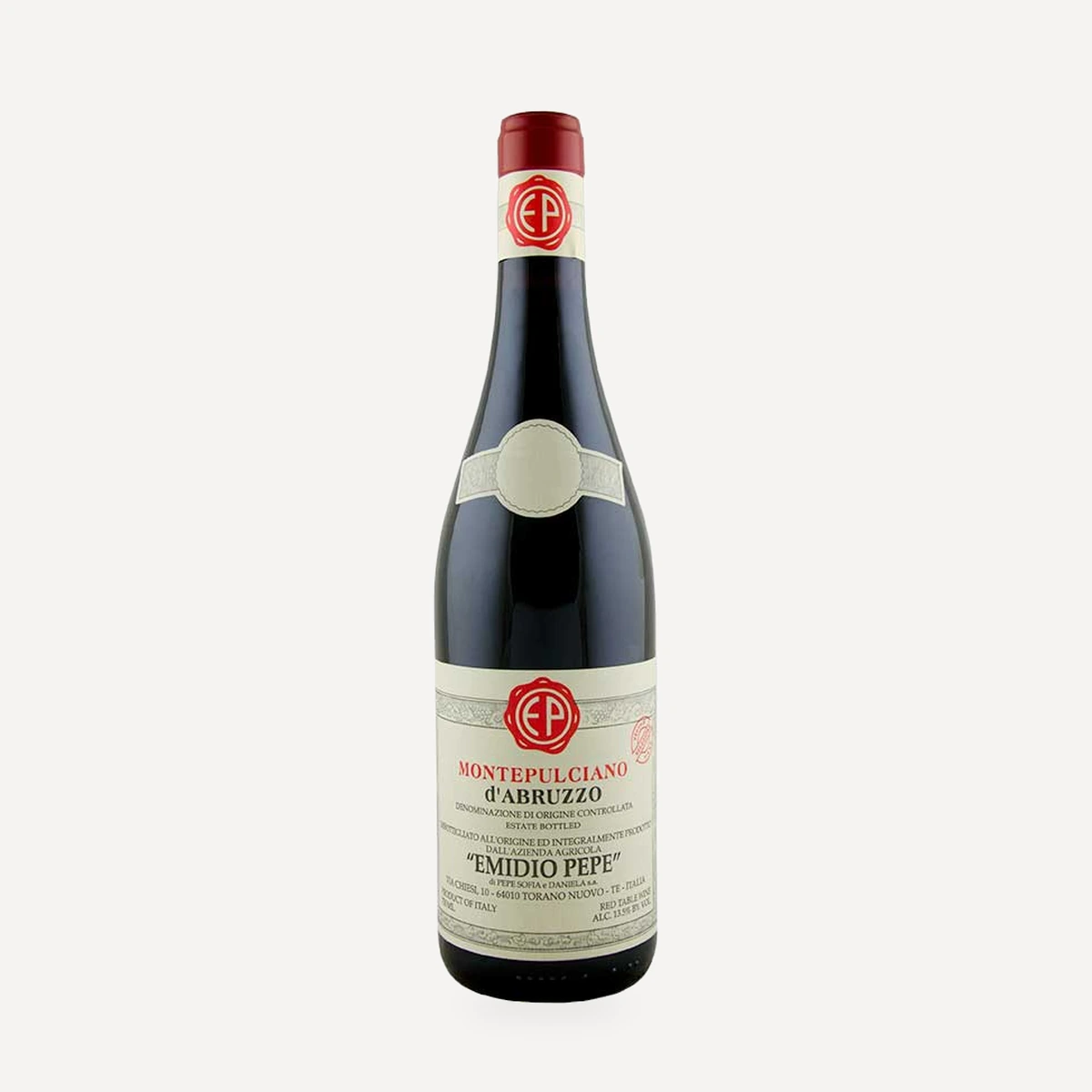
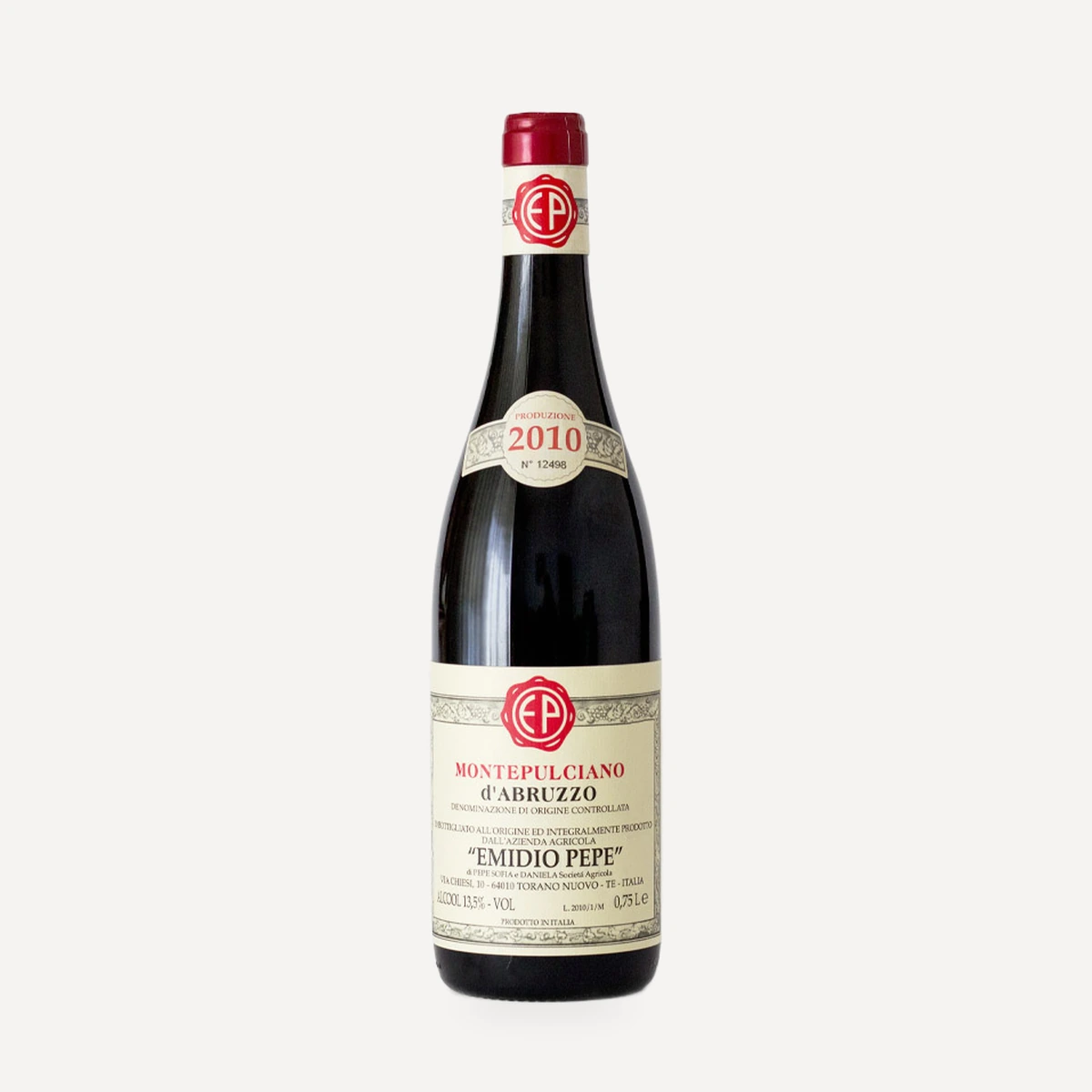
Montepulciano d’Abruzzo is grown in the estate’s 17 hectares of indigenous varieties surrounding the cellar in Torano Nuovo, within the Colline Teramane. The vineyards receive sunlight across a broad solar arc and experience marked day-to-night temperature variation and constant ventilation. Maritime influence is balanced by cold air from the Gran Sasso. Clay and limestone soils allow roots to descend several metres.
The estate combines pergola-trained and row-trained vineyards. Under the pergola, foliage shades the Montepulciano berries, slowing ripening and protecting tannin finesse. Chemical products are excluded, while biodynamic preparations, permanent vegetation and cover crops support soil life and indigenous yeast populations.
Grapes
Montepulciano d’Abruzzo.
Vinification
Harvesting and grape selection are performed by hand. Montepulciano berries are traditionally destemmed manually over a wooden vat using a mesh that separates intact stems while allowing nearly intact berries to fall through. This retains yeasts present on the skins and avoids extracting harsher stem tannins. Alcoholic fermentation begins spontaneously without selected yeasts or aroma-enhancing enzymes. Concrete is the estate’s neutral and temperature-moderating fermentation and maturation medium.
Ageing
The wines are bottled without filtration and mature in the estate cellar. At least half of total production is retained, with older vintages released in small quantities only when ready. After more than 20 years, bottles are opened and hand-decanted one by one to remove sediment and assess their condition. Each sound bottle is topped up from another bottle of the same vintage, recorked, and marked with the decanting year.
Technical data
Latest listed vintage: 2023. Energy: 326 kJ/78 kcal per 100 ml. Carbohydrates: 1.1 g per 100 ml. Sugar, fat, saturated fatty acids, protein and salt are present only in small quantities. The wine is made from organically farmed grapes, contains sulphites and sulfur dioxide, and is bottled under protective atmosphere.
Vintage notes
The 2023 growing season brought approximately 250 mm of rain between mid-May and mid-June, demanding substantial canopy work. June and July reduced the spring humidity without excessive summer heat. Hail affected some vineyards on 7 August, prompting rigorous grape selection. Fermentations ran smoothly, but the estate produced only about 25% of its normal quantity.
The 2022 season began with budbreak on 13 April and a rapid, vigorous vegetative cycle. Warm, dry conditions slowed veraison to 20–25 days. Rain from 27 July onward restored water for the final phase of phenolic ripening. Montepulciano harvesting began on 22 September. That year introduced the estate’s traditional hand-destemming arrangement with gravity unloading to preserve berry integrity.