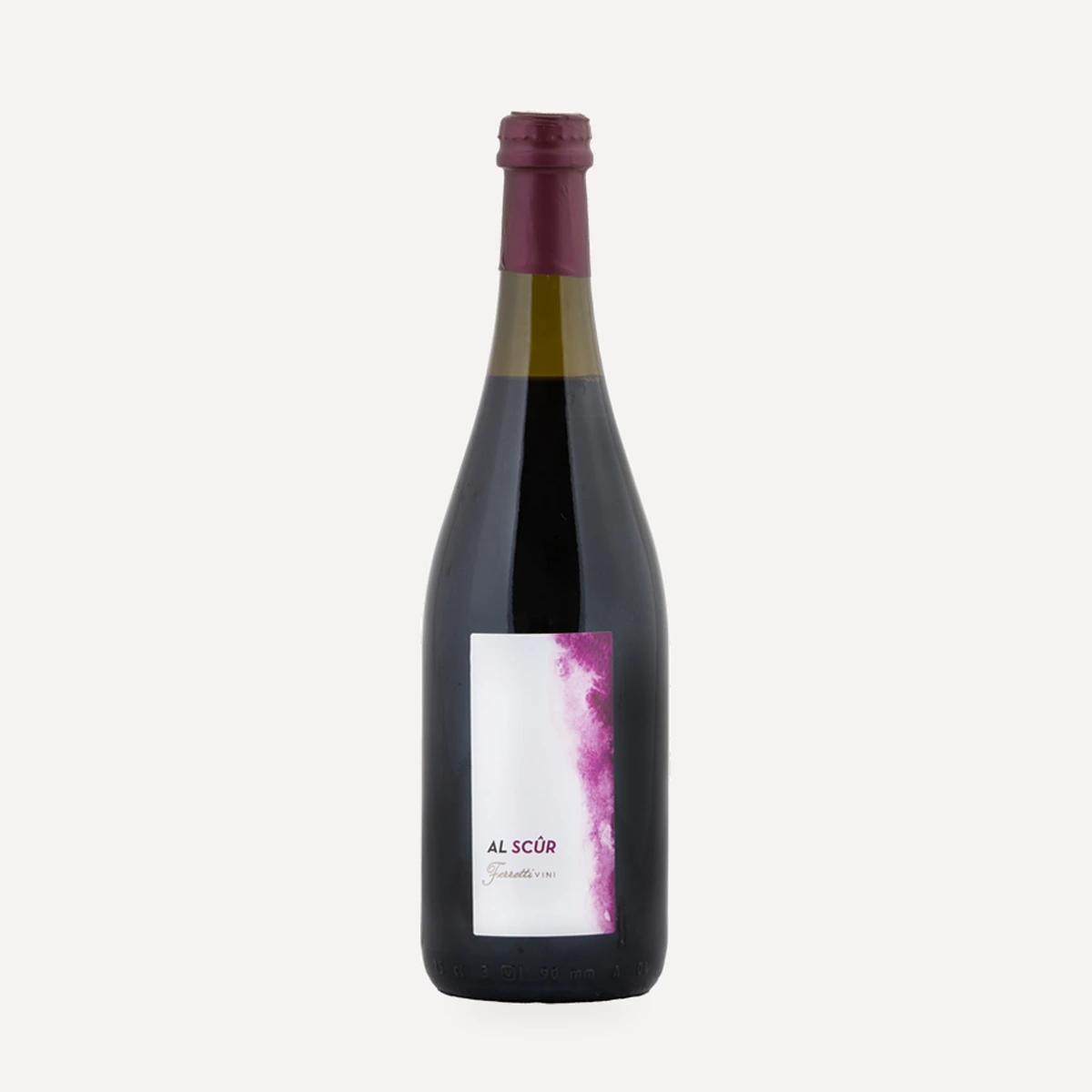
About this wine
Grapes
A blend of 25% Lambrusco Salamino, 20% Lambrusco Maestri, 15% Lambrusco Grasparossa, 15% Ancellotta, 10% Lambrusco Marani, 8% Lambrusco Oliva, 5% Lambrusco Barghi and 2% Lambrusco Foglia Frastagliata. The vines were planted in 2011.
Vinification
This dry sparkling red remains on its skins for three to four days. Fermentation is spontaneous, driven by indigenous yeasts without temperature control. Low doses of sulfites are added, and the wine is not clarified.
Ageing
At least six months on the lees.
Technical data
Lambrusco dell’Emilia IGP. Alcohol: 11.5% vol. Production is approximately 5,000 bottles.
Tasting profile
An opaque purple-red wine with generous foam. The initial nose is vinous and marked by cherries and other red fruit, developing spicier nuances with extended ageing. The palate begins full and fruit-forward, then becomes increasingly tannic and persistent over time.
Serving and pairing
Serve at approximately 10°C. Pair with traditional dishes from Reggio Emilia, including cappelletti, cotechino, roasts and mixed boiled meats.
Vintage notes
Spring frost and an extremely dry summer caused severe crop losses and low yields in 2021. The wine has violet foam, good palate structure, firm tannins and sufficient alcohol for persistence. Delicate red fruit leads the nose, with the capacity for long bottle evolution.
The productive 2020 season delivered moderate grape sugar and balanced acidity. Its wine is deeply colored and structured, with marked tannin and good alcohol; extended ageing leaves vinous and lightly spicy aromas. The balanced, productive 2019 season retained especially fine acidity. Heavy spring rain and fungal disease caused very low yields in 2018. Late frost and drought reduced yields in 2017, while uneven ripening led particularly to reds with higher alcohol and weaker acidity. Warm conditions in 2016 were moderated by cool nights, preserving balance. The very warm 2015 season had little diurnal variation, high grape sugar and low acidity. Persistent rain in 2014, including during ripening, resulted in very low yields, lower alcohol and pronounced acidity.