About this wine
Vineyard and terroir
Bajola comes from differently sized terraces in Forio on the island of Ischia. Their exposure to the sun varies, and the terraces are planted, in descending order, with Vermentino, Viognier, Sauvignon Blanc, Malvasia delle Lipari and Incrocio Manzoni 6.0.13. The vineyards are rooted in tuff-rich soil.
The soil is managed through cover cropping and green manure, mycorrhizal inoculation and biodynamic P500. By 2021, roots were visible to a depth of about 50 cm within an increasingly cohesive soil matrix. Biodynamic practices are combined with symbiotic techniques. Grapes and wine for the Tiano bottling were certified organic.
Grapes
Vermentino, Viognier, Sauvignon Blanc, Malvasia delle Lipari and Incrocio Manzoni 6.0.13.
Vinification
The bunches are harvested by hand, destemmed directly in the vineyard and dropped into underground concrete palmenti situated among the vine rows. Fermentation proceeds on the skins without processing aids, additives, selected yeasts or added sulphur dioxide.
Skin contact is deliberately prolonged. For the 2020 harvest, a light saignée was performed after 20 days, at the end of alcoholic fermentation; this portion was added to the perpetual wine in Tiano, while the main wine remained on its skins. The cap is kept moist during maceration.
The 2019 wine remained in its concrete palmento with the pomace for approximately eight months, until April 2020. It was monitored and tasted monthly before separation from the skins.
Ageing
The principal wine matures in underground concrete palmenti within the vineyard. The 2015 wine received a single racking after approximately ten months and was then rested again in concrete before bottling. It was already clear and did not require filtration.
The perpetual expression is transferred by délestage to a Tiano once the cap begins to submerge. This 200–210 L terracotta vessel has the form and capacity of a barrique. Its exterior is treated with beeswax, linseed oil and citrus essence to limit, but not eliminate, contact with air. Before first use, the interior receives an encaustic treatment made exclusively from wine-derived materials to reduce porosity.
The Tiano is deliberately not filled completely, preserving substantial contact between wine and air. It is never fully emptied: at bottling, at least 10% of the wine and its fine lees remain as a memory of earlier harvests. The perpetual Tiano bottling was bottled on 28 December 2018 under a screw cap with defined oxygen permeability. It was neither clarified nor filtered, including immediately before bottling, and contained no added sulphur dioxide.
Technical data
For Bajola in Tiano bottled on 28 December 2018:
- Alcohol: 14.3% vol.
- Titratable acidity: 7.2 g/L
- Volatile acidity: 0.71 g/L
- Reduced extract: approximately 31
- Total sulphur dioxide: below 10 mg/L
Tasting profile
Extended skin contact contributes savouriness, strength, softness and texture while retaining a lively, almost citric acidity and persistent tension. The 2015 wine showed a clear, amber-gold colour after maturation in concrete. The wine is intended to reflect the warmth, rainfall, ripeness and growing conditions of each season rather than reproduce an identical profile every year.
Vintage notes
The 2020 growing season was warm and dry. Harvest took place on 17 and 18 August. After five consecutive hot, drought-affected summers, the berries appeared more turgid at harvest than in 2015, while the foliage remained sufficiently green. Following 20 days of maceration, a small saignée at the end of alcoholic fermentation was transferred to the perpetual Tiano wine.
The 2019 season brought regular rain from April through June, followed by intense summer heat and a useful mid-July rainfall. By mid-August, Viognier exceeded 23 °Brix and Vermentino measured about 22 °Brix. Harvest began on 22 August and ended on 25 August with the last Vermentino vines. The fruit was immediately destemmed and placed in the palmenti to ferment; the wine subsequently remained with its pomace for about eight months.
The 2017 season was exceptionally hot and dry, producing a small crop with concentrated, partly dehydrated fruit. Harvest took place on 22 and 23 August. Four months later, the wine was still macerating in the palmenti. This vintage also marked the beginning of the terracotta Tiano project.
Earlier vintages displayed distinct seasonal personalities: 2013 was described through deep, complex warmth; 2014 through immediate freshness; and 2015 through a reserved initial character concealing strength and longevity.
Label / history
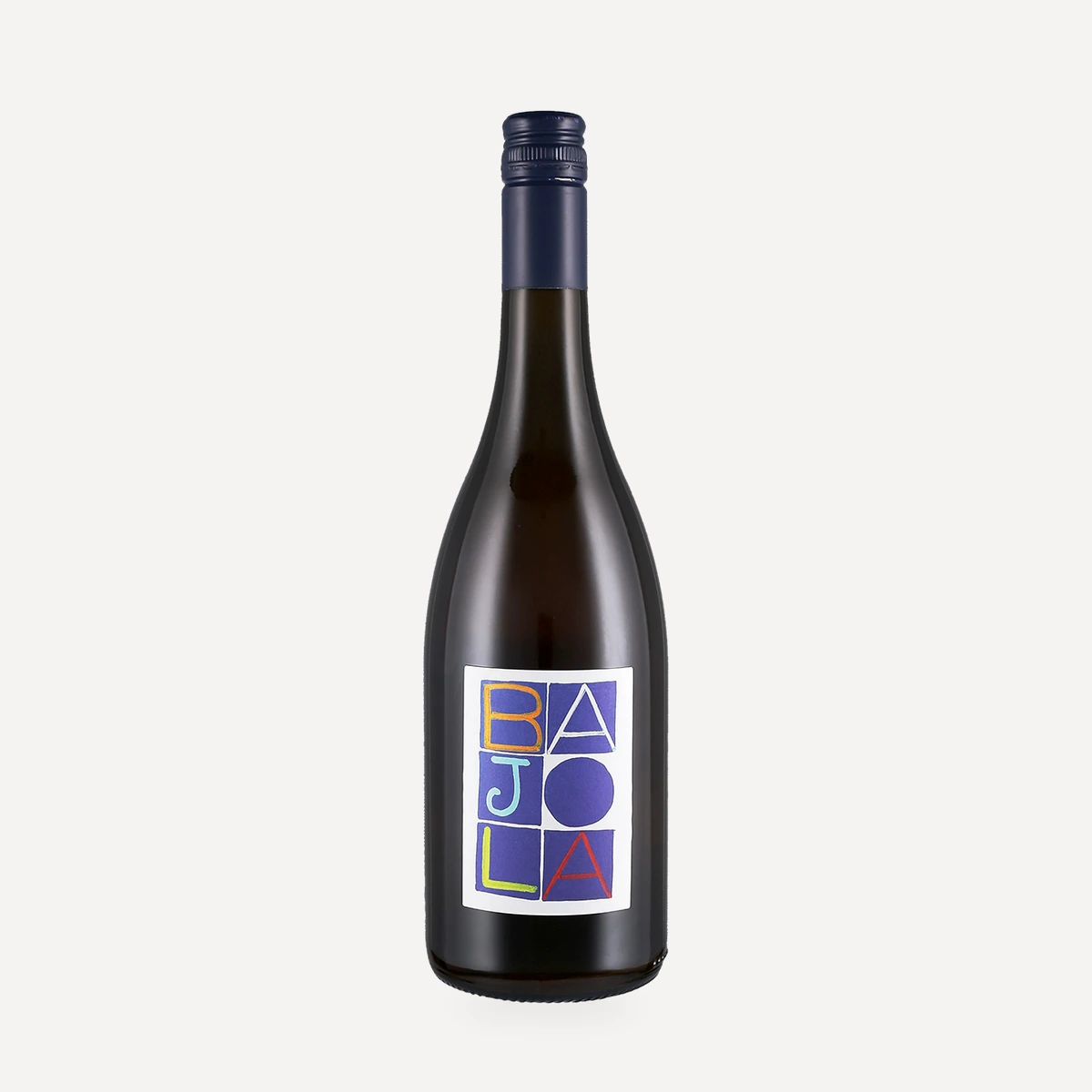
The colourful Bajola label became the basis for an artwork by Ischia artist Manuel Di Chiara. His double, mirrored interpretation evokes the chromatic character of the label and the wine’s relationship with the island’s sea, volcanic landscape, savouriness and warmth.