About this wine
Vineyard and terroir
The Sangiovese comes from the Morselli vineyard at 330 metres above sea level. The clay-soil site was planted in 1980, and its rows run east–west. The vineyard was converted to Guyot training in 2017 and is managed with grassed rows. Planting density is approximately 3,300 vines per hectare.
The certified-organic vineyard yields approximately 1 kg per vine and 60 quintals per hectare. Copper and sulfur treatments vary with the season, averaging five or six applications in a typical year. Fertility is managed with legume green manure and manure. No grapes are purchased from third parties.
Grapes
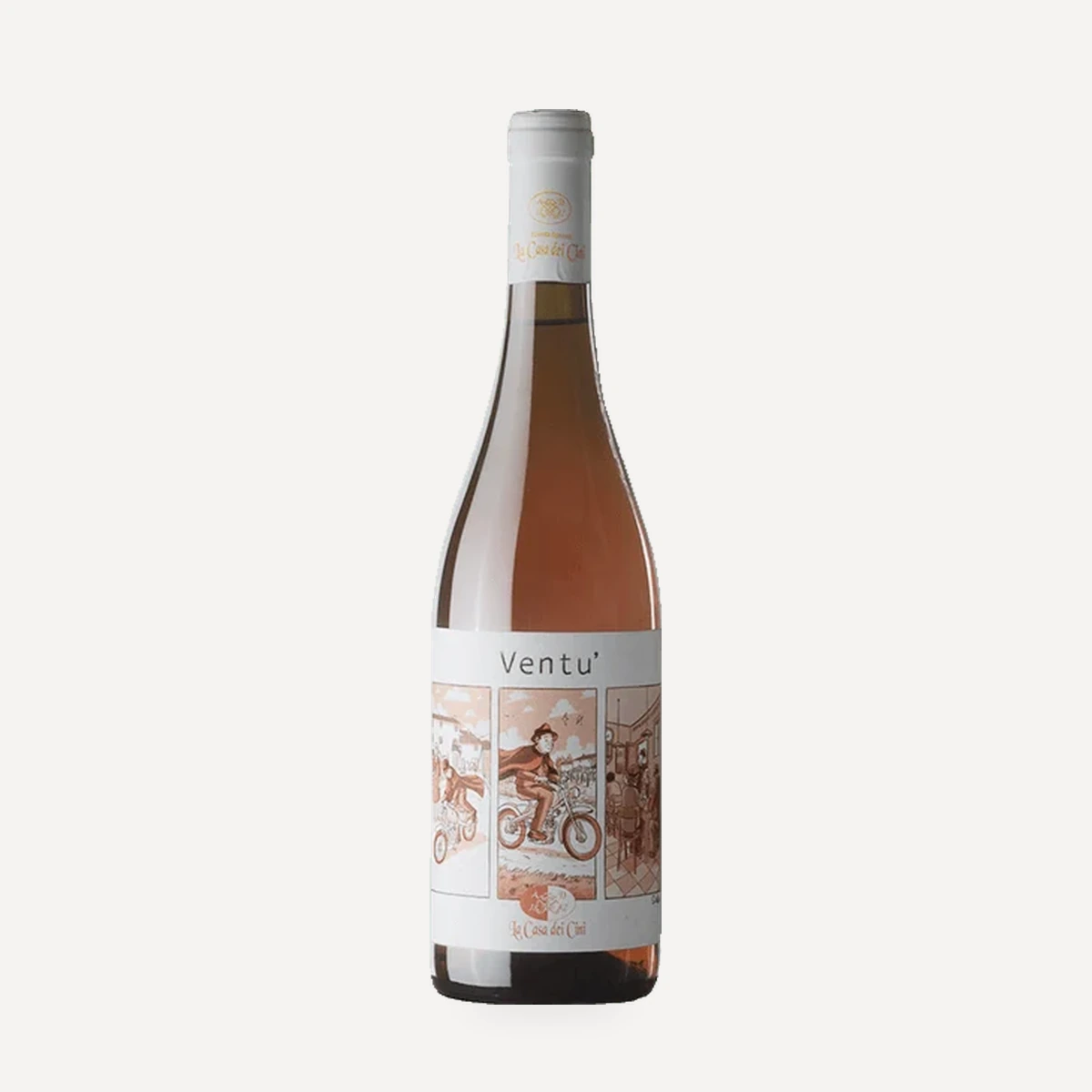
Sangiovese. Ventù was first produced in 2019 as the estate’s first rosé.
Vinification
Harvest generally starts during the last week of August and is carried out manually into boxes. The grapes are destemmed without rollers so that the berries remain whole, then pressed in a horizontal disc press and vinified in steel without maceration or selected yeasts.
Metabisulfite is added at approximately 1 g/hl during each racking and 2 g/hl at bottling. The wine undergoes no stabilization, filtration or clarification. No corrections, concentrated must, rectified concentrated must or concentrator are used, and the wine is not produced by the saignée method. The grape-to-wine yield is approximately 60%.
Ageing
Ventù matures for seven months in steel, without barrel or barrique ageing.
Technical data
The 2022 production comprised 1,200 bottles, with only the first portion bottled. The wine is presented in a Burgundy-shaped bottle closed with a microcellular cork. Pomace is returned to the fields rather than used to produce grappa or other distillates.