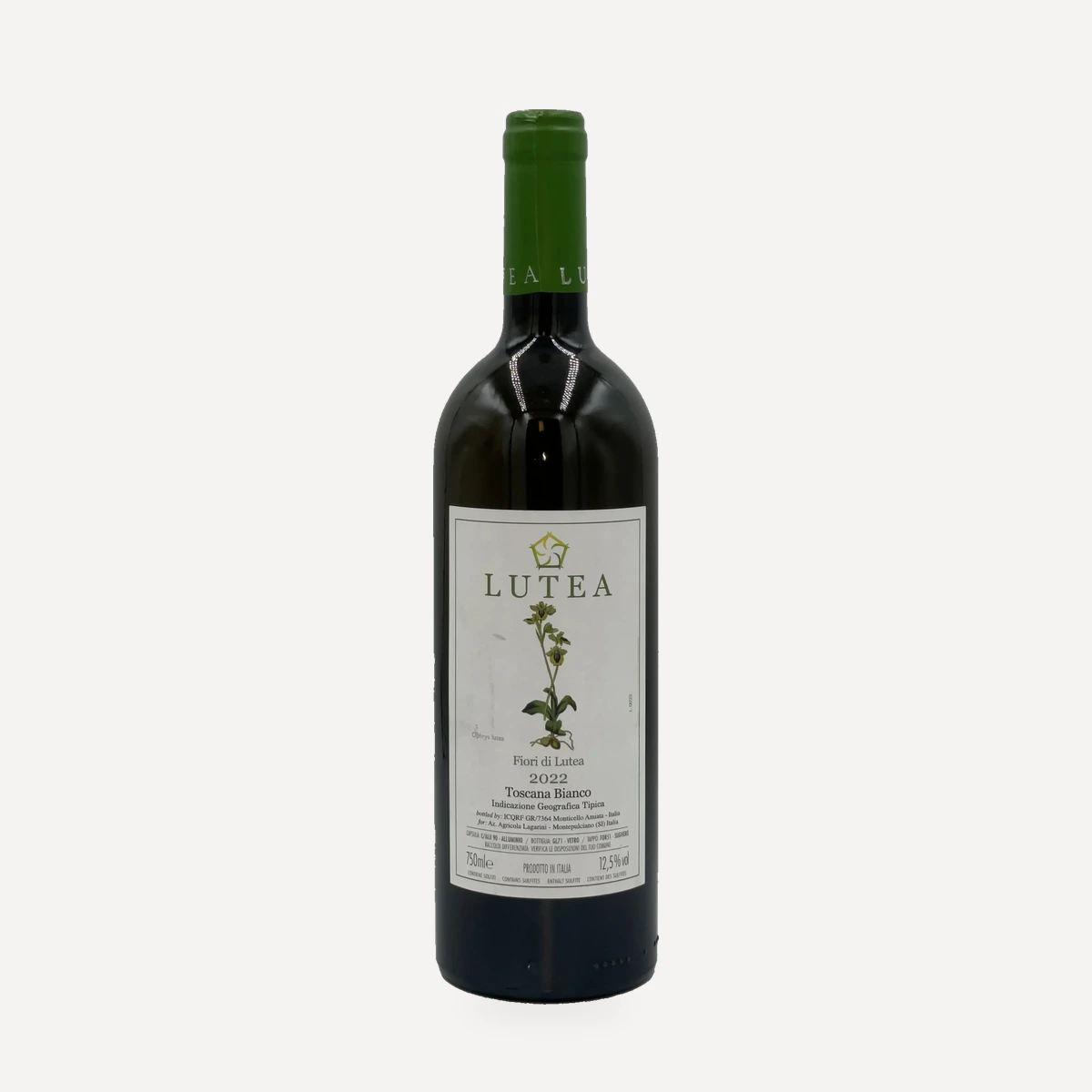
About this wine
Vineyard and terroir
The Maladina vineyard lies at Monticello Amiata in Tuscany, in an isolated mountainous setting surrounded by dense woodland and less than 30 km from the sea. It sits above 500 m and faces north-east. The 1.20 ha vineyard has 10–15-year-old vines trained to a single spur-pruned cordon. Planting density is 7,500 vines/ha, with spacing of 1.80 × 0.70 m. The site is farmed under certified biodynamic methods. Its soils combine heterogeneous clay and sand with a substantial limestone presence.
Grapes
35% Vermentino, 35% Sauvignon Blanc, 20% Petit Manseng and 10% Viognier.
Vinification
Selected bunches are harvested manually into small crates at the end of September. The grapes are destemmed, undergo three hours of cold skin maceration and are pressed gently. Fermentation with indigenous yeasts takes place in stainless steel for 15–20 days at 16°C. The stainless-steel portion does not undergo malolactic fermentation, while the tonneaux portion does. The wine is bottled in April without filtration.
Ageing
The wine remains on its lees for six months in stainless steel, with a portion matured in tonneaux, followed by 2–4 months in bottle.
Technical data
The yield is 70 q/ha and 42 hl/ha. Production totals 900 bottles. The first vintage was 2022.
Tasting profile
Straw yellow with green reflections. Boxwood and lime lead the bouquet, followed by elderflower, orange blossom, white peach, citrus and linden, over a subtle woody nuance. The palate echoes the aromatic complexity, adding a savory character, flinty mineral tones and orange peel. The finish is citrus-driven and persistent.
Serving and pairing
Pair with fish-based first courses, fried seafood, fish and vegetable soups, or soft, rich cheeses.
Label / history
The wine originated through a collaboration intended to express the character and delicacy of the Monte Amiata terroir.