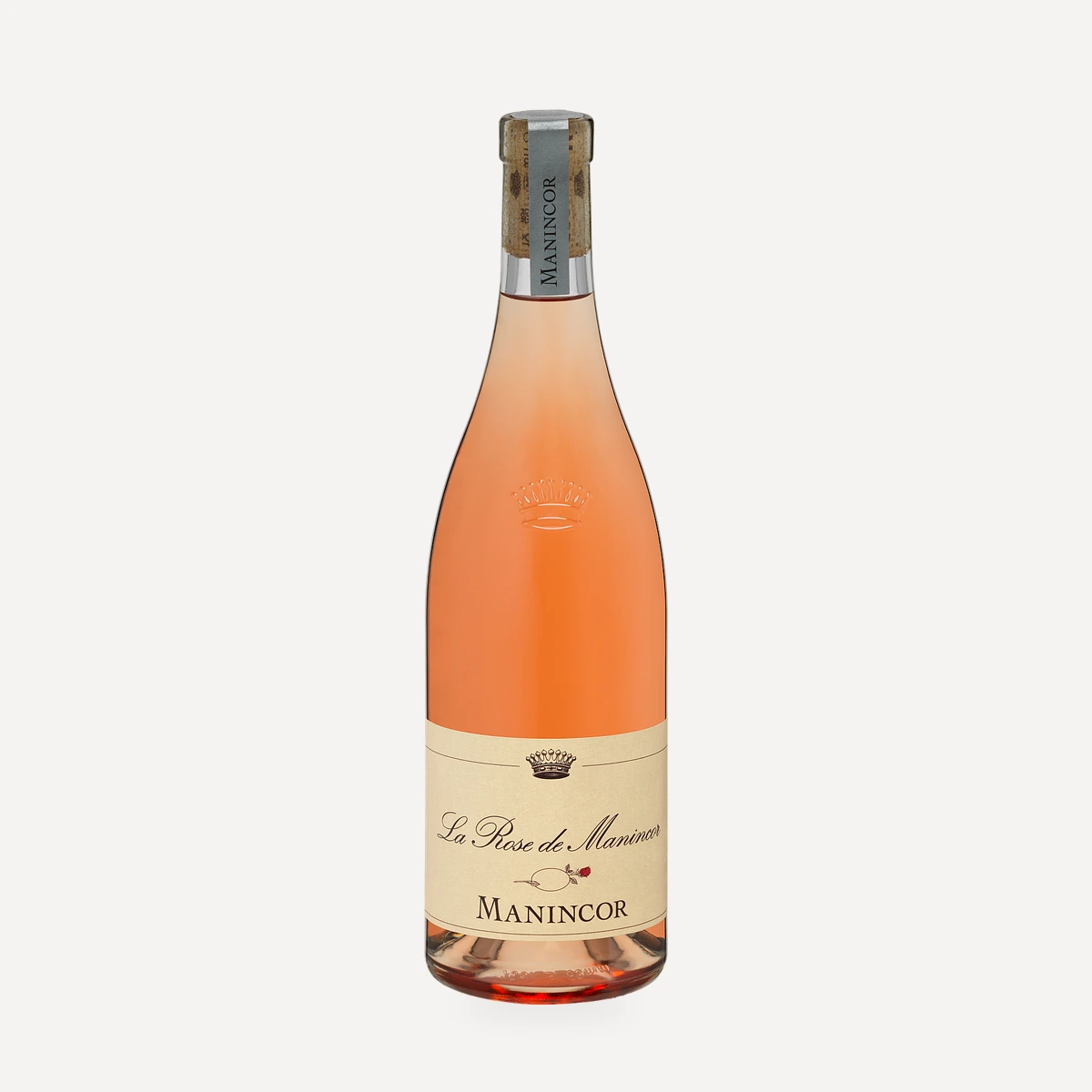
About this wine
Vineyard and terroir
Fruit comes from selected red-wine parcels at Manincor, Seehof, Panholzerhof and Mazzon, situated between 250 and 500 m. The clay-rich soils contain limestone gravel and other glacial deposits.
Grapes
Blend proportions and character vary by vintage. Latest published vintage (2025): 30% Cabernet Franc, 25% Merlot, 20% Pinot Noir, 13% Schiava, 4% Tempranillo, 4% Syrah and 4% Petit Verdot.
Vinification
One portion of the must receives brief skin contact before being drawn off by saignée; the remainder is obtained by directly pressing whole grapes. Fermentation takes place partly in wooden barrels and partly in stainless-steel tanks, with indigenous yeasts used for a portion of the wine.
Ageing
Approximately five months on the fine lees develop the wine’s aromas, structure, complexity and finesse.
Technical data
The 2025 wine has 13% alcohol, 5.3 g/l total acidity after malolactic fermentation and 0.9 g/l residual sugar. Yield was approximately 50 hl/ha. Production comprised 44,340 standard bottles and 387 magnums. The wine is biodynamic, Respekt-BIODYN certified and vegan.
Tasting profile
Opulent and succulent in style, with fine tannins, a long palate and a mineral, fruit-driven finish.
Serving and pairing
Serve at 8–10 °C. Best enjoyed from early summer 2025 through the end of 2028. Pair with spicy appetisers, fried or smoked fish, and light or grilled meats.
Vintage notes
The 2025 season began with early budbreak and a warm spring; flowering took place by mid-May. Sunny conditions and moderate rainfall in July and August supported healthy grapes and promising ripening. September rain increased the challenge, but precise vineyard work and careful hand harvesting delivered grapes with freshness, balance and expression. Harvest for La Rose de Manincor ran from mid-September to early October.