About this wine
Vineyard and terroir
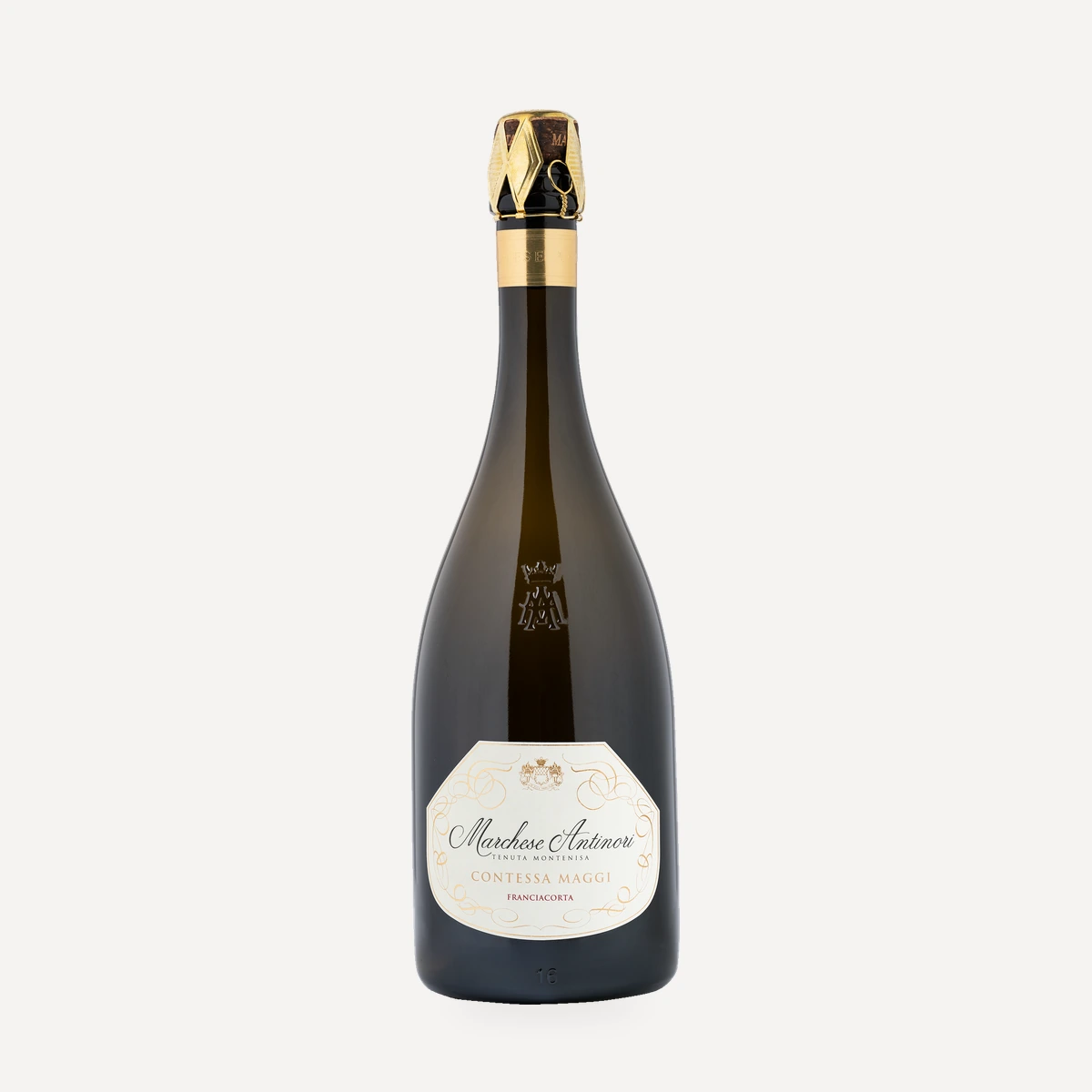
The fruit comes from Tenuta Montenisa around Calino, near Lake Iseo in the heart of Franciacorta. Vineyards around the Maggi family’s villa have anchored Marchese Antinori Franciacorta production since 1999. Contessa Maggi is one of the estate’s vintage-dated wines and is made only in exceptional years.
Grapes
Blend proportions vary by vintage. The latest published vintage, 2020, combines Chardonnay and Pinot Nero.
Vinification
The separate musts fermented in temperature-controlled stainless-steel vats and were carefully chilled to retain freshness and varietal aromas. Following primary fermentation, a small proportion was moved to barriques. The separately matured Chardonnay and Pinot Nero lots were subsequently blended and transferred to stainless steel to complete their maturation. The wine was bottled in May 2021 and underwent secondary alcoholic fermentation in bottle.
Ageing
The barrique component matured for six months in second-fill French oak. Other lots aged separately, including a lengthy period on the lees. After bottling, the finished blend spent more than 30 months on its lees. Disgorgement and dosage took place in November 2024, resulting in a Brut wine.
Tasting profile
The wine is intense straw yellow with bright golden highlights. Its creamy mousse carries a refined, persistent perlage. Chalk and flint meet acacia blossom and apricot on the nose, complemented by delicate oak nuances. The palate is harmonious and structured, with freshness that supports its ageing capacity. A fragrant, savoury finish completes the profile.
Vintage notes
Budbreak occurred normally in the first half of April amid sunny, dry conditions, supporting even growth, flowering and fruit set. Rainfall remained very limited. June was the coolest of the preceding five years, with thunderstorms during its first 20 days lowering average temperatures. Dry, breezy weather followed, and marked day-to-night temperature changes supported ripening and aromatic development. Harvest extended from 17 August through 3 September.