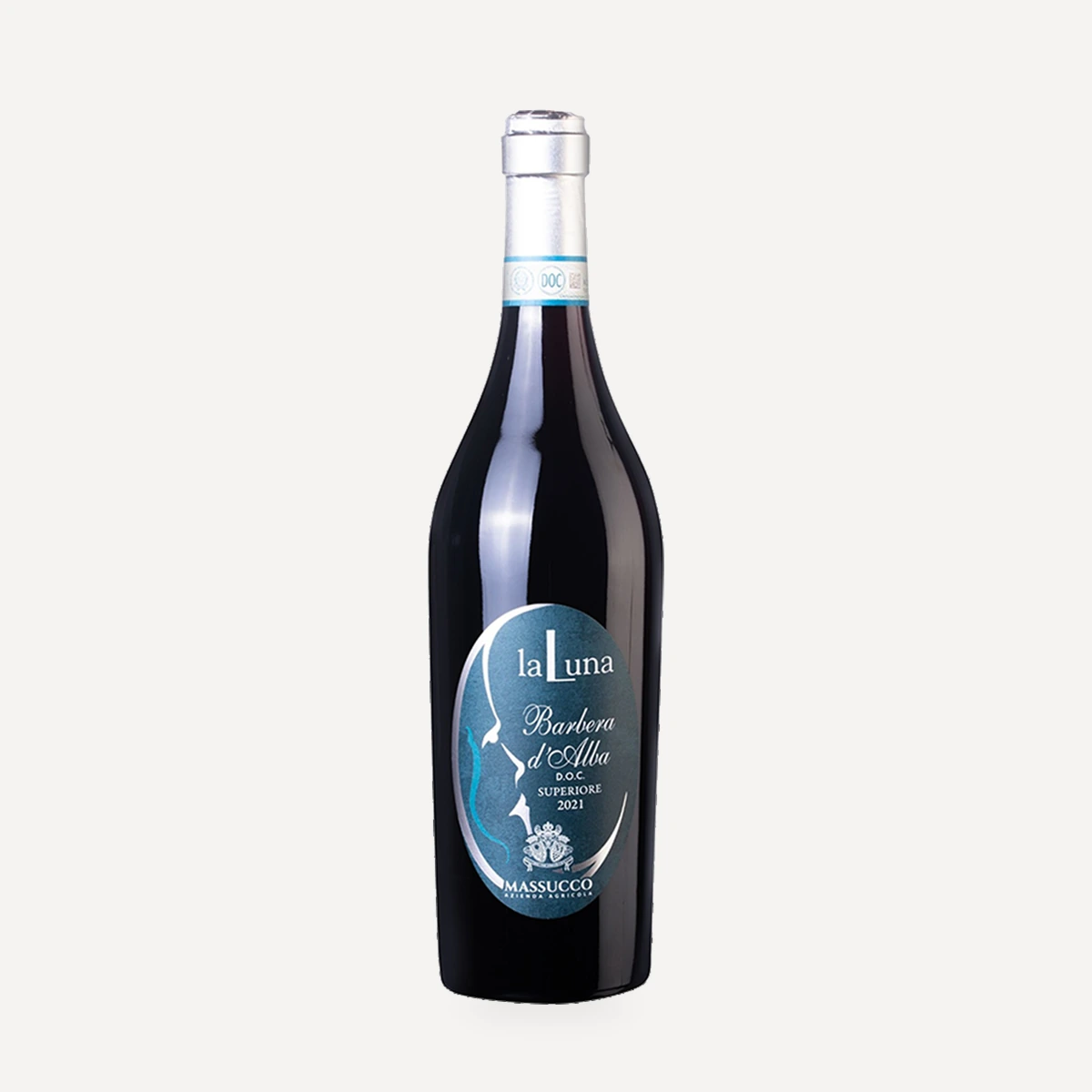
About this wine
Vineyard and terroir
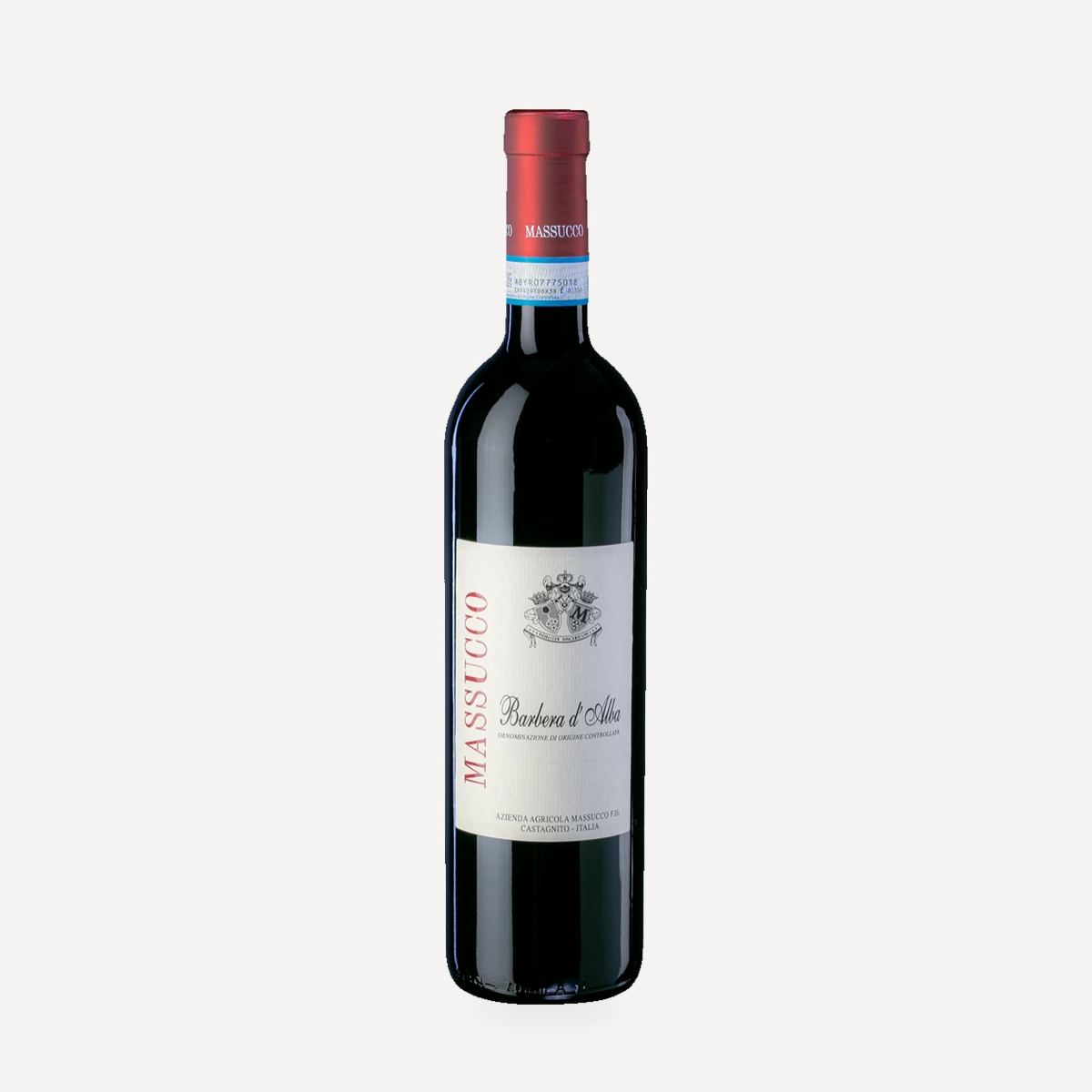
The Barbera comes from a vineyard at Castagnito. The vines are trained on vertical trellises and Guyot pruned. The wine page describes calcareous clay marls with sandy layers and a yield of 70 q/ha. The technical sheet instead gives clayey soil with sandy marls and a yield of 90 q/ha, with crop thinning for quality.
Grapes
100% Barbera.
Vinification
Harvest takes place in two stages. One portion is picked and traditionally vinified in October; the remainder stays on the same vines for another 30–40 days to become overripe. The two components are then assembled, combining different expressions of ripeness from one vineyard. The technical sheet gives a different process: manual harvesting, crushing and destemming, soft pressing, temperature-controlled fermentation in horizontal vats and bâtonnage in steel.
Ageing
The characteristics panel identifies a 3,000 L French-oak vessel, while the production-method section describes six months in oak barriques. The technical sheet instead specifies steel-tank ageing.
Technical data
Alcohol: 14% vol. The palate has perceptible residual sugar, though no numerical measurement is provided.
Tasting profile
An impenetrable, intense ruby red. The concentrated bouquet presents cherry, small woodland fruits, pepper, dried or withered red fruit and dried rose. Oak, nutmeg and cinnamon also appear in the technical-sheet description. Full-bodied and harmonious, with a pleasant acidic line and a sweet finish; another description presents the palate as dry, rounded and smooth.
Serving and pairing
Serve at 18–20°C. Its residual sweetness and acidity allow it to accompany a complete meal, particularly cheeses, meat-based pasta, substantial or spiced main courses and roasted beef.