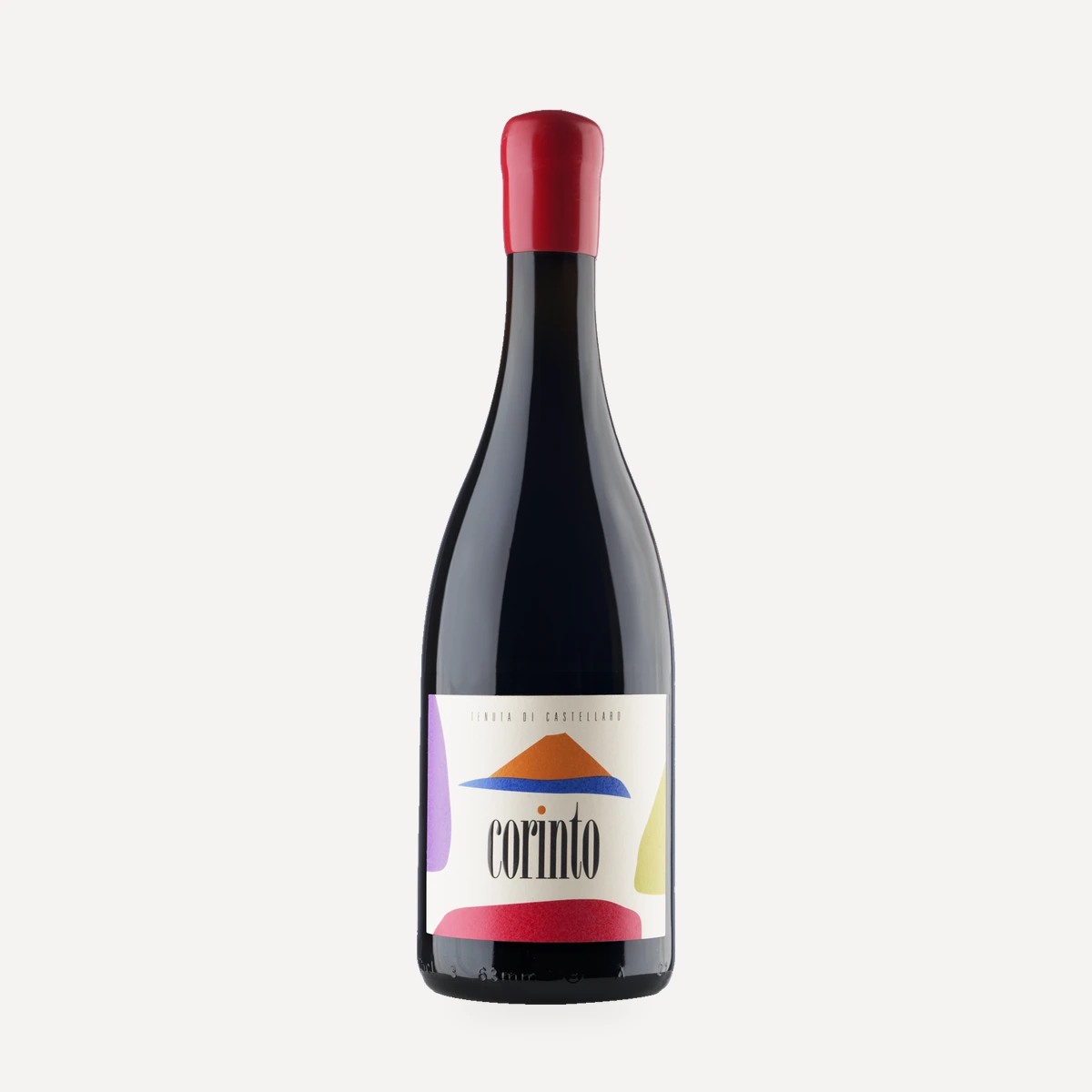
About this wine
Vineyard and terroir
Corinto is produced on Lipari in the Aeolian Islands and is associated with some of the archipelago's oldest vines. Vineyards stand at 350 metres above sea level on deep, fertile volcanic sand rich in microelements. The climate is warm and Mediterranean, windy and subject to pronounced diurnal temperature changes. Bush-trained vines are planted at 7,000 per hectare and yield 60 quintals per hectare.
Grapes
100% Corinto Nero. The variety is presented as an ancient grape of Greek origin, brought from the lands of the eponymous polis to Sicily during Hellenic colonisation. The first bottled vintage was 2013.
Vinification
The grapes are selected during manual harvesting and destemmed. Vinification takes place in French oak vessels, with about ten days of maceration and periodic punch-downs. After devatting, the wine is transferred to 500-litre barrels, where malolactic fermentation occurs.
Ageing
The wine matures in 500-litre barrels for at least one year before bottling, followed by at least 12 months in bottle. Its estimated ageing capacity is a minimum of ten years.
Technical data
IGT Terre Siciliane Rosso. Alcohol: 13%. The product page lists a 750 ml bottle; the estate shop also offers magnum and Jéroboam formats.
Tasting profile
Deep red with violet reflections. Ripe red fruit is layered with spice, green pepper and liquorice. The palate is harmonious and savoury, with restrained, soft tannins and a notably long, elegant finish.
Label / history
The wine is framed as an eno-archaeological recovery of Corinto Nero and a pure expression of a rare variety shaped by wind, volcanic soil and traditional bush-vine cultivation.