About this wine
Vineyard and terroir
The fruit comes from Mornico Losana and Rovescala in Lombardy and Sant’Agata Fossili in Piedmont’s Colli Tortonesi. The south-facing vineyards lie at 240–380 m on clay and marl soils, with planting densities ranging from 6,000 to 10,000 vines per hectare. Organic and biodynamic practices are combined with the “Vigneti & Natura” project.
Grapes
Timorasso and indigenous grape varieties, hand-picked into small crates at full ripeness.
Vinification
Alcoholic fermentation proceeds slowly and spontaneously, relying exclusively on indigenous yeasts carried by the grapes. The wine undergoes an exceptionally long period of skin contact in stainless-steel tanks—approximately two years. It is neither clarified nor filtered and is made without additives or added sulphites; only naturally occurring sulphites from fermentation remain.
Ageing
After skin maceration, the wine is further matured on its lees in stainless steel.
Technical data
IGT. Organic and estate-produced. Still, skin-macerated white wine (orange wine). Alcohol: 12.5%.
Tasting profile
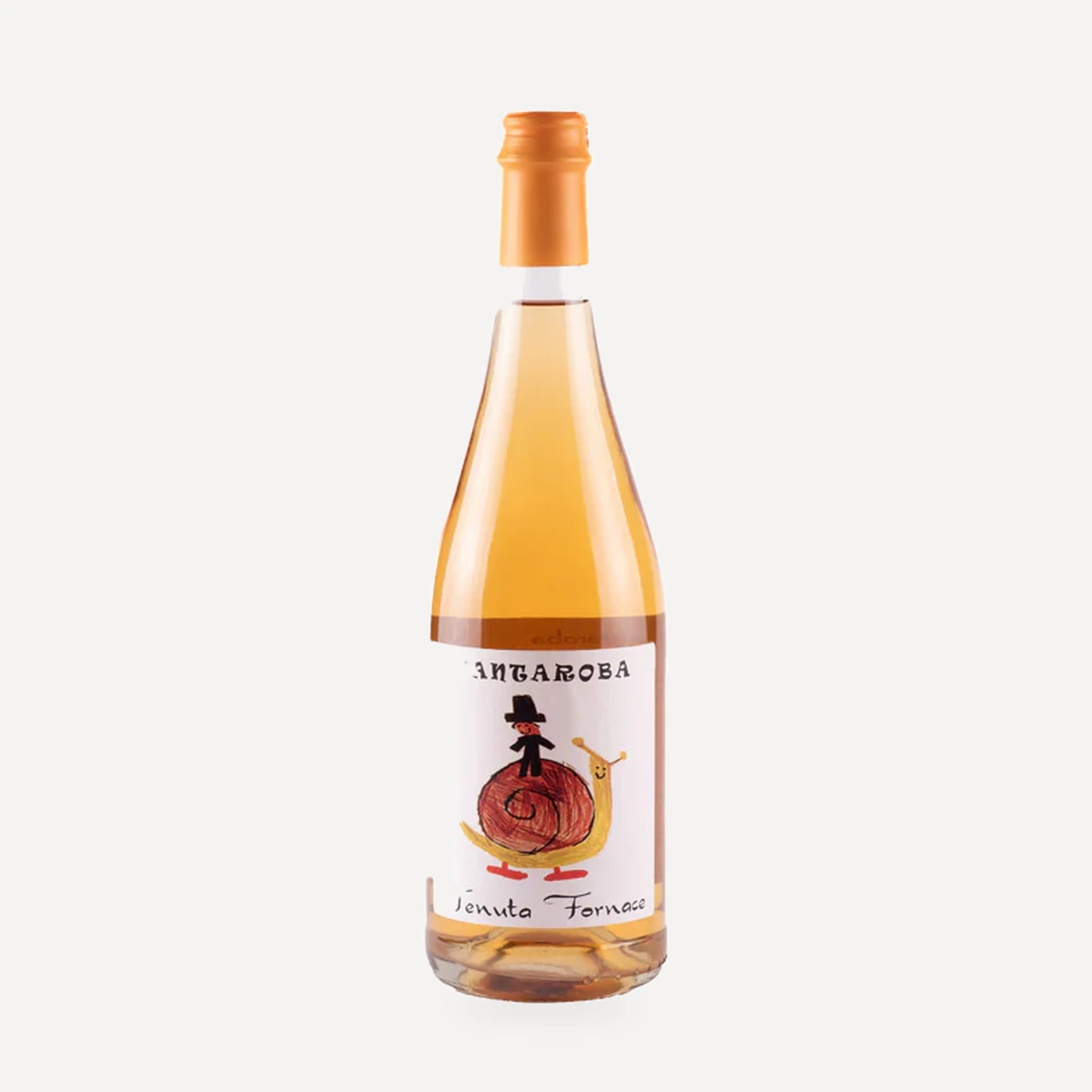
Yellow with golden reflections. The bouquet is intense and complex. The palate is dry and concentrated, with pronounced, persistent freshness and a multifaceted flavour profile.
Serving and pairing
Serve at 12–14°C with risotto, cheeses or white meats.
Label / history
The name Tantaroba refers to the wine’s intense aromas and many-layered flavours following prolonged skin contact. The label reproduces a drawing by Alice, the producer’s daughter, showing a large snail in red shoes. Its slow journey mirrors the long, gradual fermentation and maceration that shape the wine.