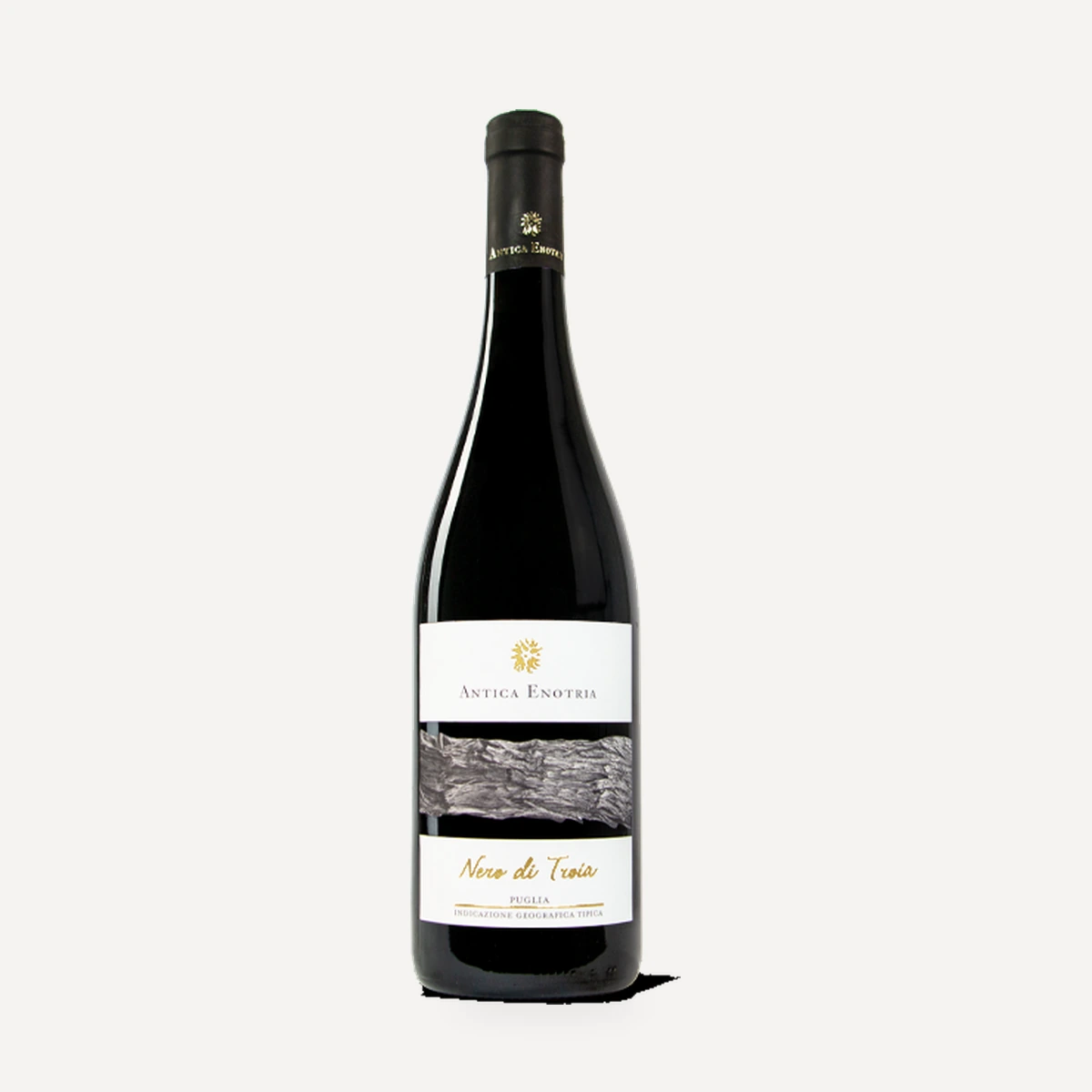
Questo vino
Vineyard and terroir
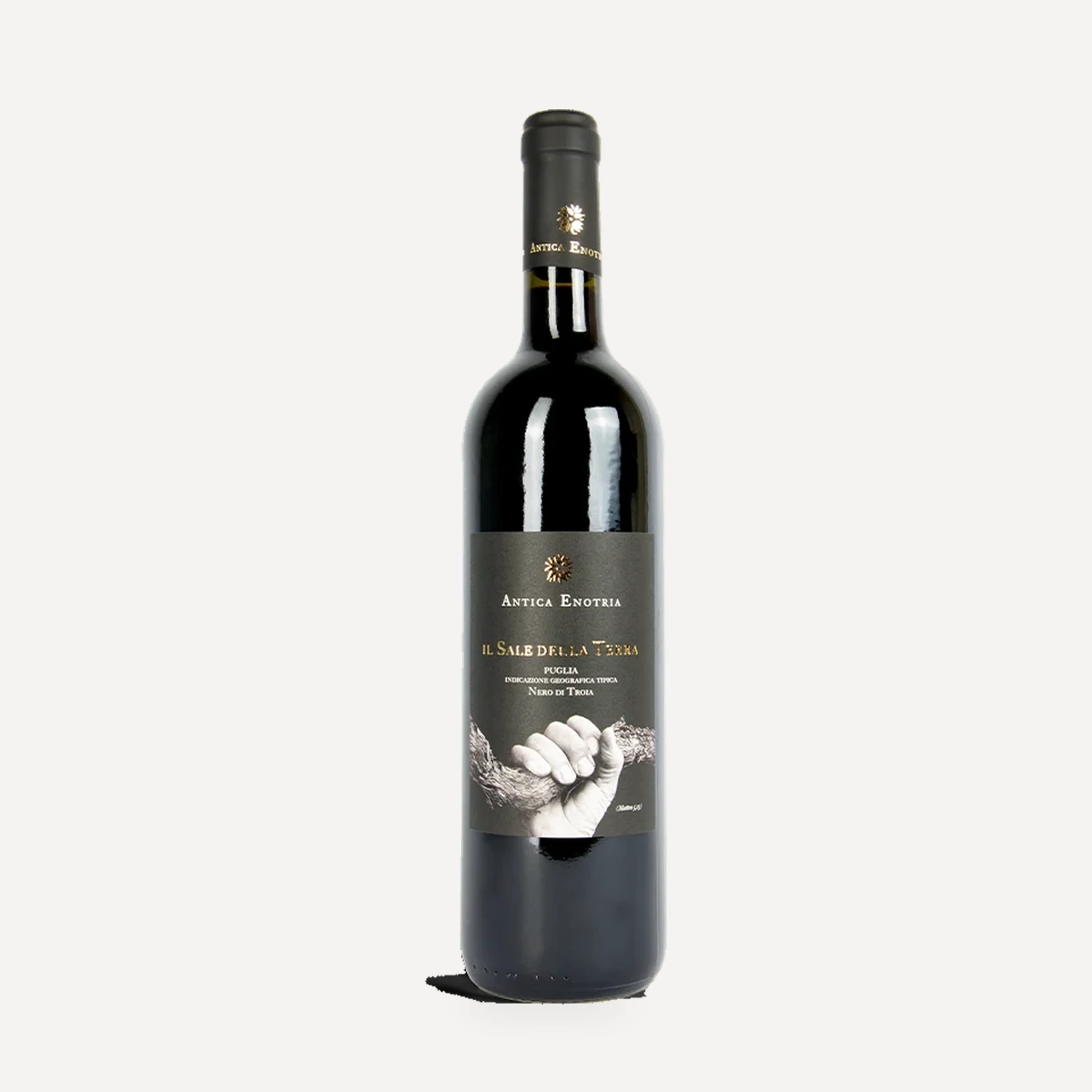
An organically produced Nero di Troia IGT Puglia from Guyot-trained vines yielding 70 quintals per hectare. The wine is presented as a characteristic expression of its territory. Nero di Troia is closely associated with Daunia, encompassing the province of Foggia and the northern part of the province of Bari.
Grapes
100% Nero di Troia.
Vinification
The selected technical sheet places harvest in the last week of October. After destemming and crushing, the must macerates in stainless-steel tanks for 10–12 days and ferments at a controlled temperature of 25°C. Pump-overs and délestage regulate the extraction of aromatic and colouring compounds.
Ageing
Twelve months in stainless-steel tanks followed by 12 months in large 30 hl oak casks.
Technical data
Alcohol: 13.5% vol. Available formats: 750 ml and 1.5 L.
Tasting profile
Deep ruby red with violet nuances. The intense, elegant bouquet combines ripe fruit, spices and light toasted notes. The palate is soft, with measured freshness and tannic grip. The overall profile is described as long-lived, elegant and persistent.
Serving and pairing
Suitable for intensely flavoured food: first courses with truffle or meat-based red sauces, spiced roast pork, lamb, mature cheeses with lampascioni, and roast hare.
Label / history
Traditions concerning Nero di Troia associate it either with Diomedes, the hero of the Trojan War, or with Cruja on the Albanian coast, whose vernacular name was Troia. Historically valued for its substantial tannin content, the variety was often used in blends before renewed attention focused on its elegance and delicacy.