Questo vino
Vineyard and terroir
The production area surrounds the medieval village of Vigoleno. Morning humidity, sunlight and light breezes from Val Stirone and Val Ongina create conditions that encourage noble rot, particularly on Santa Maria grapes. The variety begins ripening in August, and Botrytis can already be present in a latent form before the grapes enter the drying room.
The Santa Maria vineyard covers 0.8 ha, with vines approximately 50 years old, a yield of 50 q/ha and production of 15 hl/ha. The 0.5 ha Melara vineyard is approximately 40 years old, also yielding 50 q/ha, with production of 20 hl/ha.
Grapes
Blend proportions vary by vintage. The latest detailed harvest, 2011, comprised 60% Santa Maria and 40% Melara. Both are indigenous, non-aromatic white varieties cultivated around Vigoleno. Santa Maria has a thick green-yellow skin and dehydrates less during drying; Melara generally dries first, loses more weight and develops pronounced honeyed aromas.
Vinification
Harvest normally takes place around the end of August. Bunches are carefully selected, the harvesting tools and baskets are sanitized, and the grapes are transported in no more than two layers to limit crushing, premature oxidation and contamination.
The bunches dry for an average of three months on purpose-built racks in a shaded, ventilated room. During this period they lose approximately 25–50% of their weight, while Botrytis cinerea develops under suitable conditions. Pressing traditionally takes place in December during the week before Christmas. The bunches undergo two or three pressings; between them, the pomace is manually reimmersed and mixed in its own must-wine.
After the final pressing, the must settles in covered oak vats for 20–30 days. Sediment falls to the bottom while a protective surface film develops, marking the first fermentation phase. The wine is then transferred to partially filled oak caratelli, where a second fermentation takes place through a self-selected yeast flora. Fermentation progresses seasonally: winter cold slows it, spring warmth restarts it, summer carbon dioxide temporarily halts it, and activity resumes in autumn. No added sulfites are used.
Ageing
Ageing lasts at least five years in 100–200 L oak caratelli that are themselves 10–20 years old. Oxygen in the partially filled barrels promotes the characteristic oxidative bouquet. Bottling is considered from the fifth year onward, normally in November or December, using the traditional Renana bottle.
Technical data
For the latest detailed harvest, picked on 28–30 August 2011 and pressed on 18–20 December, settling lasted 18 days and ageing continued for eight seasons. Bottling took place on 1 January 2019. The lot comprised 137 L and yielded 364 bottles of 0.375 L. Developed alcohol was 10.62%, potential total alcohol 29.12%, total acidity 7.1 g/L and reducing sugars 308.40 g/L.
Tasting profile
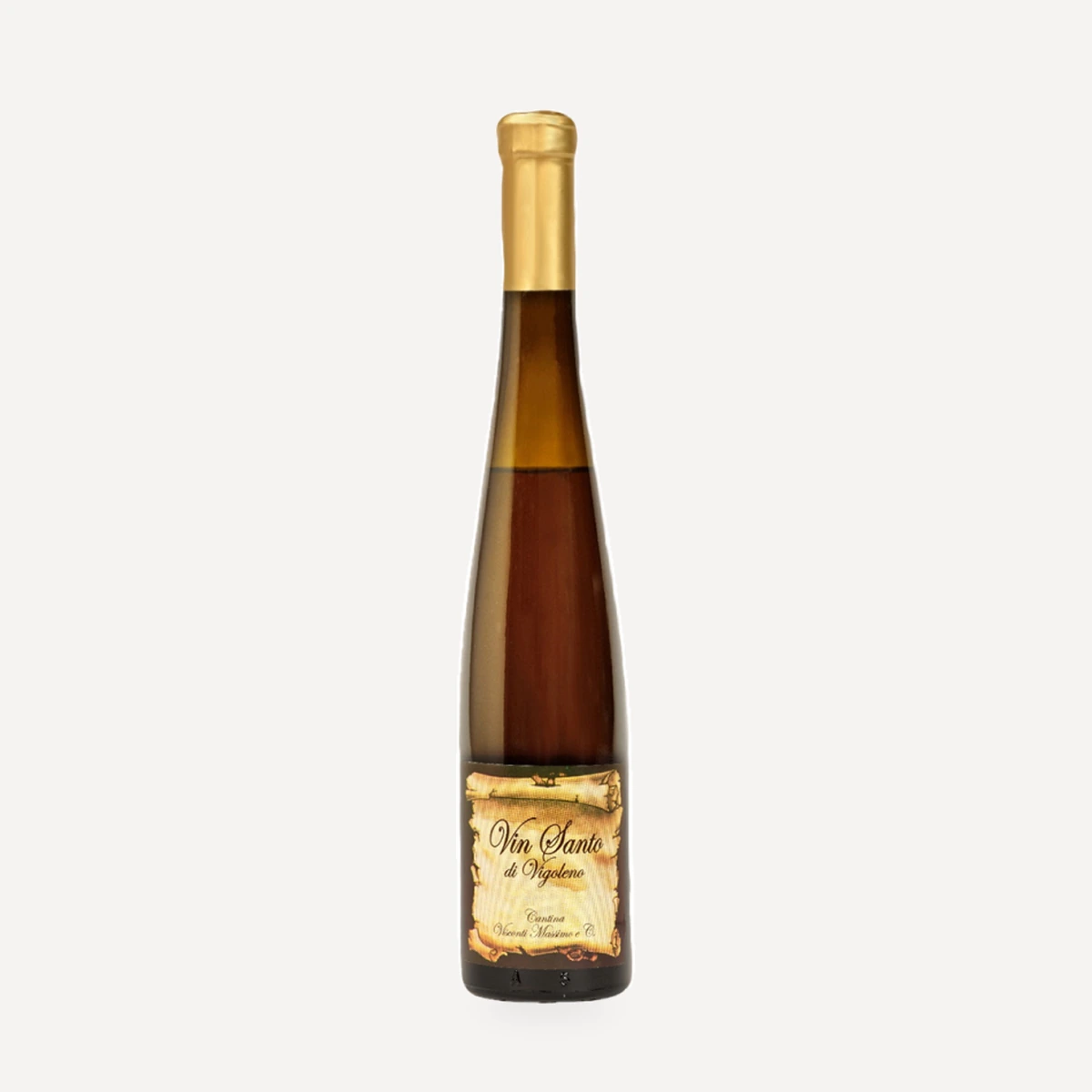
A dense, amber-colored passito and meditation wine with a powerful, noble profile and a lingering character associated with its historical religious use. Oxidative ageing builds complexity, while Melara contributes honeyed notes and Santa Maria brings an intense, sweet, alcoholic and savory expression. The aromas persist over time, even after the bottle has been opened.
Vintage notes
The 2011 harvest followed a relatively dry, mild winter. Adequate rain in June and July supported vegetative growth and advanced the vines' development, while the dry warmth of August and early September maintained growth. Later ventilation and moderate temperatures favored drying and the regular development of noble rot on Santa Maria.
The detailed releases differ substantially by harvest. The 2009 lot included Ortrugo and aged six years, while the 2008 lot aged eight years. Production, acidity and reducing sugar also varied between releases.
Label / history
The wine's history is linked to the clergy of medieval Vigoleno. Friars developed a dense, durable amber wine for important religious ceremonies, giving rise to the name Vin Santo. Grapes grown by local farmers were donated to the Church, then dried and aged in the castle cellars. Written evidence includes a 1539 castle inventory referring to a prized local wine and an 1826 account recording the receipt of grapes intended for Vin Santo. A dedicated production code was established in 1992, and only six producers in the Vigoleno area continue the tradition.