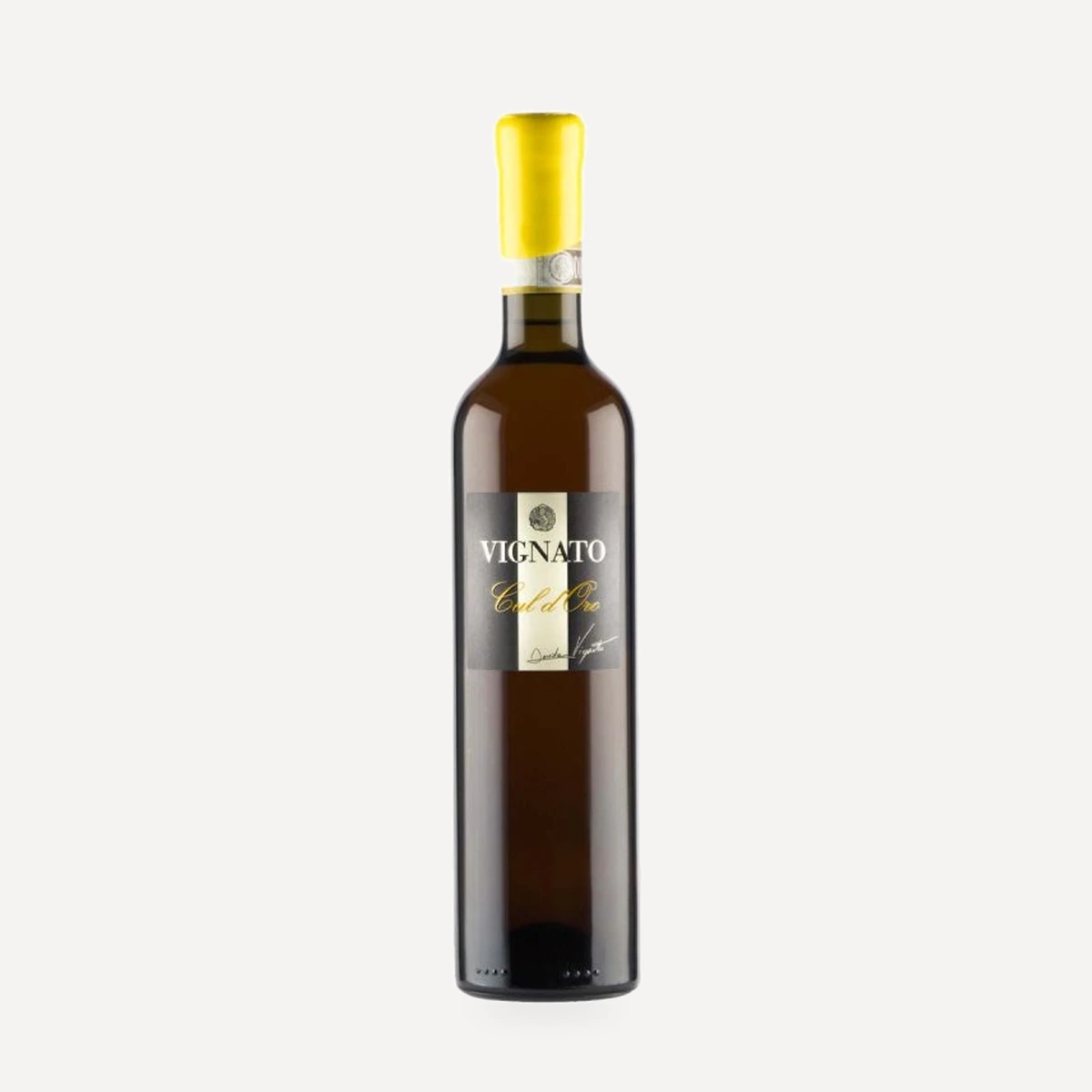
Questo vino
Vineyard and terroir
The Garganega comes from the Cul d’Oro vineyard in Faldeo, within Gambellara. The site lies at an average elevation of 250 metres on volcanic soil. The vines average 35 years of age and are trained on the Vicentine pergola. The vineyard name refers both to the shape of the land and to the golden colour of its ripe grapes.
Grapes
100% Garganega. The fruit is harvested and selected by hand, with only the best bunches retained.
Vinification
The bunches dry on traditional suspended picai until February or March. Fermentation then takes place at controlled temperature under reductive conditions.
Ageing
The wine matures on its lees in used barrels for five months before bottling.
Technical data
The 2011 technical sheet records 15.60% alcohol, total acidity of 6.3 g/L and residual sugar of 154 g/L. Total sulphur dioxide is 30 mg/L and free sulphur dioxide is 6 mg/L.
Tasting profile
Brilliant, luminous golden yellow. The broad bouquet offers refined ripe-fruit aromas. The palate is sweet and elegant, intense and persistent, while retaining good freshness. Its soft, balanced texture leads to a lightly almond-toned finish.
Serving and pairing
Serve at 12–14°C. It can accompany dessert or be enjoyed as a contemplative sipping wine. Recommended pairings include dry almond-paste pastries, foie gras and blue-veined cheeses.
Label / history
Cul d’Oro takes its name from the vineyard site, a reference to the shape of the terrain and the golden colour of the ripe fruit.