Questo vino
Vineyard and terroir
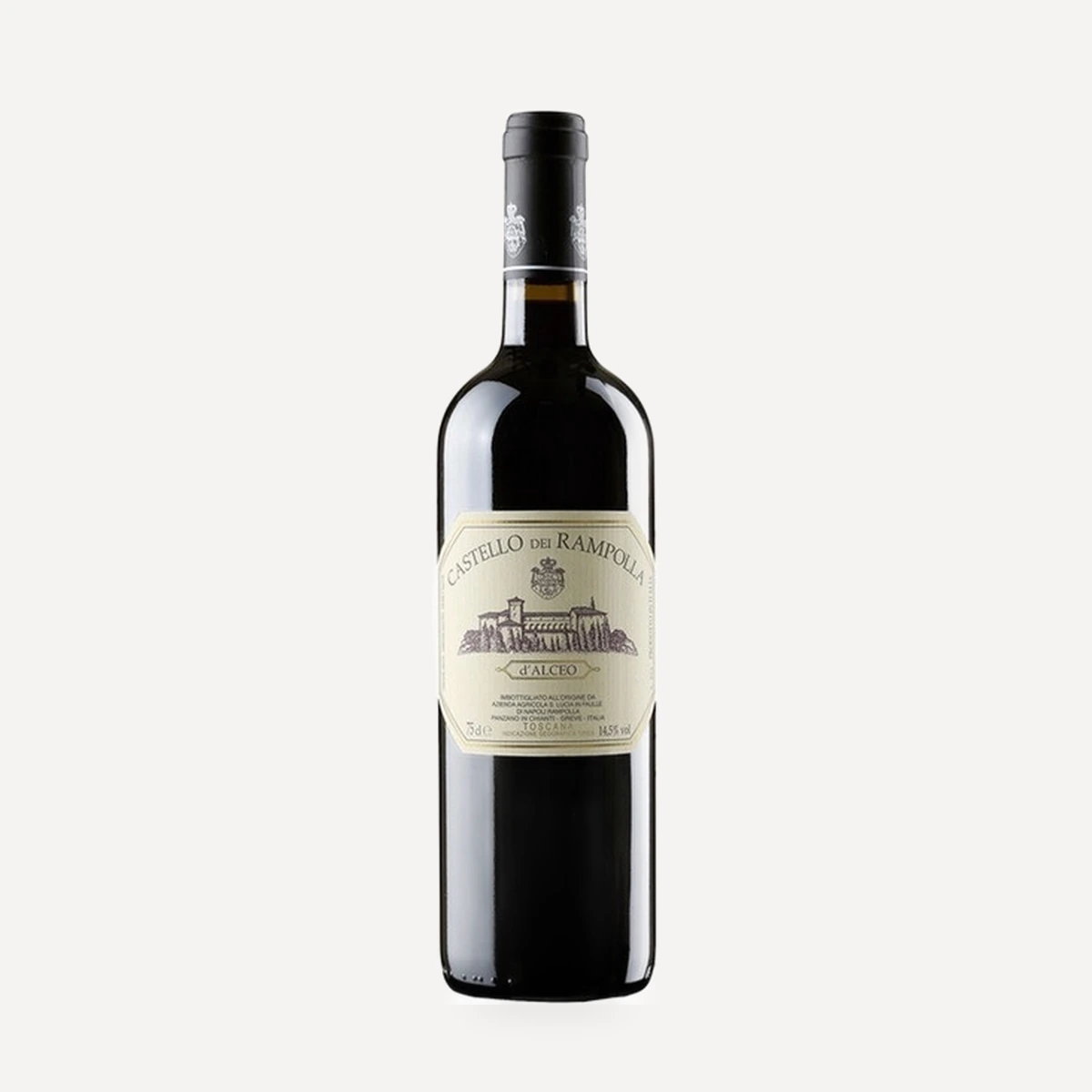
D’Alceo expresses the character of the vineyard planted by Alceo. Its identity rests on the relationship between the site, its exposure and the two varieties grown there.
Grapes
Cabernet Sauvignon and Petit Verdot. The proportions are not specified.
Vinification
The wine spends three months in concrete tanks. For the 2018 vintage, the published tasting note specifically describes fermentation in concrete.
Ageing
Maturation lasts 12–15 months in un-toasted or medium-toasted tonneaux. The Italian version also identifies barriques among the ageing vessels. Bottle maturation continues for 18–24 months. The 2018 vintage was aged for 12 months in a combination of 500-litre tonneaux and barriques.
Technical data
Average production ranges from 6,000 to 12,000 bottles.
Tasting profile
D’Alceo is intense, warm, refined and elegant, with ripe red fruit integrated with delicate cigar and tobacco nuances. It combines considerable concentration with an absence of heaviness.
Vintage notes
The 2006 remained notably vibrant, driven by mid-palate acidity and chalky tannins. Its aromatic profile combined earth, dark fruit and wild plum, later developing spicy barbecue-smoke nuances.
The 2010 joined concentration with freshness and balance. Dark fruit, spice, forest floor and crushed-mineral notes shaped the bouquet, while fine tannins gave the palate a focused, vertical profile.
The 2013 was described as seamless and voluptuous, reflecting the character of Panzano’s terraced vineyards. The 2017 combined lavender, rose petal, kirsch, mint and violet with dark blue and purple berry fruit; its contours were soft, its tannins silky, and it retained substantial ageing potential. The 2018 brought together Cabernet Sauvignon and Petit Verdot in a layered profile of blue and purple fruit, sage, mint, lavender and chocolate, opening further with air.
Label / history
The wine takes its identity from the vineyard planted by Alceo. The score archive begins with the 1996 vintage under the name Vigna D’Alceo; from 1999 onward it appears as D’Alceo.