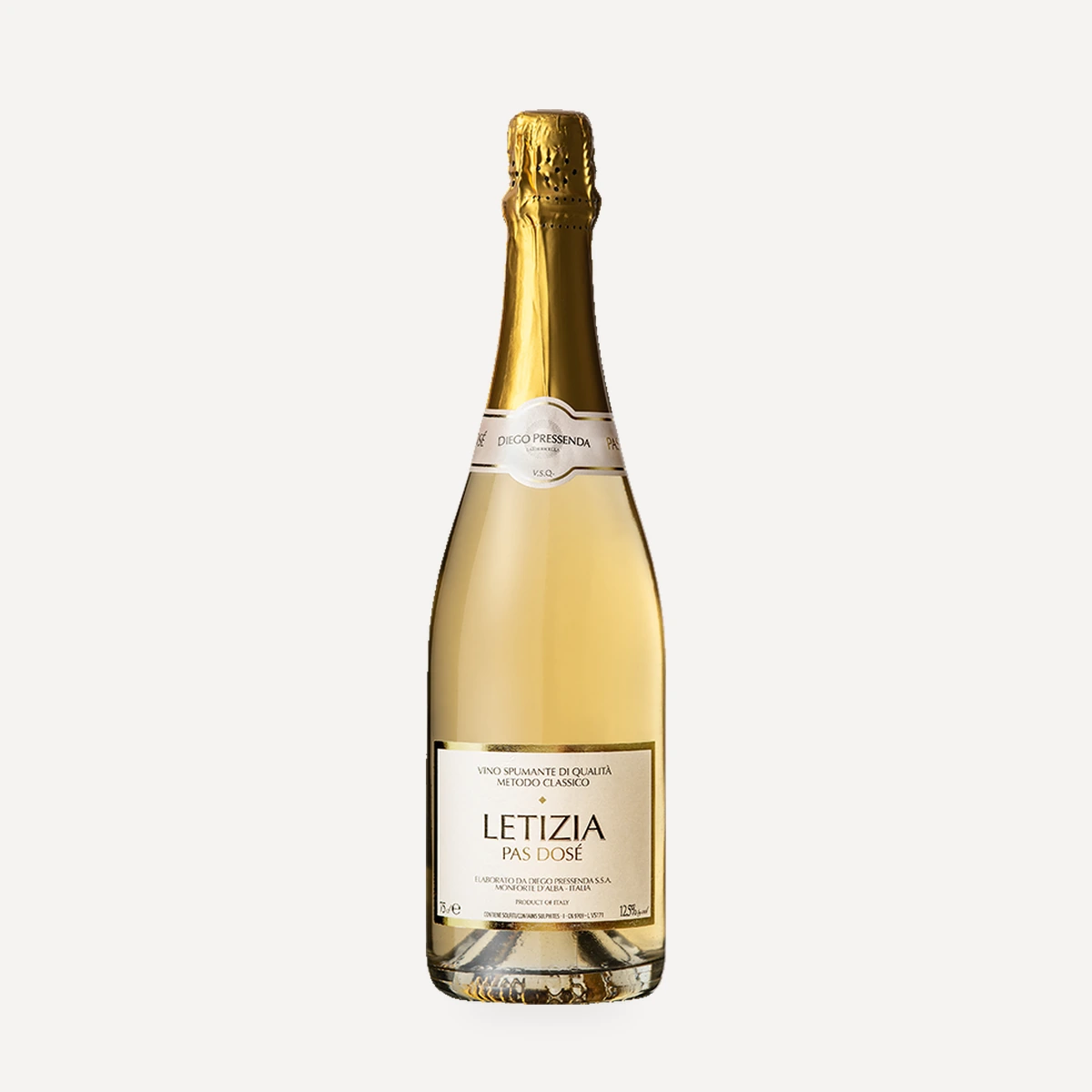
Questo vino
Vineyard and terroir
The fruit comes from several parcels on the cooler lower part of the hill in Monforte d'Alba. This position helps preserve freshness. The vines were planted between 1985 and 1988 at an average altitude of 500 m, with an average yield of 63 hl/ha. Harvest takes place in the first week of September, selecting bunches in the coolest sites at the beginning of ripening.
Grapes
Dolcetto and Riesling Renano, with Dolcetto as the principal variety.
Vinification
The cuvée originated as a variation on Dolcetto vinification. Whole bunches are pressed directly. Primary fermentation lasts 10 days at 15–18°C. The wine page places this fermentation in steel, whereas the technical sheet specifies French-oak barriques. Secondary fermentation takes place in bottle at approximately 14°C.
Ageing
The wine remains on its lees in bottle for 12 months. Remuage is performed manually on pupitres, and no dosage syrup is added.
Technical data
Alcohol: 12.5%. Average vineyard yield: 63 hl/ha.
Tasting profile
Golden yellow, with a rapidly forming mousse and fine, persistent perlage. The aromas evoke bread crust, yeast and dried fruit, complemented by floral nuances. The palate is full and rich yet easy to drink, ending with a refreshing sensation.
Serving and pairing
Suitable as an aperitif and with white-meat or fish dishes; it can also accompany dessert.
Vintage notes
The first sparkling wine was produced in the 2012 harvest.