Questo vino
Vineyard and terroir
The fruit comes from limestone soils at medium altitude. Warm Mediterranean summer days are balanced by cool mountain air at night, supporting freshness and tension in the finished wine.
Grapes
The 2025 blend is 60% Gewürztraminer, 20% Chardonnay and 20% Müller Thurgau.
Vinification
The three varieties are vinified separately. Before pressing, only the Gewürztraminer receives six hours of skin contact. The grapes are carefully pressed, and the must is statically clarified before fermentation in stainless-steel tanks at a controlled 20°C. The final cuvée is assembled in spring.
Ageing
Several months on the lees in stainless-steel tanks.
Technical data
Vintage 2025. Alcohol: 13.50% vol. Total acidity: 5.6 g/L. Residual sugar: 2.9 g/L. Available in 0.75 L bottles. The grapes are entirely hand-picked. Ageing potential is 3–4 years.
Tasting profile
Strong yellow in colour. The delicate but expressive bouquet combines floral aromas, rose petals and spicy herbal notes. The palate is fresh and youthfully light, with an elegant, juicy structure and a stimulating finish.
Serving and pairing
Serve at 12–14°C. Suitable as an aperitif and with hearty first courses, spicy food, Asian cuisine and white meats.
Vintage notes
The 2025 harvest began on 27 August and concluded just over a month later. Early flowering was followed by a warm, dry June, while a much cooler July helped preserve the grapes’ natural freshness and acidity. August supplied favourable ripening weather. September alternated between sunshine and occasional rainfall toward the end of harvest, and the fruit arrived at the cellar healthy and balanced.
Label / history
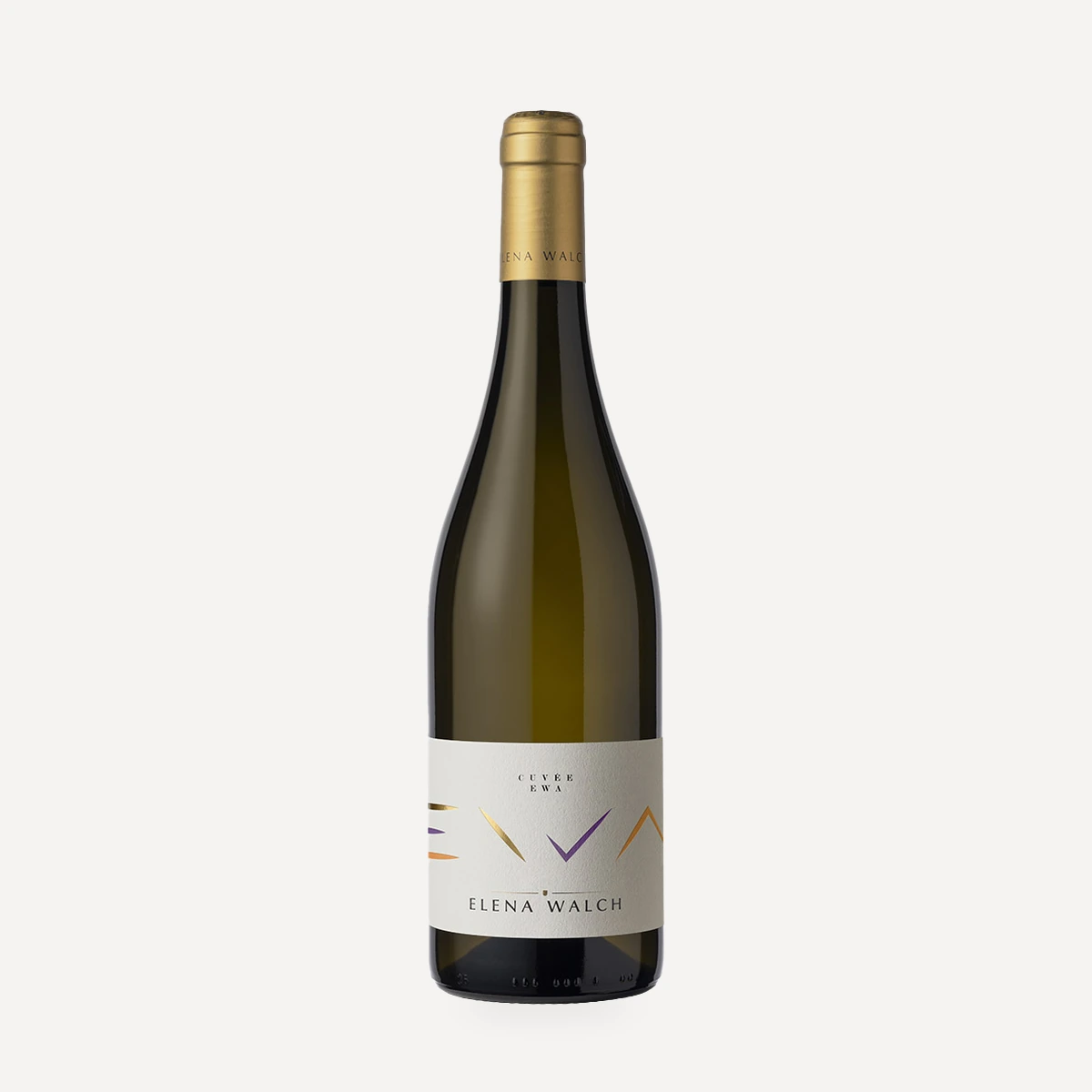
The name EWA is formed from “Elena WAlch.”