Questo vino
Vineyard and terroir
The fruit is grown at Magnano in Val Chero, nine kilometres south of Carpaneto Piacentino on the Colli Piacentini. The vines follow the local Guyot training system and grow in Pliocene clay and sand, with grey Lower Apennine clays and marine fossils. The estate's vineyards average approximately 30 years of age.
Grapes
Barbera and Bonarda.
Vinification
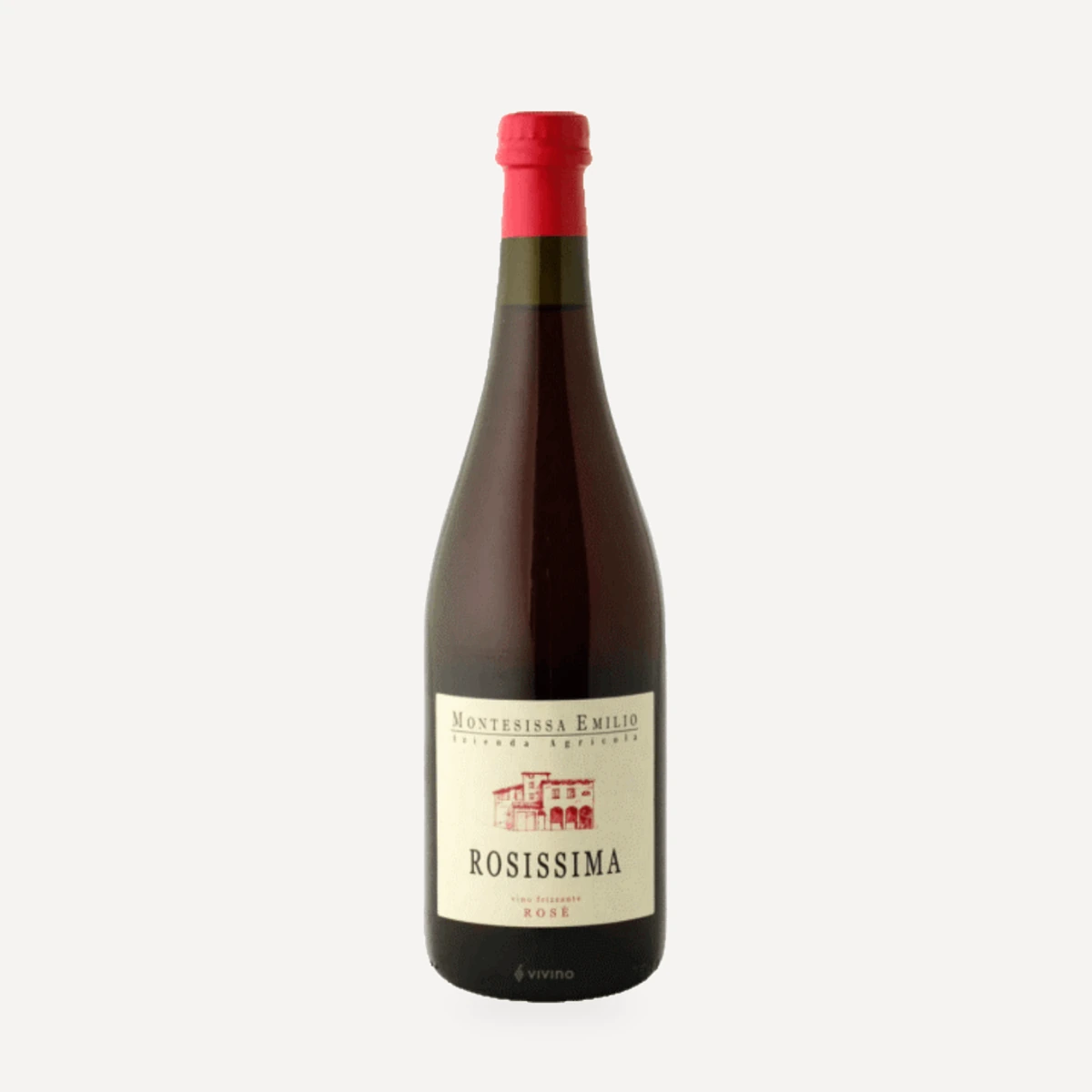
The grapes are picked by hand into small crates and pressed immediately. Rosissima is made using the saignée method. Fermentation is spontaneous, driven solely by indigenous yeasts and conducted without temperature control. The nitrogen-poor must ferments slowly; autumn cold pauses the process before the wine is bottled in spring with natural residual sugar. Rising temperatures then restart fermentation in the bottle and create its natural sparkle.
Ageing
One or two rackings take place during winter. The wine is bottled without filtration.
Tasting profile
A sparkling rosé with woodland and bitter-citrus notes, pronounced acidic freshness and restrained effervescence.
Serving and pairing
The estate treats its naturally sparkling wines as table wines and pairs them with local DOP cured meats and cheeses, bread made from estate flour, and seasonal vegetables.
Label / history
Rosissima is dedicated to Elisabetta Montesissa's mother, Rosa. Since 2006, the labels have featured the small farming hamlet maintained by the family.