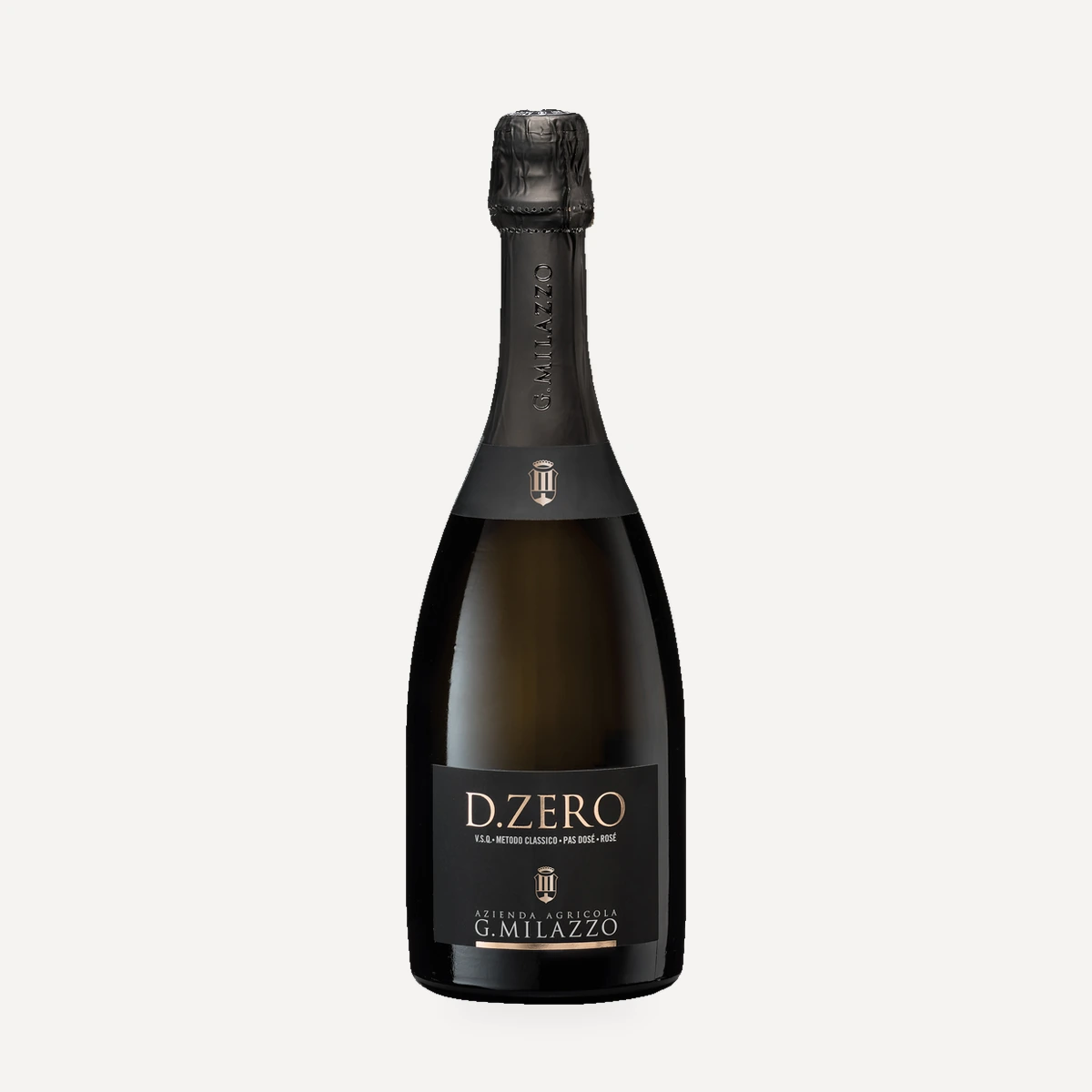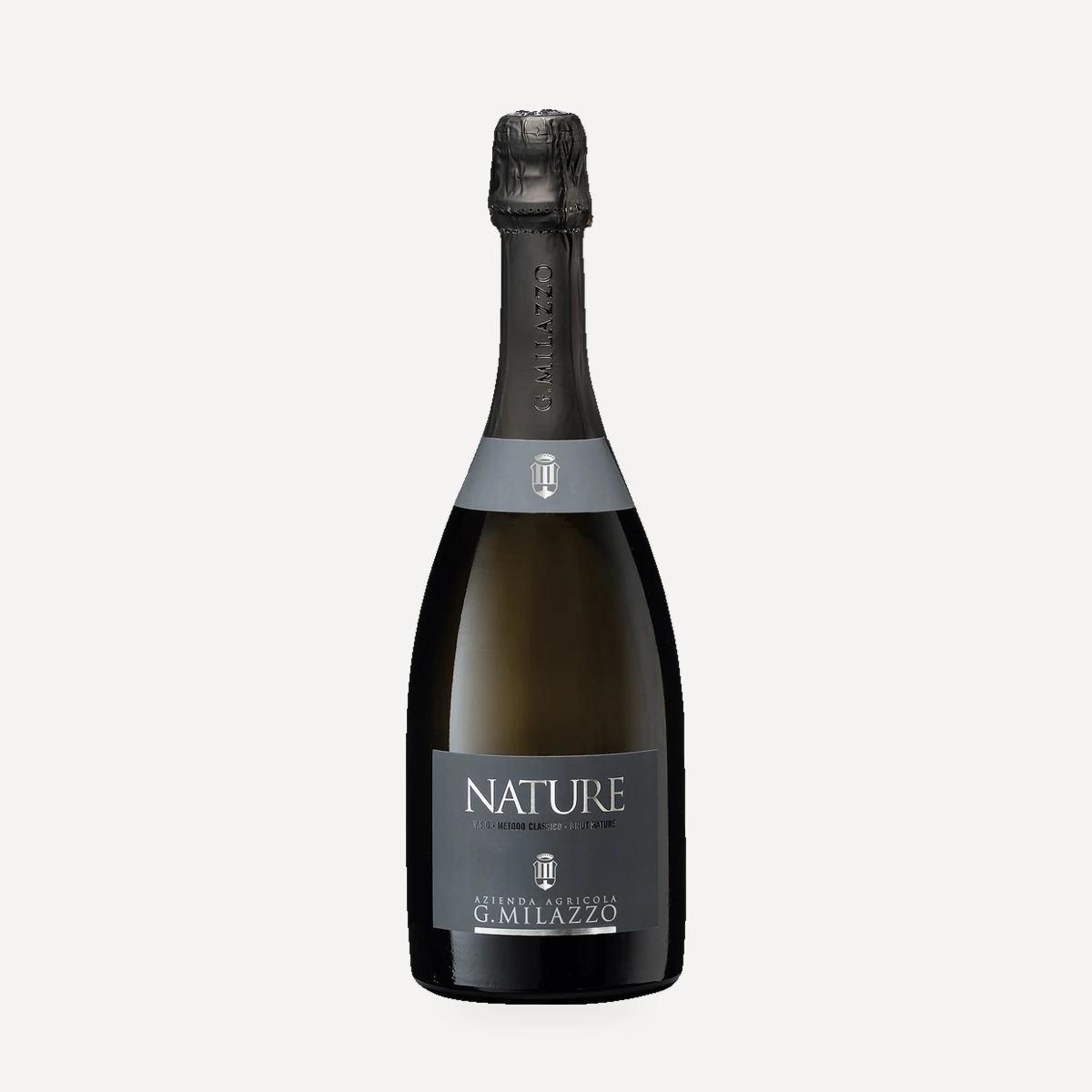
Questo vino
Vineyard and terroir
Chardonnay comes from two areas within Contrada Fondirò. Munti has highly mineral black clay and 25-year-old vines; Giuseppina has a calcareous-clay matrix and 20-year-old vines. The vineyards are vertically trellised and pruned to spur cordon or Guyot at 5,600 vines per hectare. Farming is certified organic.
Grapes
Chardonnay, made as a Blanc de Blancs.
Vinification
Harvest occurs in the first half of August and is carried out manually into 14 kg crates. Whole bunches are pressed, followed by temperature-controlled fermentation. The base wine matures in stainless-steel tanks.
Ageing
After the liqueur de tirage is added, secondary fermentation takes place in bottle. The wine remains stacked on its lees for no less than 48 months. It is finished without dosage.
Technical data
Alcohol: 12.5% vol.
Tasting profile
Clear, pale yellow with green reflections and a persistent, well-defined bead. The complex, refined nose combines green apple and pear with aromatic herbal notes and hints of bread crust. The palate is intensely savoury and persistent, driven by citrus-like acidity. It is direct and muscular yet harmonious, with the taut, vertical profile expected from an undosed Chardonnay.
Serving and pairing
Serve at 8–10 °C. Suitable throughout a meal, particularly with fish, molluscs and crustaceans.
Label / history
First released in 2017, Nature is an undosed expression of Milazzo Chardonnay, developed to present the selected clones with minimal stylistic intervention and to keep the wine itself at the centre.