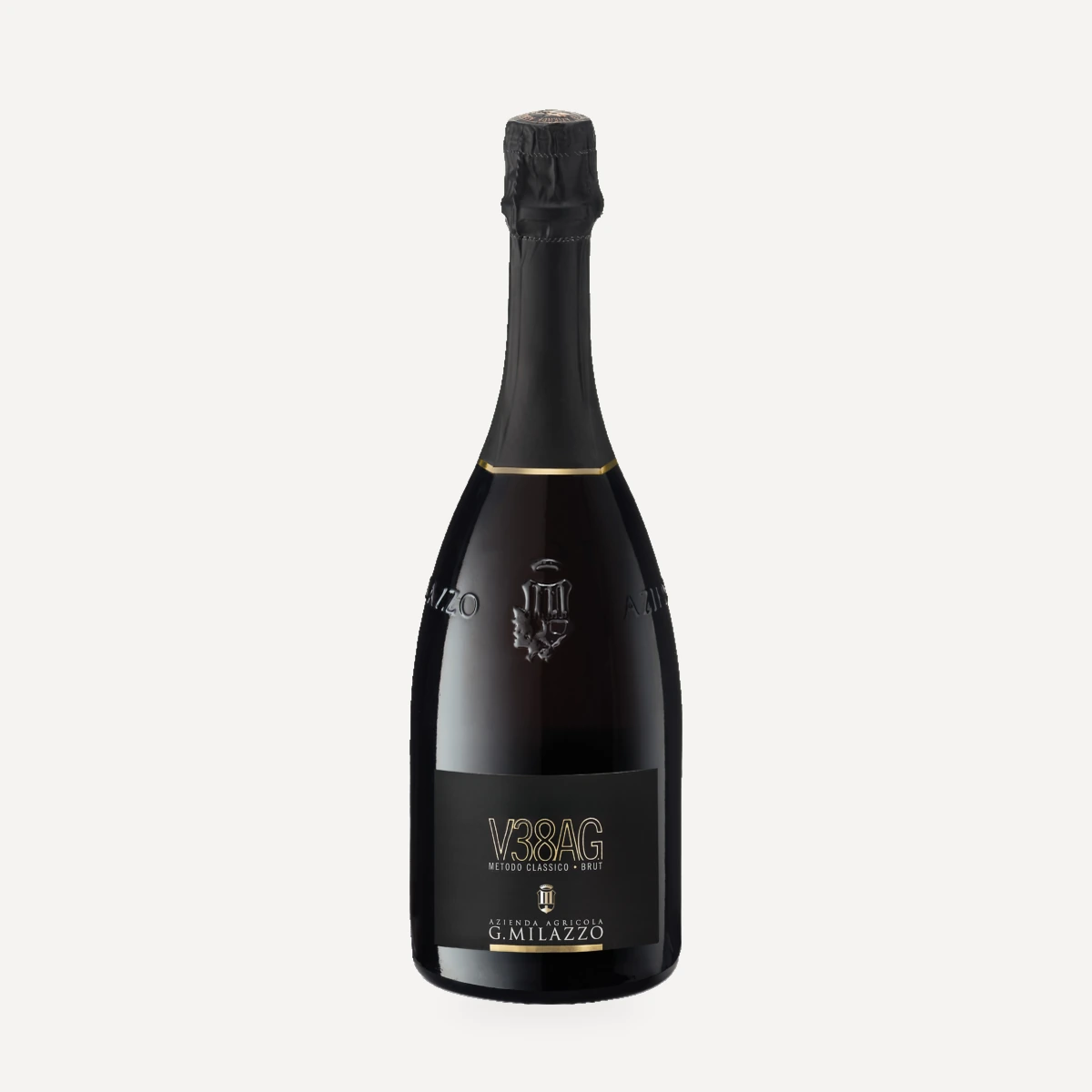
Questo vino
Vineyard and terroir
Chardonnay and Inzolia are selected from estate parcels in three contrade. Contrada Milici and Fondirò’s Munti area have dark clay soils, while Contrada Ninotta combines pale calcareous ground with grey marl. The vines average 40 years at Milici, 25 years at Munti and 40 years at Ninotta. Training comprises pergola and vertical trellising with spur-cordon and Guyot pruning. Planting density is 5,600 vines per hectare, and yield is 80 q/ha.
Grapes
Chardonnay and Inzolia. The cuvée combines complementary base wines from different parcels and, for the edition described in the current technical sheet, from two harvest years.
Vinification
Chardonnay is harvested in the first half of August and Inzolia in early September. Bunches are selected on the vine and picked manually into 14 kg crates. Whole bunches are pressed, retaining only the first press fractions. Fermentation takes place under temperature control. The sparkling-wine bases mature partly in oak barriques and partly in stainless-steel tanks before blending.
Ageing
Following assembly and addition of the liqueur de tirage, secondary fermentation takes place in bottle. The bottles remain stacked on their lees for at least 48 months.
Technical data
Alcohol: 12.5% vol. Ageing potential: at least 10 years.
Tasting profile
Bright, pale straw yellow with green reflections and an exceptionally fine, persistent bead. The fragrant nose layers vanilla and pastry with spice and Mediterranean scrub. Full and structured on the palate, it is creamy and savoury, with an appealing powdery tactile sensation that supports its suitability at the table.
Serving and pairing
Serve at 5–7 °C, particularly with fish, molluscs and crustaceans.
Vintage notes
The cuvée described in the current technical sheet is based on sparkling-wine bases from 2019, supplemented by approximately 10% from the 2018 harvest. The warm but balanced 2019 season produced lower yields and wines with greater structure and aromatic potential. The cooler, more productive 2018 season, with better soil water availability around harvest, yielded leaner, more vertical bases. Their combination brought balance and elegance, while prolonged lees ageing enhanced aromatic complexity and savoury depth.
Label / history
First released in 2014, V38AG takes its name from the winery’s original bottler code, recalling a sparkling-wine journey begun more than 40 years ago.