Storia
Historic vineyards and properties
The estate includes vineyards whose histories predate Graci itself. Contrada Muganazzi is a historic Passopisciaro property formerly owned by Ettore Majorana. Contrada Feudo di Mezzo retains an approximately 80-year-old vineyard, while the ungrafted Nerello Mascalese vines of Contrada Barbabecchi are around 100 years old and grow on high-altitude terraces supported by dry-stone walls.
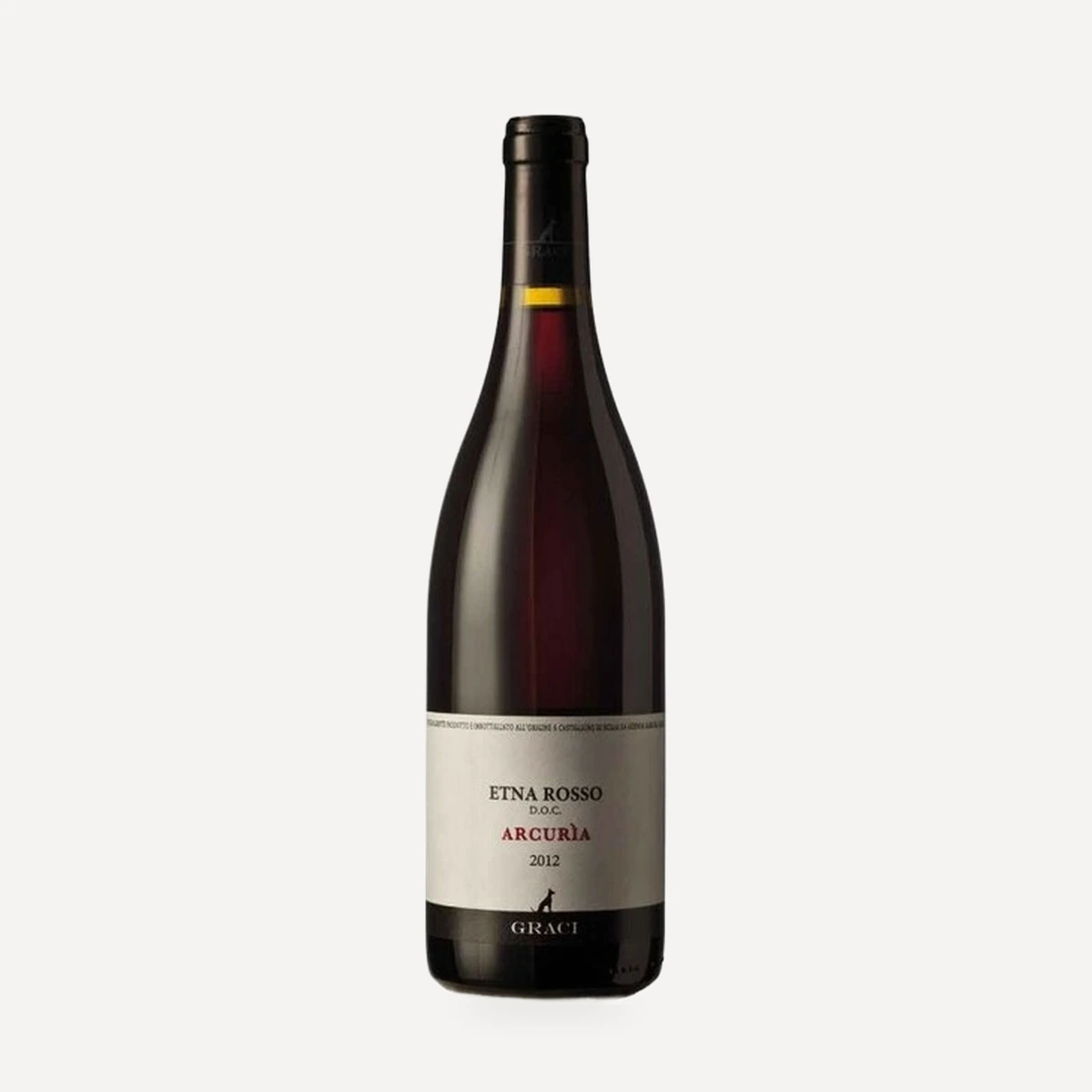
2004 — research in Contrada Arcurìa
A detailed investigation of the soils of Contrada Arcurìa was conducted in 2004. It identified differences in texture, profile and chemical composition among the individual vineyards. The associated zoning work distinguished Sopra il Pozzo from the surrounding sites: its soil consists of alternating layers of stone and coarse sand locally called rifusa. Subsequent blind tastings following harvest repeatedly identified its wine by its transparency, lightness, fluidity and complexity.
2005 — foundation of Graci
Graci was founded in 2005 on the northern slope of Etna. The founding idea was to produce wines that express the identity of this continually changing volcanic landscape. The project developed as a family enterprise rooted in Sicily’s agricultural tradition, joining inherited vineyard culture with continuing research in both vineyard and cellar.
2019 — Contrada Santo Spirito
In 2019, 0.9 ha of Carricante were planted in Contrada Santo Spirito. These remain the youngest vineyards in the Graci holdings.
The present project
Graci now works named sites in Muganazzi, Santo Spirito, Feudo di Mezzo, Arcurìa and Barbabecchi, ranging from 600 to 1,000 m in the general vineyard description and reaching 1,100 m in the detailed description of Barbabecchi. Its current direction combines native Etna varieties, preservation of old and ungrafted vines, restoration of dry-stone walls, protection of woodland, organic farming and a deliberately restrained approach to vineyard and cellar intervention.
Terroir
Northern Etna and the Alcantara valley
Graci’s vineyards lie around Passopisciaro and Solicchiata on the northern and north-eastern side of Etna, within the Alcantara valley. The general altitude range is 600–1,000 m, while the detailed description of Barbabecchi extends its upper limit to 1,100 m. The mountain setting combines substantial day–night temperature variation, ventilation and volcanic geology.
The soils are described broadly as young, complex and mineral-rich volcanic formations. Their diversity is central to the estate’s parcel-based approach: Contrada Arcurìa alone contains five volcanic-soil types, while its Sopra il Pozzo vineyard is marked by alternating layers of stone and coarse sand known as rifusa.
Site-specific conditions
Contrada Arcurìa forms a natural amphitheatre exposed to cold, dry northerly winds. These conditions can support full ripening in demanding seasons while preserving tension in warm years. A Carricante section is additionally described as humid, well ventilated and well supplied with rainfall, with pronounced temperature swings.
Muganazzi occupies a cool, bright mountain setting at about 700 m. Its volcanic soil contains abundant macro- and microelements, high organic matter and a reaction ranging from neutral to sub-acidic.
Feudo di Mezzo lies at 600 m. Its fine, very sandy soils are further characterised as brown volcanic soils rich in coarse mineral fragments, with volcanic sands of sandy-loam and loamy-sand texture. They are neutral in pH, non-calcareous, rich in iron and contain a good level of nitrogen.
Barbabecchi occupies high-altitude volcanic terrain at 1,000–1,100 m. It combines what Graci characterises as a northern climate with African sunlight. Strong diurnal temperature variation accompanies the mineral-rich soils, and the grapes ripen sufficiently late for harvest to take place in November.
Vinificazione
Graci describes its farming as organic and bases it on respect for biodiversity and the biological vitality of the soil. Woodland is protected, dry-stone walls are reconstructed and the estate seeks to maintain an agricultural equilibrium developed over centuries.
Only native Etna varieties are cultivated: Nerello Mascalese, Carricante, Catarratto and Nerello Cappuccio. Vineyard intervention is deliberately limited, with work tailored to the identity of each plot and to the differences expressed by each vintage.
Planting densities range from approximately 6,000 to 10,000 vines/ha. Both espalier and traditional alberello systems are used. Contrada Arcurìa includes ungrafted alberello vines at 10,000 vines/ha, while Barbabecchi preserves approximately century-old, ungrafted Nerello Mascalese on high-altitude terraces. The latter vineyard is integrated with apple, chestnut, hazelnut and olive trees and balsamic herbs.
Harvest timing reflects the altitude and individual site. Feudo di Mezzo is picked first. Muganazzi Carricante is hand-harvested around mid-October; Feudo di Mezzo is harvested around the middle of October; Arcurìa Nerello Mascalese is picked by hand in the second half of October; Sopra il Pozzo follows at the end of October; and the high-altitude Barbabecchi fruit is harvested in November. Feudo di Mezzo is associated with low yields, quantified at approximately 27 quintals/ha.
Graci follows an essential, minimally interventionist cellar approach intended to preserve the expression of native grapes, individual vineyards and vintage variation. Continuous research in the vineyard and cellar supports this parcel-sensitive work.
White-wine production includes slow pressing of intact bunches without destemming. Stainless steel is the principal fermentation and maturation vessel, while selected lots also use large oak casks. Spontaneous fermentation without selected yeasts is employed. Lees maturation in steel and subsequent bottle ageing form part of the approach, while site selections may spend longer periods divided between steel and large oak.
Red wines are produced through traditional fermentation with extended skin contact. Where quantified, maceration lasts about 30 days; large truncated-cone oak vats are used for parcel selections. Some fermentations proceed without selected yeasts and without temperature control. Spontaneous malolactic fermentation is used where specified.
The cellar employs stainless steel, concrete tanks, truncated-cone oak vats and large oak casks. Documented oak-vessel sizes include 12 hl, 15 hl and 42 hl. Depending on the lot, maturation extends from steel or concrete to long ageing in large oak, followed by additional bottle ageing. This range of vessels is used within a consistent philosophy of restrained handling rather than a single uniform recipe.
Filosofia
Graci presents wine as a cultural product rather than merely an agricultural commodity. Its purpose is to interpret a living volcanic territory in which viticulture belongs to the landscape, history and culture.
The project’s central principle is fidelity to place. Each vineyard is treated as an individual expression, and differences between sites and vintages are considered a source of richness rather than variation to be standardised. Native Etna varieties are regarded as the means through which these terroirs can be translated most precisely.
The estate’s self-described approach is artisanal and family-based, joining past and future. It combines Sicily’s agricultural tradition with continuous research, organic cultivation, protection of woodland, restoration of dry-stone walls and limited intervention. Biodiversity and soil vitality are treated as integral to wine quality, while work in the cellar is intended to preserve rather than overwrite the identity developed in the vineyard.
Vini
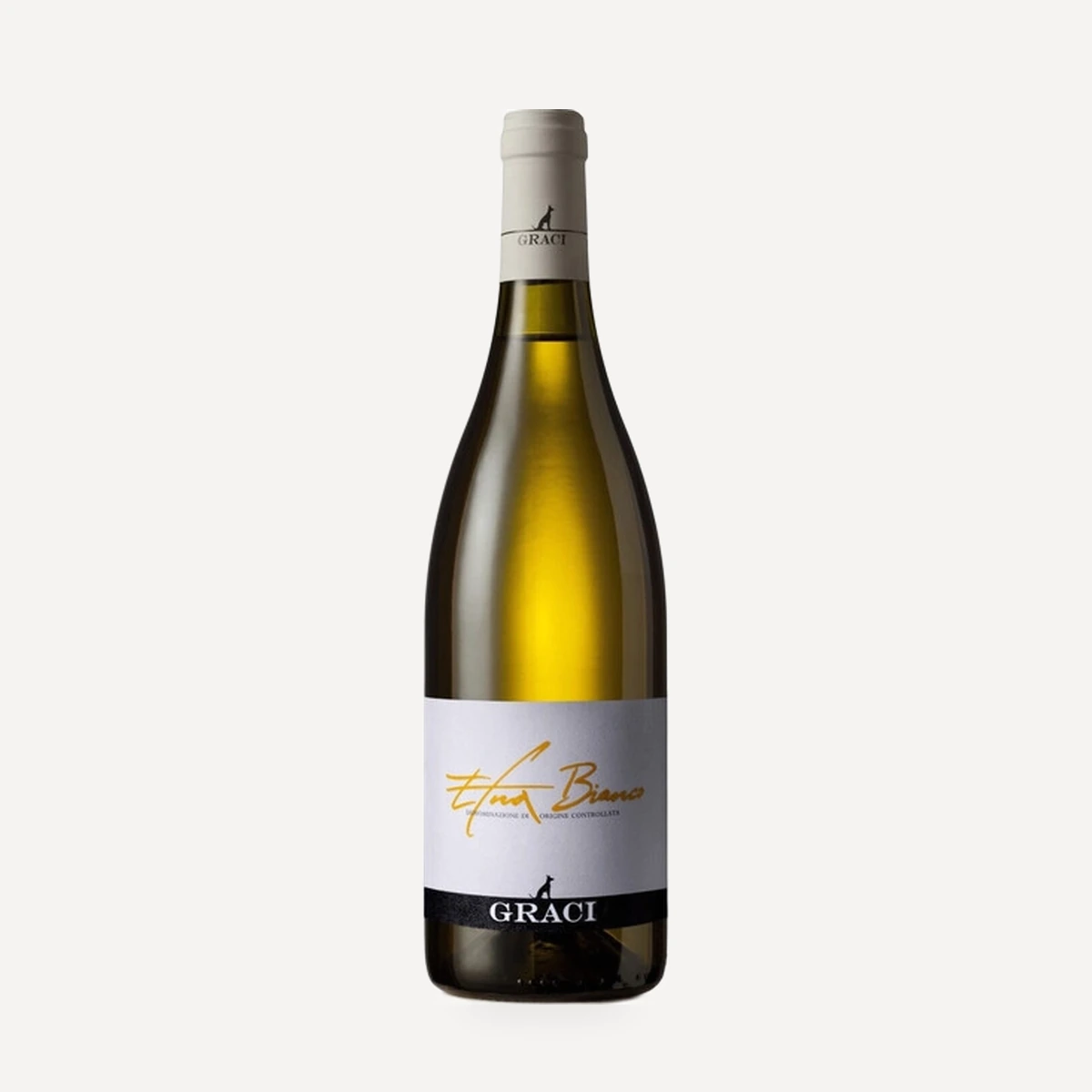
Etna Bianco DOC
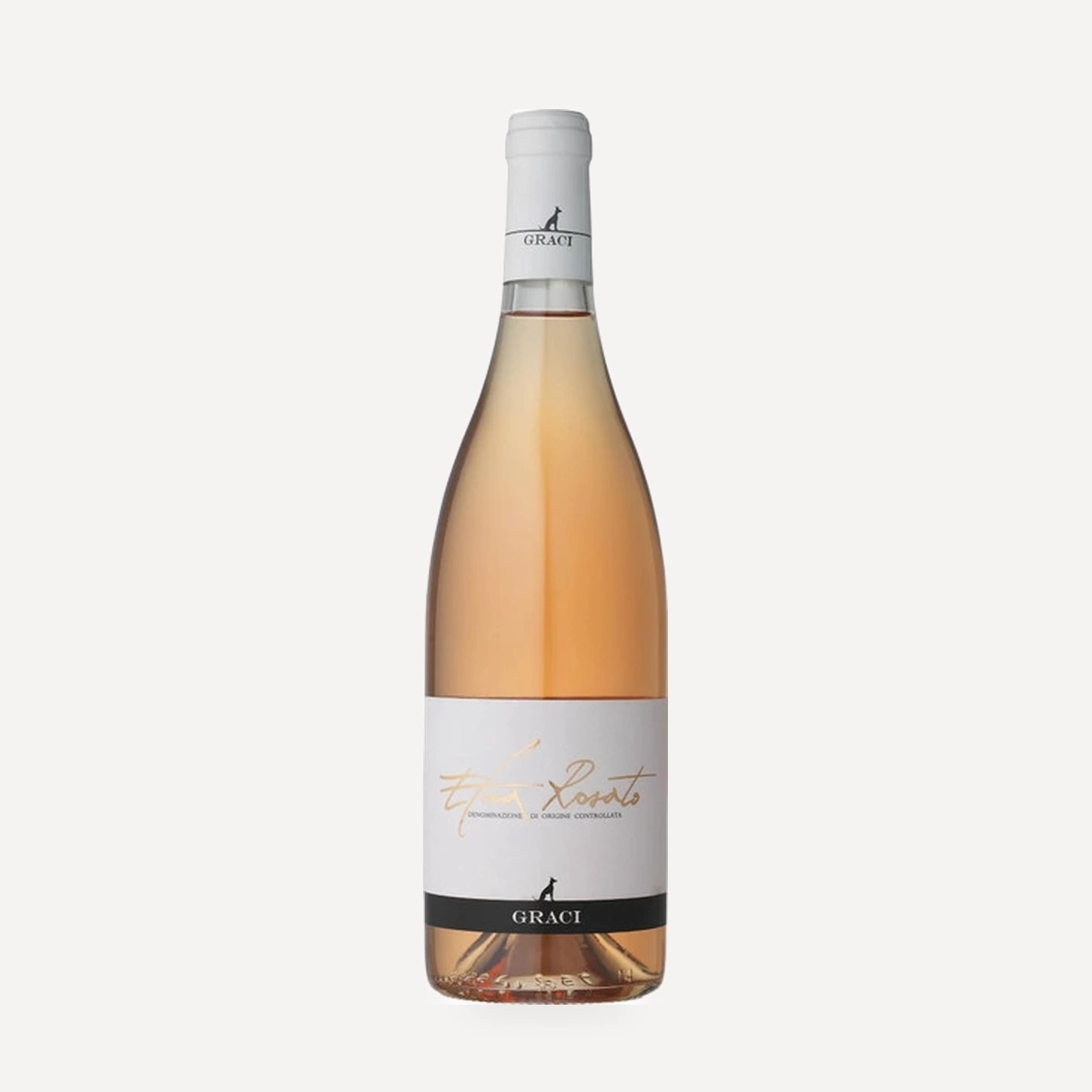
Etna Rosato DOC
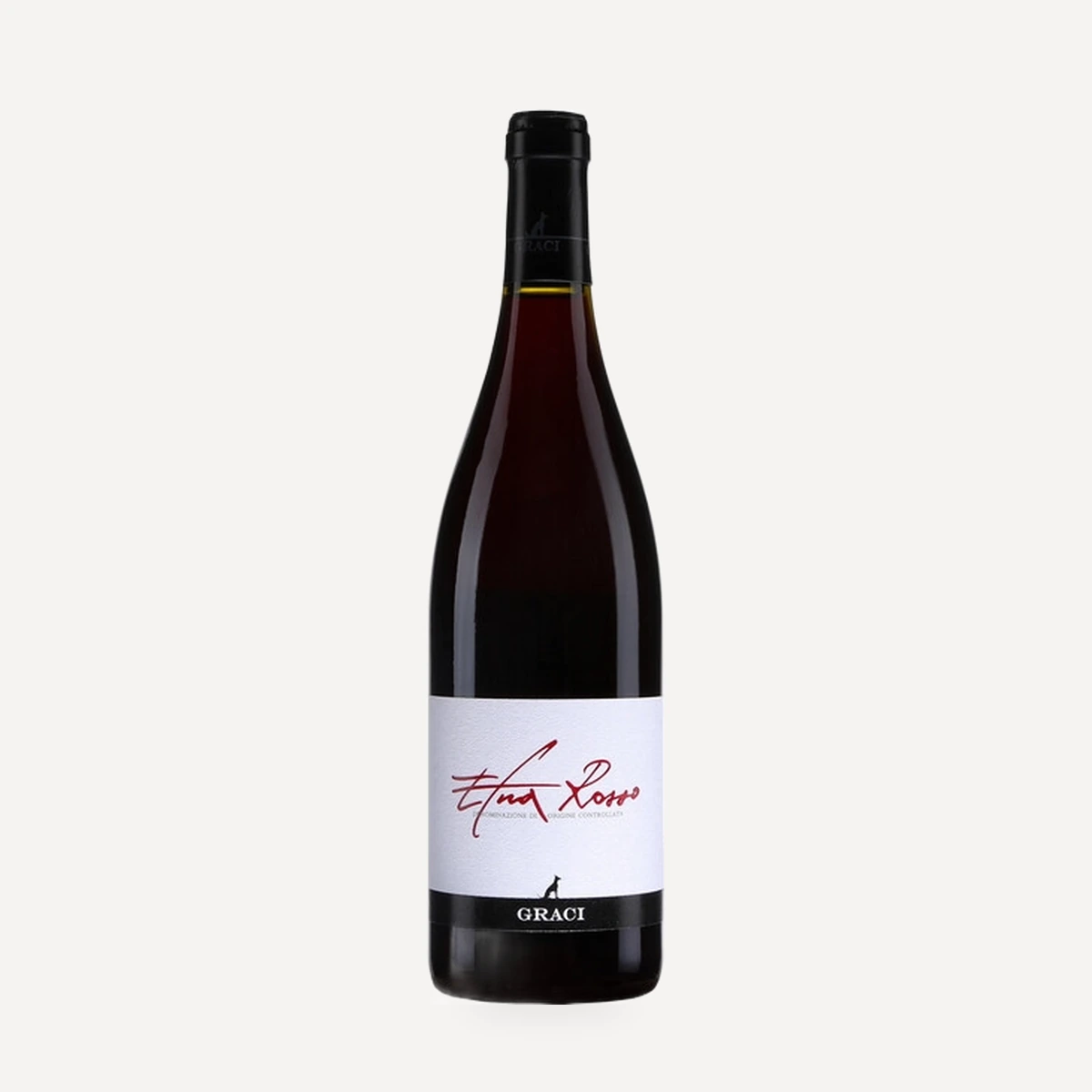
Etna Rosso DOC