Questo vino
Vineyard and terroir
Di Rado is produced only in seasons whose conditions permit it. Garganega and Trebbiano di Soave are selected from the oldest vines in a vineyard planted in 1970. The Pergola Veronese vines face south on a limestone hillside where portions of rock emerge at the surface. The vines receive neither fertiliser nor irrigation; biodynamic preparations are used to stimulate and nourish the organic matter. Treatments are limited to low doses of copper and sulphur, herbal macerations and biodynamic preparations.
Grapes
Garganega and Trebbiano di Soave. The best-exposed, loosest bunches are chosen from the oldest vines. Light crop thinning reduces the load and concentrates ripening in the selected bunches. Harvest is exclusively manual and takes place 2–3 weeks later than for the estate’s other white wines.
Vinification
Fermentation occurs spontaneously with indigenous yeasts in stainless-steel tanks and in contact with all the skins. Maceration and maturation continue for an extended period, almost until bottling. The wine is bottled without treatment or added sulphur dioxide.
Ageing
Nine months in stainless-steel tanks are followed by at least 24 months in bottle.
Label / history
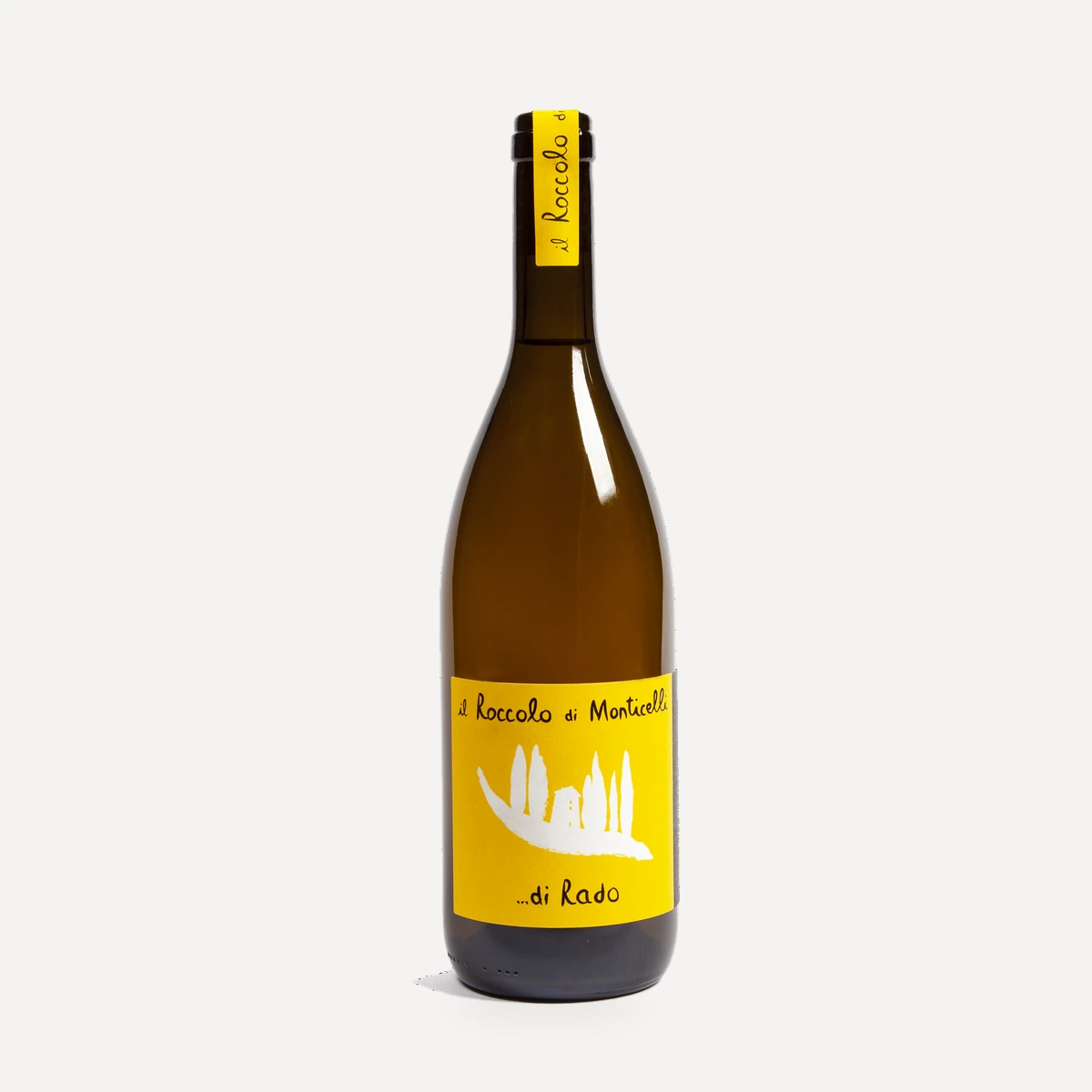
The name has two meanings. In Italian, di rado means “rarely,” reflecting that the wine is not produced every year. It also refers to dirado, the light thinning of fruit performed during its production.