Questo vino
Vineyard and terroir
The grapes grow in the municipality of Terricciola at an altitude of 250 m, on sandy soils of marine origin rich in oceanic deposits.
Grapes
The wine is made exclusively from Prugnolo Gentile, an ancient variety generally considered a biotype of Sangiovese.
Vinification
The must undergoes seven days of maceration and fermentation in temperature-controlled stainless-steel tanks. Malolactic fermentation takes place in old French oak barrels.
Ageing
The wine ages for 24 months in old French oak barrels, followed by approximately six months in bottle.
Tasting profile
The nose is elegant, floral and fruity. The palate is delicate and very gentle, with restrained tannins and a flavour reminiscent of Nebbiolo.
Label / history
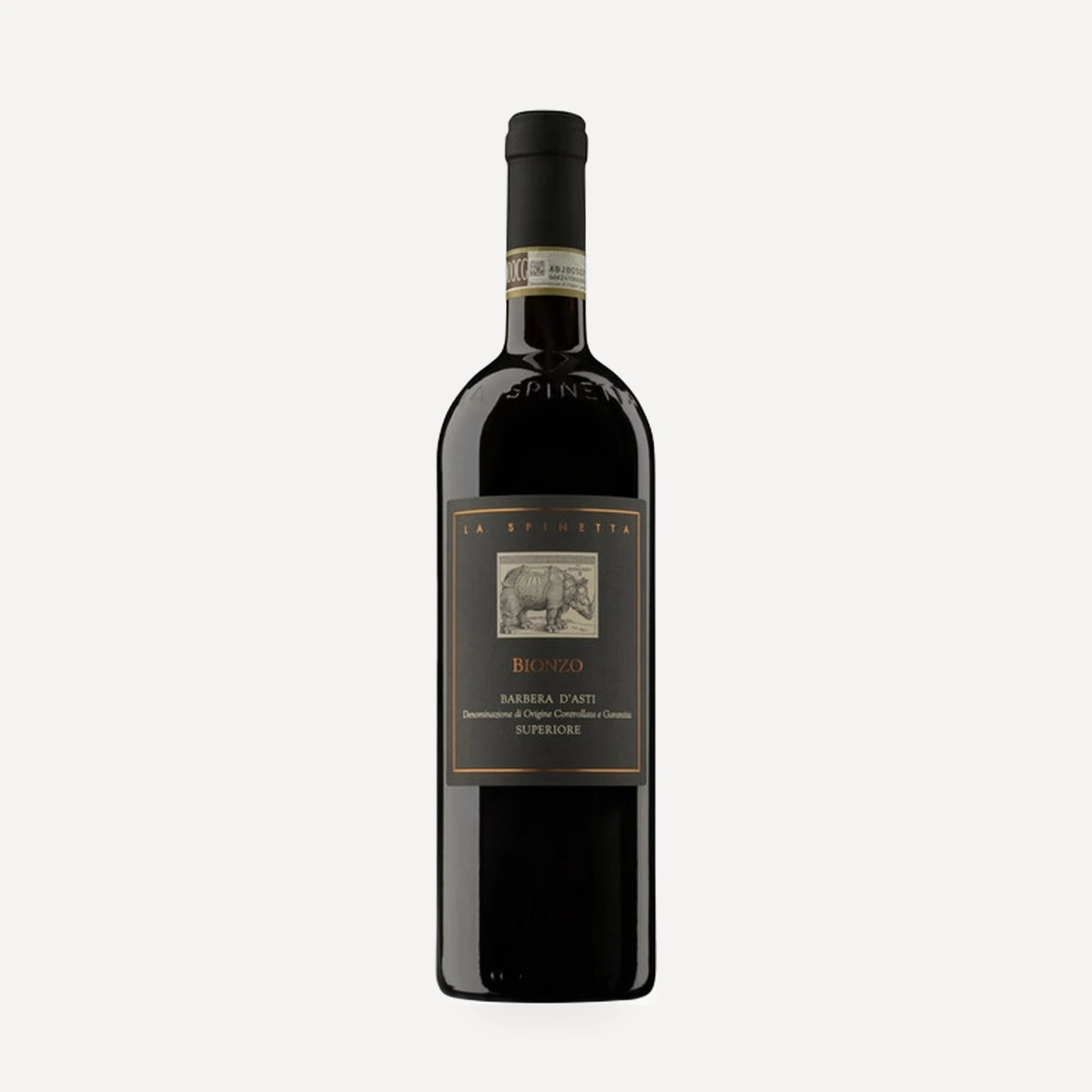
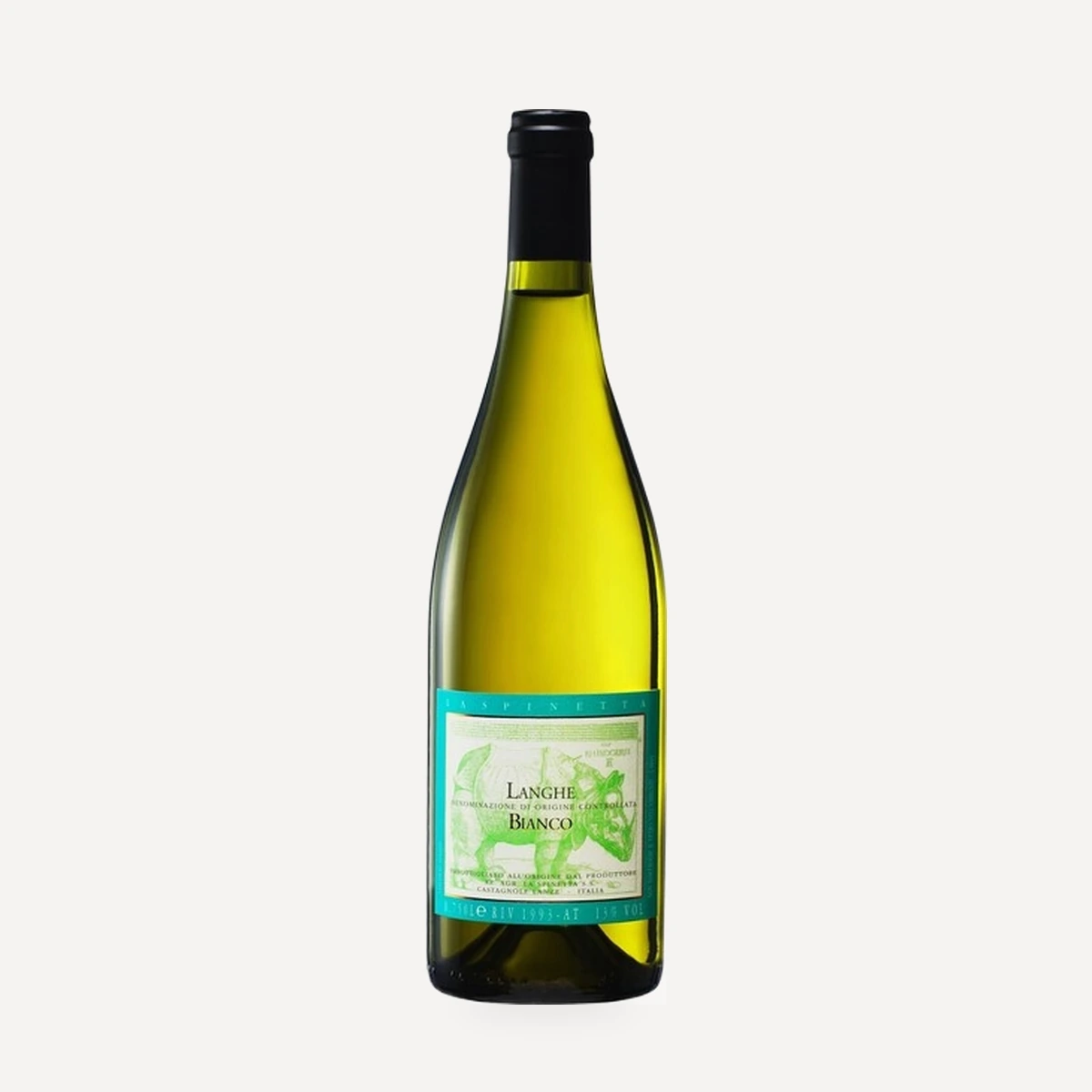
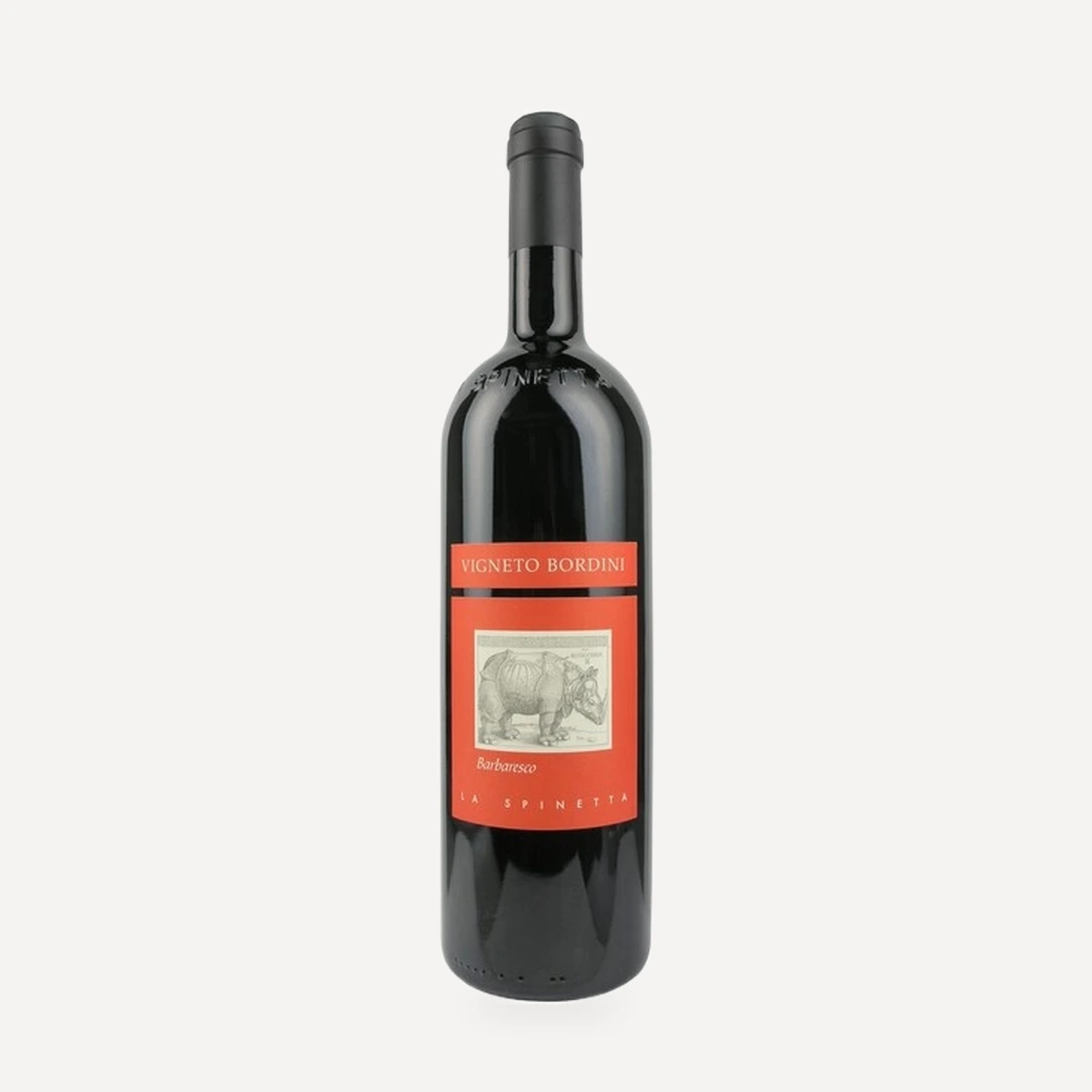
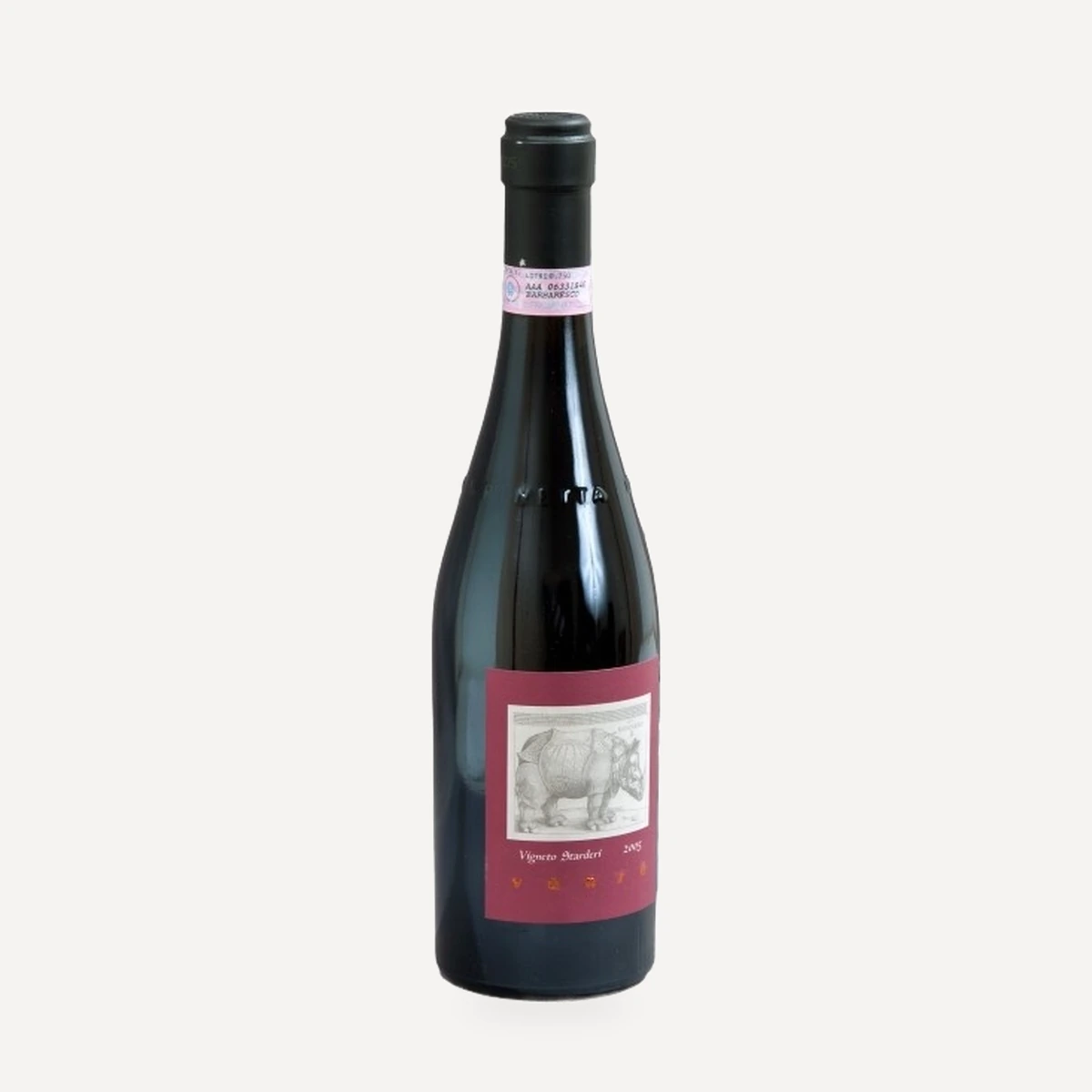
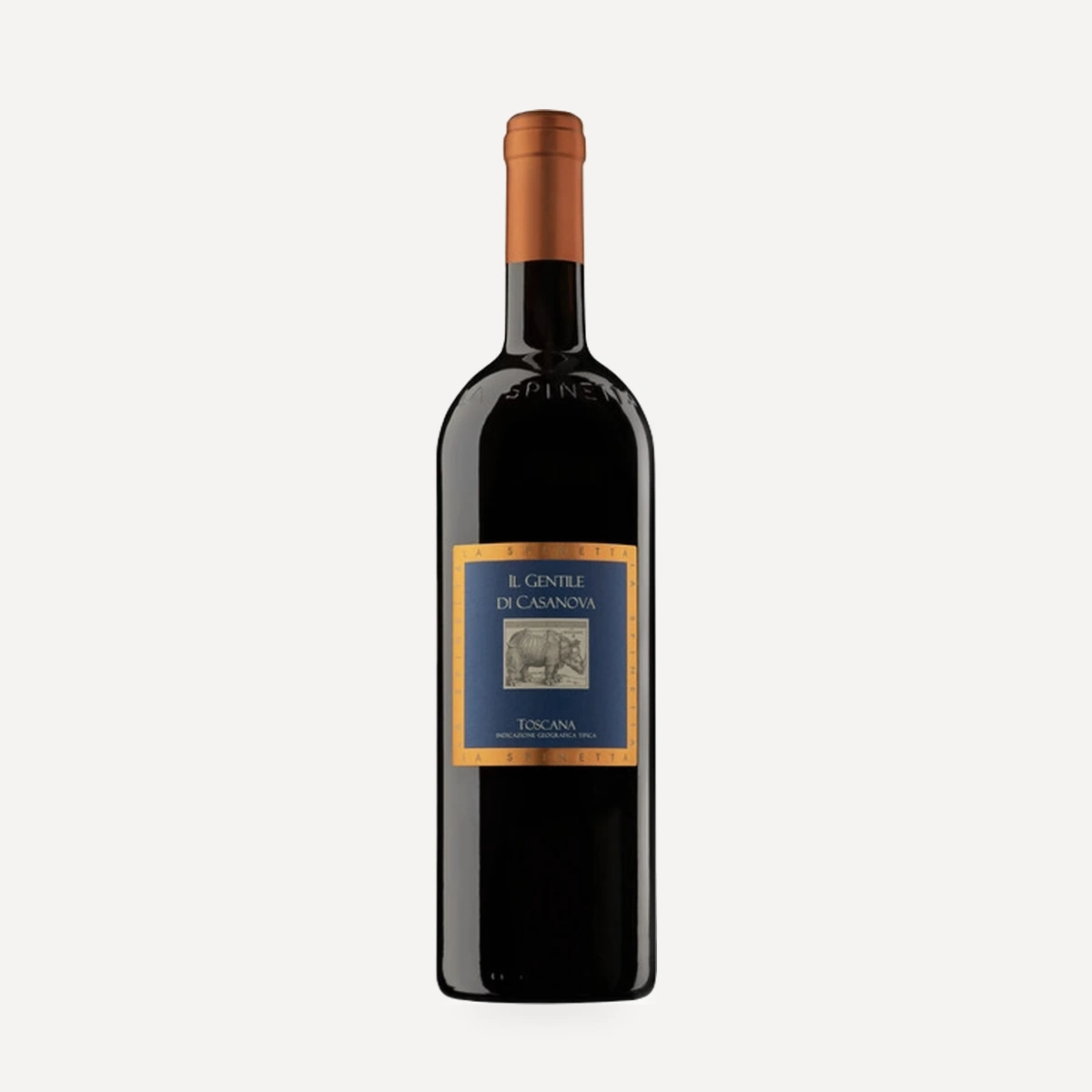
The label depicts a rhinoceros based on the celebrated drawing and woodcut by German artist Albrecht Dürer. Giorgio Rivetti's fondness for the image derives from its history rather than any encounter between La Spinetta and a rhinoceros.
In 1515, the governor of India gave a rhinoceros to the king of Portugal. According to the story, it was made to fight an elephant for entertainment; the elephant fled, and the rhinoceros was declared the winner. A description of the animal subsequently reached Germany. Dürer, probably relying on sketches and without having seen the animal himself, created his drawing and woodcut. His imaginative interpretation proved so persuasive that European illustrators borrowed elements from it for the following 300 years, even after live rhinoceroses became available for observation.