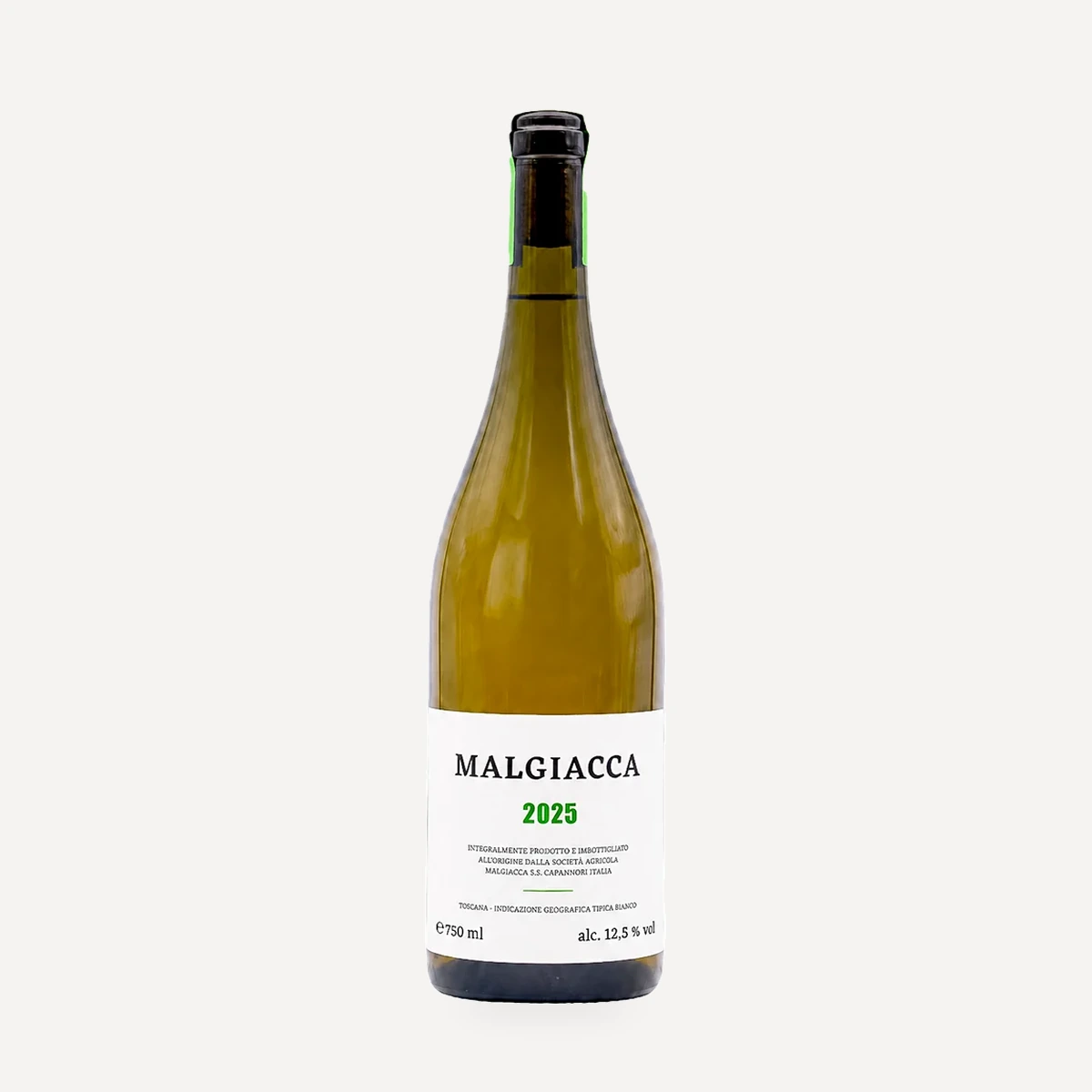
Questo vino
Vineyard and terroir
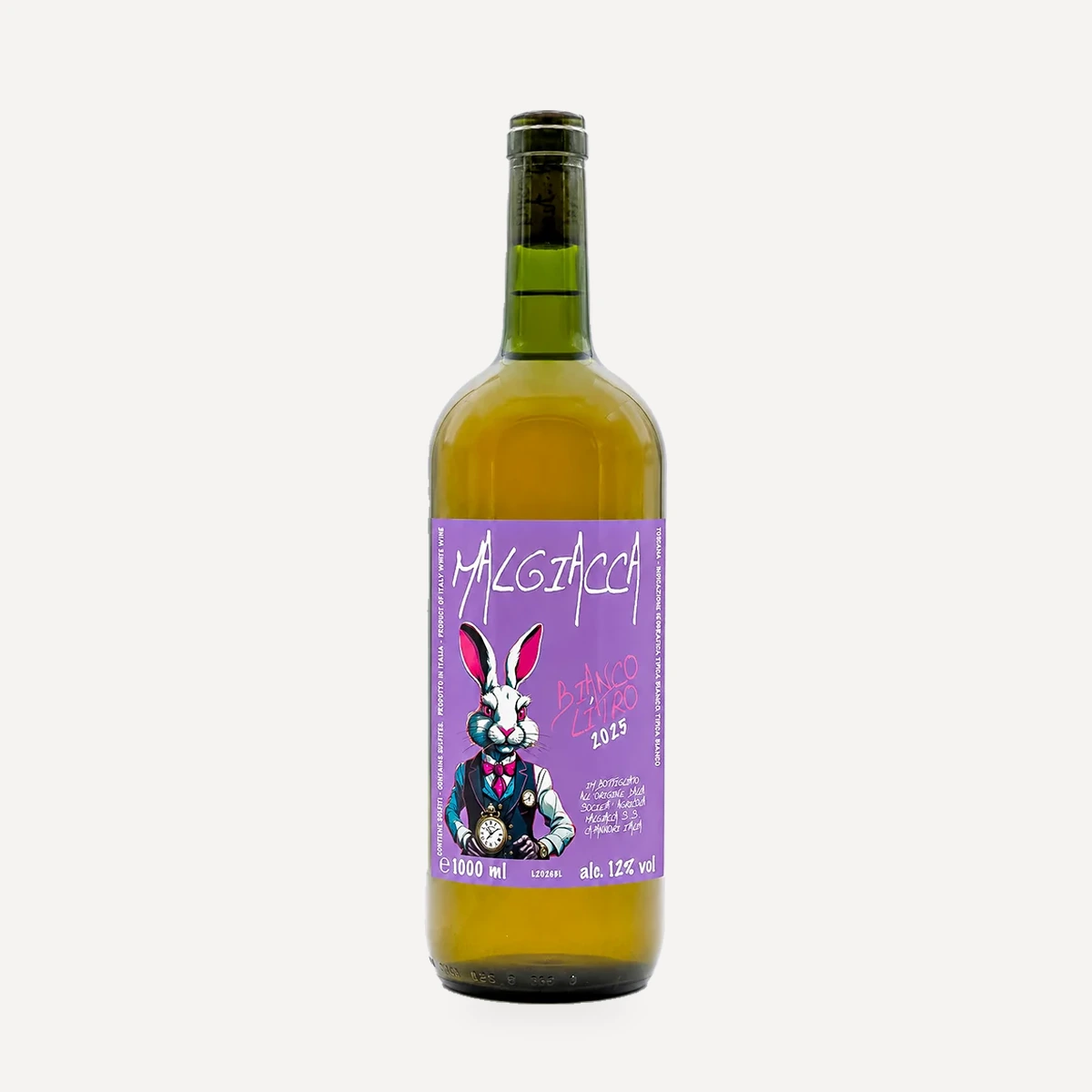
Produced in Lucca, Tuscany, from the area's traditional mixed-variety vineyards. Malgiacca farms biodynamically without pesticides, herbicides or synthetic chemical treatments.
Grapes
Blend proportions vary by vintage. The latest published vintage, 2025, is approximately 50% Trebbiano, 15% Vermentino and 15% Malvasia; the remaining 20% comprises other varieties, principally Grechetto and Moscato.
Vinification
Half of the grapes are pressed in a pneumatic press and half in a basket press. Fermentation occurs spontaneously in stainless-steel tanks without temperature control, followed by malolactic fermentation. The wine is bottled unfiltered in spring and may show a light haze if not decanted.
Ageing
The wine rests on its lees for three months in stainless steel, then is racked and left to settle until bottling.
Technical data
IGT Toscana. The 2025 wine has 12.5% alcohol, no residual sugar and 39 mg/L total sulfites. Approximately 5,000 bottles were produced.
Tasting profile
A taut, savoury white with floral and herbal notes recalling white flowers and sage, together with a light honeyed nuance. The palate is satisfying, progressive and dynamic, driven by pronounced salinity and minerality that leave a clean finish.
Serving and pairing
A versatile table wine.
Vintage notes
The 2025 winter was wet and rainy, with persistently warm, humid air. Spring began early and accelerated after a slow start. Temperatures exceeded 40°C for almost three weeks in June, while another heat event in August scorched the most exposed west-facing bunches. Tropical rain and humidity between 10 and 25 September brought vineyard mould for the first time in 23 years. Conditions improved at the end of the month, allowing the final grapes to reach the cellar healthy and ripe. Harvest ran from 8 to 28 September 2025.