Storia
Origins
Malgiacca grew out of a longstanding friendship among Saverio Petrilli, Lisandro Carmazzi, Luigi Fenoglio, Sarah Richards and Brunella Ponzo. Together they began managing both old and newer vineyards in the hills northeast of Lucca. Some of these vineyards were entrusted to them by elderly or retired farmers as the existing plantings were being abandoned.
The project developed around the recovery of those old sites rather than their replacement. The inherited vineyards preserved mixed plantings, locally remembered grape names and agricultural knowledge that was at risk of disappearing. Malgiacca chose to bring the sites back into cultivation and to treat each vineyard as an individual unit capable of expressing its particular place.
Biodynamics since 2005
Malgiacca has practised biodynamic agriculture consciously since 2005. Its approach was shaped in part by Alex Podolinsky, whose practical teaching helped growers around Lucca learn to observe natural processes and work with them actively. Malgiacca subsequently became part of Lucca Biodinamica, a local network through which farmers exchange experience with biodynamic methods.
The present project
The current presentation identifies three vignerons—Saverio, Lisandro and Gimmi—who have pursued the present venture for almost a decade. Their work continues to focus on restoring old or neglected vineyards, preserving mixed plantings and interpreting three distinct geological settings in the Lucchesia: the alluvial soils of Gragnano, ancient lake deposits around Gragnano and the calcareous hillside clays between San Gennaro and Valgiano.
The contemporary range comprises nine labels. Production remains rooted in spontaneous fermentation, manual cellar work and the use of amphora, cement, stainless steel and previously used wood according to the needs of the fruit.
Terroir
Malgiacca works in the green area between the city of Lucca and the Alpi Apuane, about 12 km northeast of the historic city and within reach of the sea. Woods, olive groves and vineyards shape the landscape. Moderated maritime air reaches the hills, daily temperature variation is pronounced, and returning rain can bring substantial quantities of water.
The vineyards occupy three of the four principal geological terroirs identified in the Lucchesia.
Alluvioni di Gragnano
These are geologically young, deep and fertile alluvial soils with abundant organic matter. They are associated with natural freshness and an immediately accessible expression.
Lago Pre-glaciale
Ancient lakebeds surround Gragnano. These deposits provide the setting for the vineyards associated with Malgiacca Rosso and Bianco.
Argille Collinari
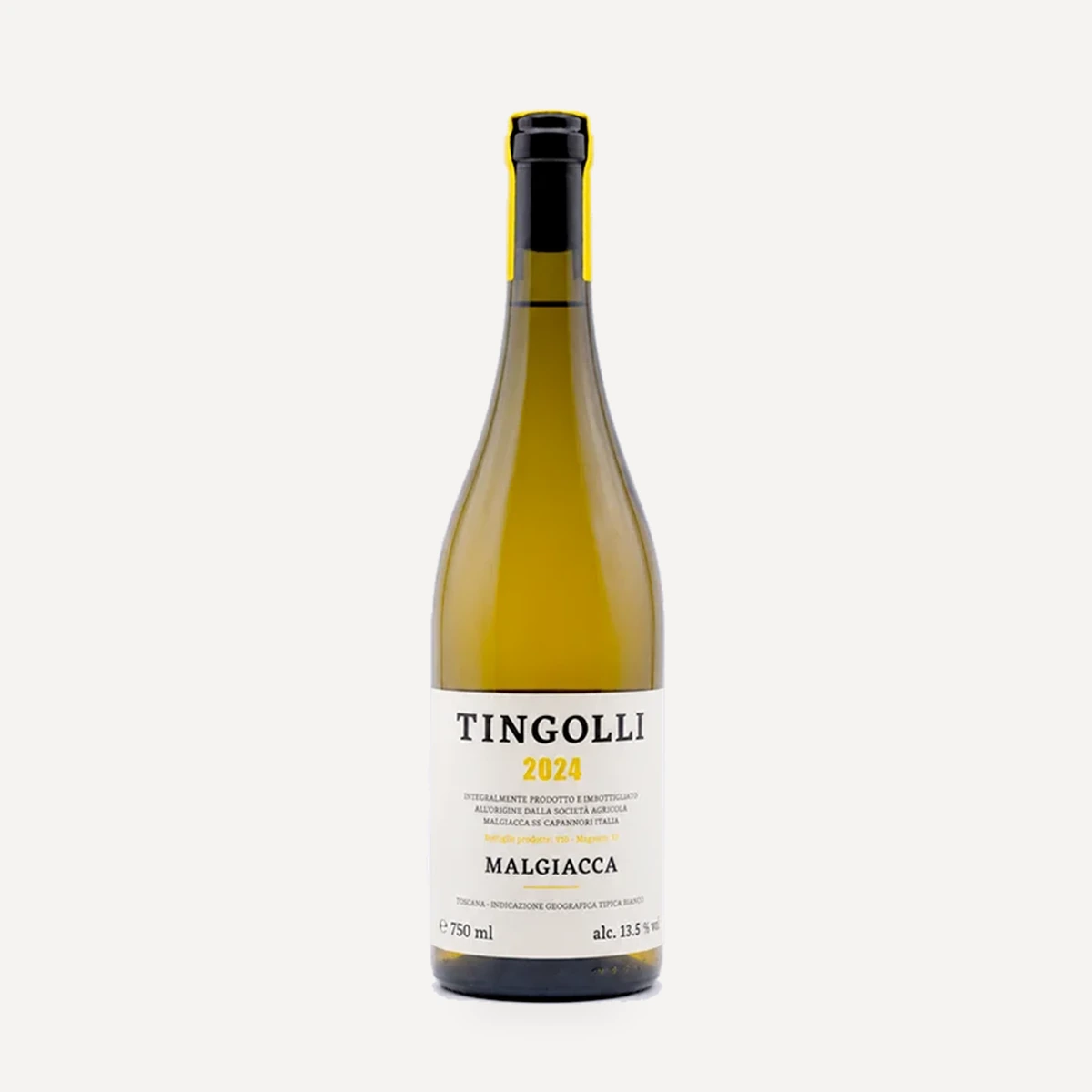
On the hillside between San Gennaro and Valgiano, calcareous alberese clays occur at approximately 280 m above sea level. Fruit ripens slowly here. The nearby Tingolli site lies among woods on older Pleistocene deposits.
Pleistocene formations at Tingolli
Tingolli's soils developed from fluvio-lacustrine clays and sands, locally compacted into rounded reddish pebbles. They are assigned to the Pleistocene and dated to approximately 2–5 million years ago. The vineyard occupies a southwest-facing hill at 180 m above sea level.
A broader description of the managed vineyard mosaic places sites between 150 and 250 m above sea level, with exposures ranging from southeast to west. Individual vineyards range from approximately 1,000 m² to 2 ha and have planting densities of 3,000–6,000 vines per hectare.
Vinificazione
Malgiacca has consciously followed biodynamic agriculture since 2005 and belongs to Lucca Biodinamica, a network of local farmers who share practical experience of the method.
Biodynamic preparations are used to stimulate soil fertility and support the life of the vineyard. Preparations 500 and 501 are made by hand, and work follows lunar rhythms. Preparation 500 is used to channel vegetative vigour into strength, while 501 is used to encourage expression and balance light-related conditions. The approach excludes pesticides, herbicides and synthetic chemical molecules.
The soil is regarded as a living system. Humus, biological activity, air, light and water are treated as the foundations of fertility; healthy, humus-rich soil is expected to breathe, retain water, nourish the vines and support balanced growth. Observation determines intervention, with the objective of building health rather than treating isolated symptoms.
Mixed planting is central to the vineyards. Several varieties coexist within a single parcel, an inherited response to Lucca's unpredictable climate: diverse ripening patterns improve the likelihood that part of the vineyard will reach appropriate maturity in a difficult season. The mixed plantings also reflect Lucca's mercantile history, through which travellers returned with varieties from different origins.
Harvesting is performed by hand, including the use of small crates. Each vineyard is managed independently so that its particular site character can be retained through cultivation and vinification.
Cellar work is deliberately manual. Red grapes are destemmed by hand over a sieve, crushed by foot and allowed to ferment naturally in small vats. Selected yeasts are not used and fermentation temperatures are not controlled. Spontaneous fermentation is likewise used for white grapes, which may be pressed with pneumatic or basket presses before fermenting in stainless steel.
The cellar uses amphora, cement, stainless steel and wood according to the character and requirements of the fruit. New wood is generally avoided in the current approach. The cellar repertoire also includes whole-cluster basket pressing, short skin maceration in cement, longer maceration in amphora and maturation in older small barrels. Malolactic fermentation is completed in the vinifications described across the range.
White-wine practice can include approximately three months on the lees in stainless steel, followed by racking and further rest before bottling. Red-wine practice includes stainless-steel maturation as well as older small oak vessels. Some cuvées divide the fruit among several vessels or maceration regimes before blending. Bottling is commonly carried out without filtration, and some wines receive additional bottle maturation.
Filosofia
Malgiacca presents biodynamics as a way of viewing the world before it is an agricultural technique. Caring for the land begins with observing and listening to it. The farm understands itself as one element within a living organism governed by delicate balances that must first be recognised.
Agricultural products are understood as expressions of soil fertility. Crops draw nutrition from humus and the life within it, absorb light, energy and water, and return fruit. A living, humus-rich soil can breathe, retain water and nourish balanced plant growth. This underpins Malgiacca's recurring principle that the earth must be allowed to breathe.
Human participation remains central. Preparations may carry an impulse intended to support life, but they are considered ineffective without an observant and creative farmer who intervenes when necessary. The aim is not to remedy isolated problems but to create health within the farm organism.
The preservation of mixed vineyards also expresses the estate's understanding of terroir. Rather than reducing a parcel to a single variety, Malgiacca regards the coexistence of many grapes as both practical resilience and a fuller means of conveying place. Old, partly forgotten vineyards and inherited farming knowledge are treated as elements to be kept alive.
In the cellar, this philosophy becomes spontaneous fermentation, manual processing, no temperature control and a choice among amphora, cement, stainless steel and old wood according to the grapes rather than a fixed recipe. The intended result is an agricultural product that remains alive and reflects both its site and its vintage.
Vini
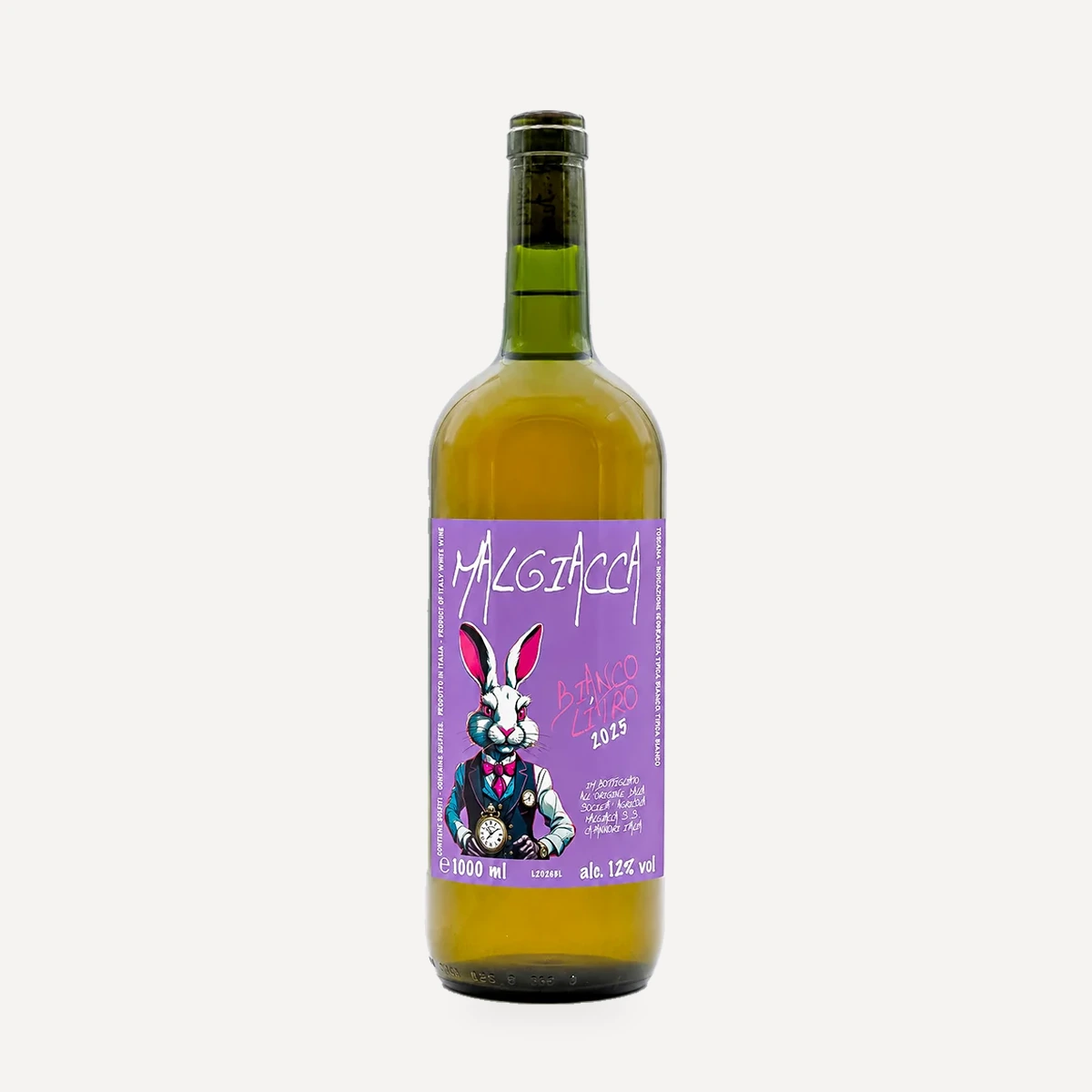
Biancolìtro
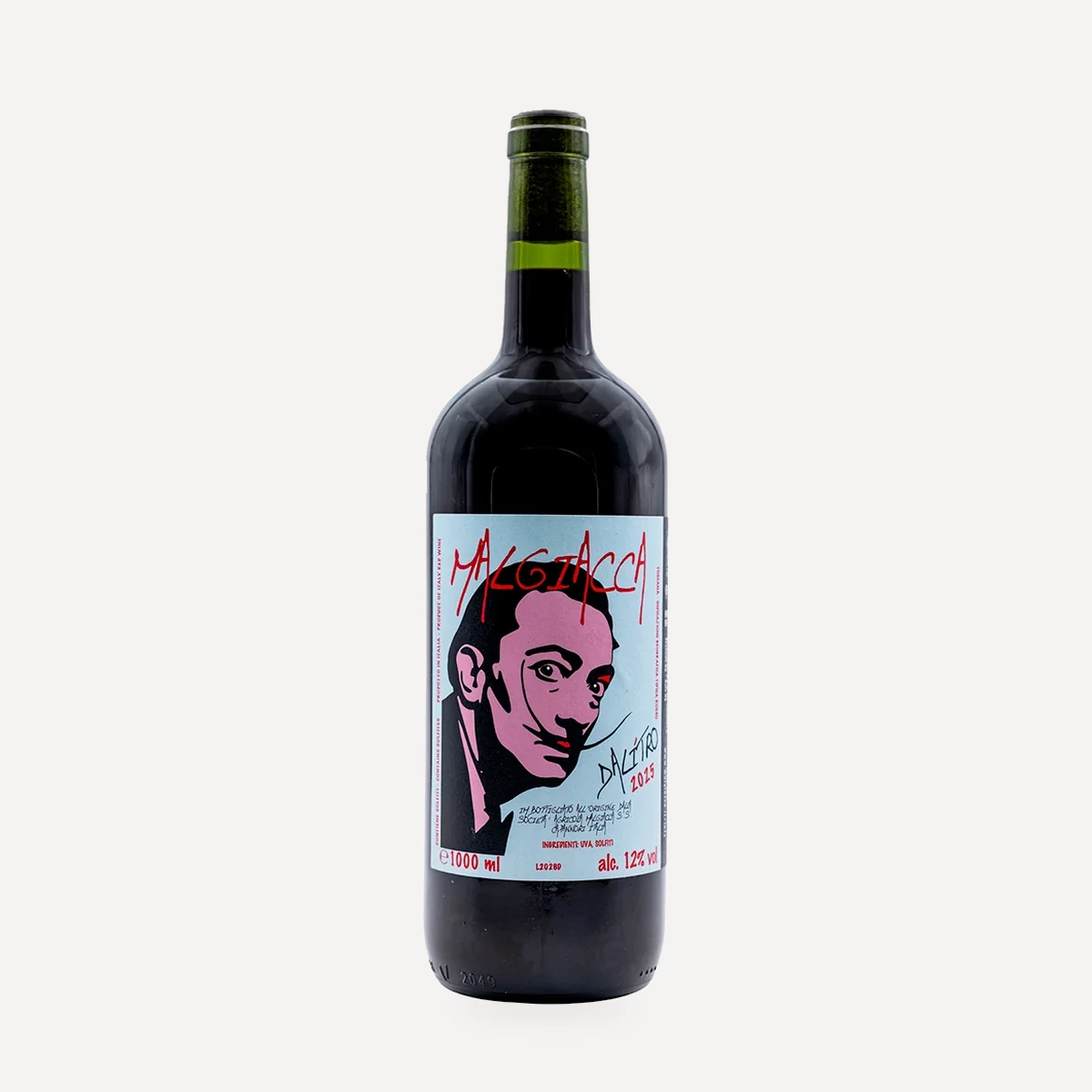
Dalìtro
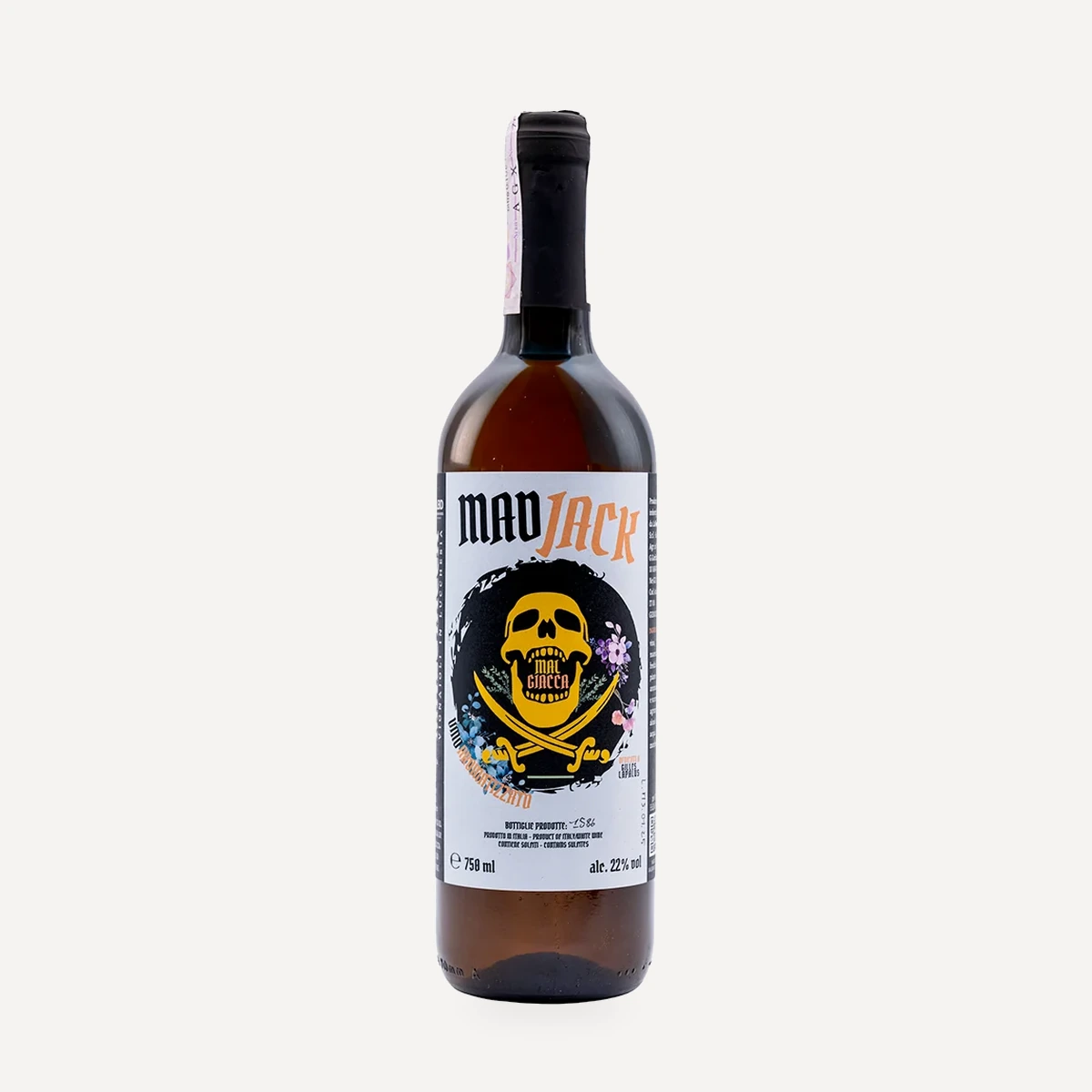
MadJack
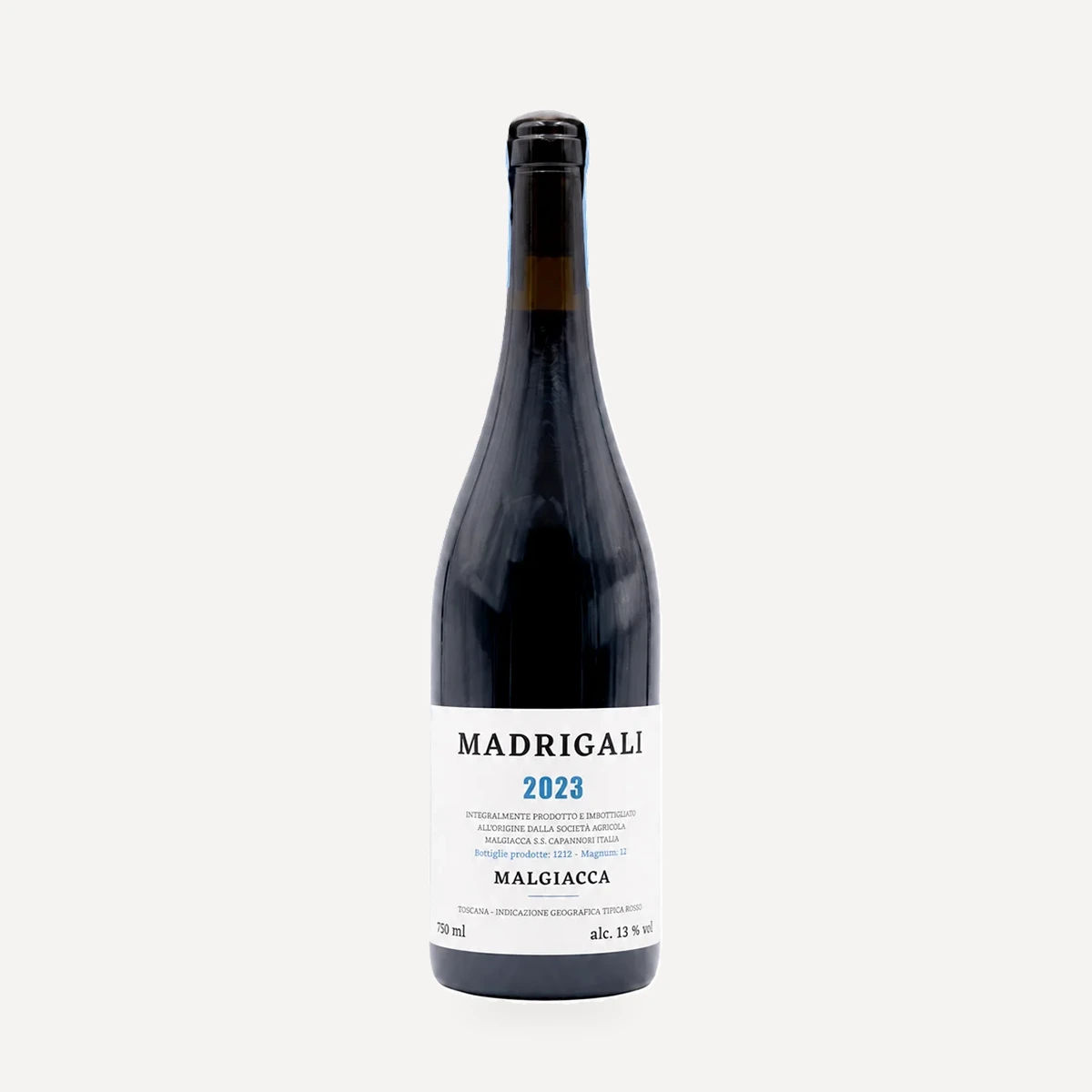
Madrigali
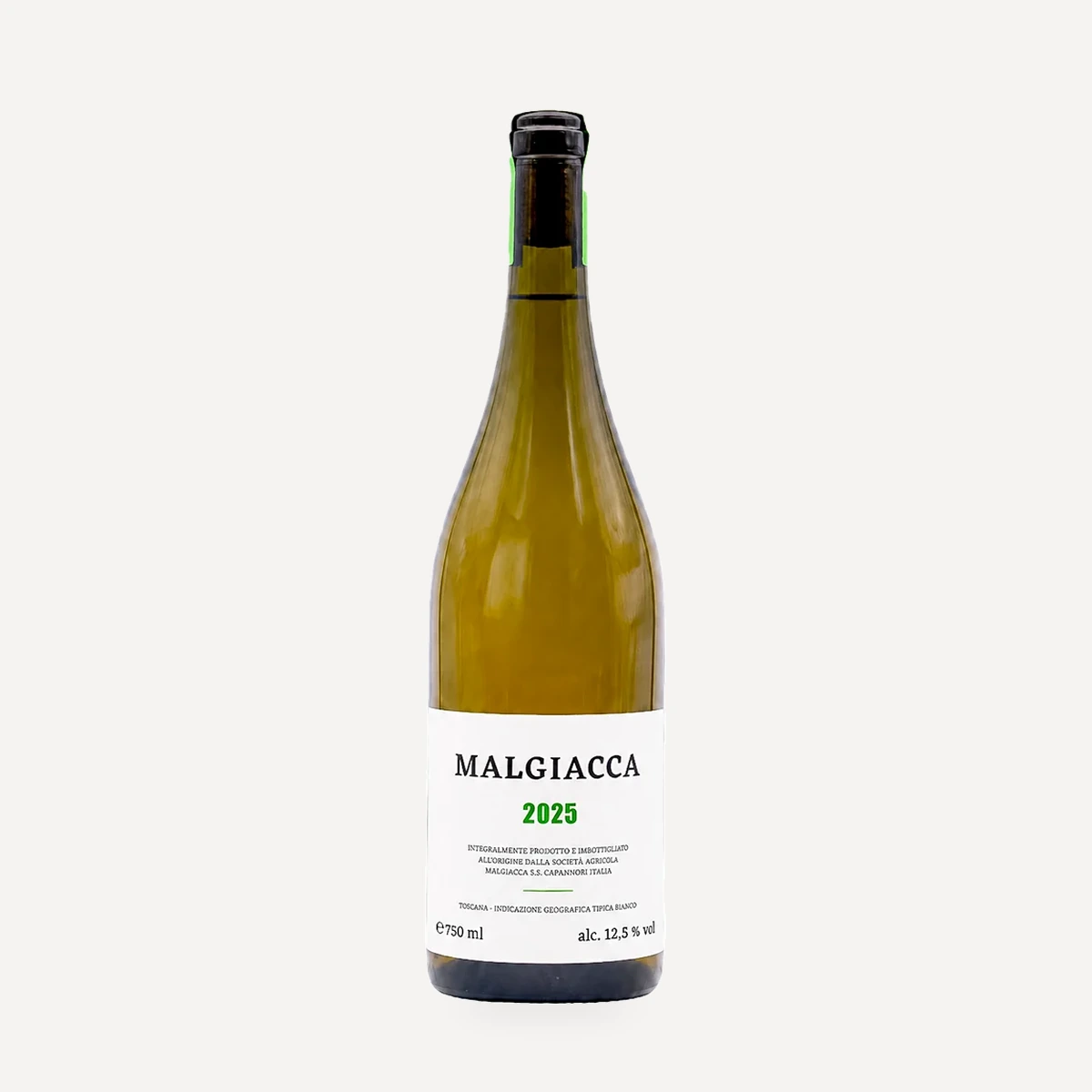
Malgiacca Bianco
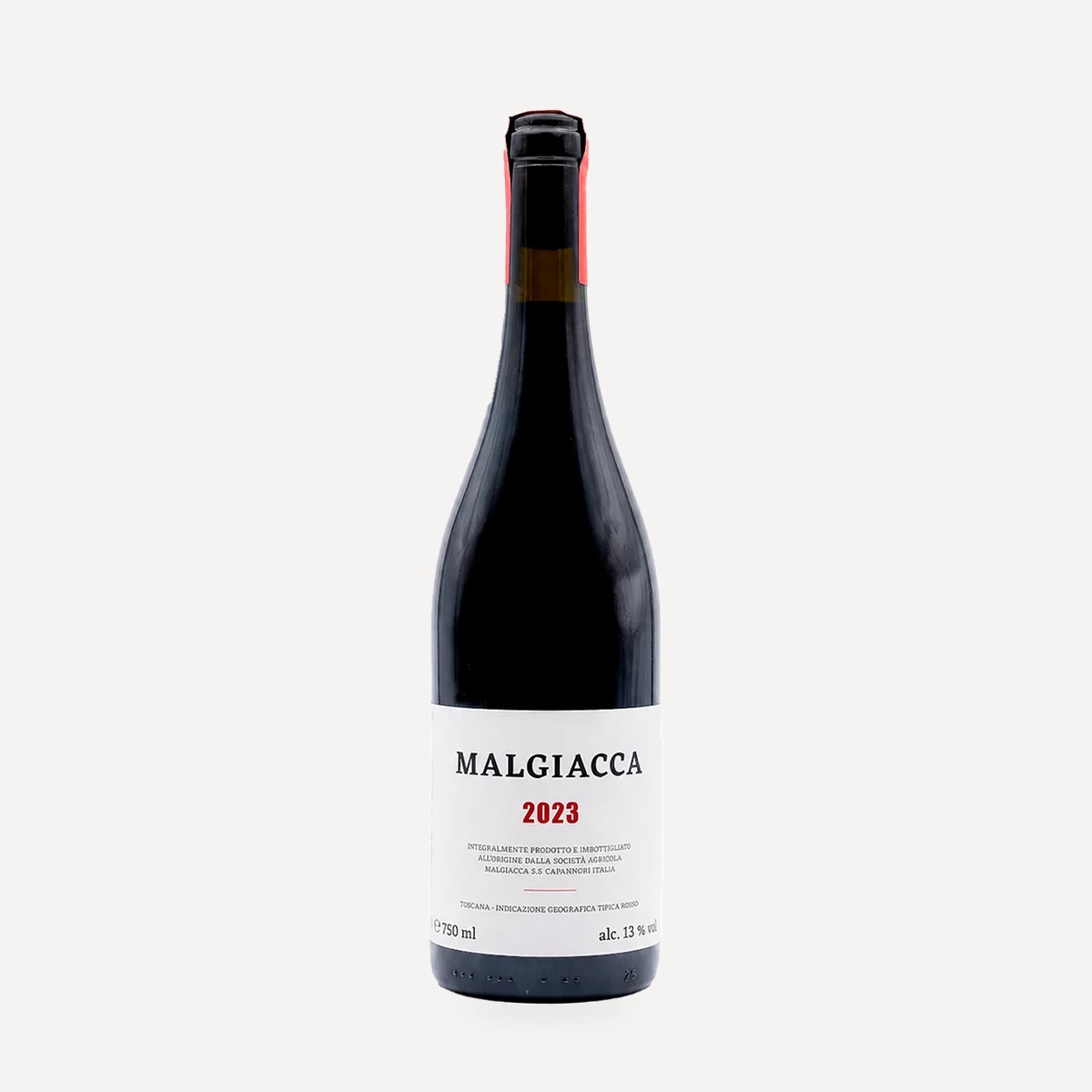
Malgiacca Rosso
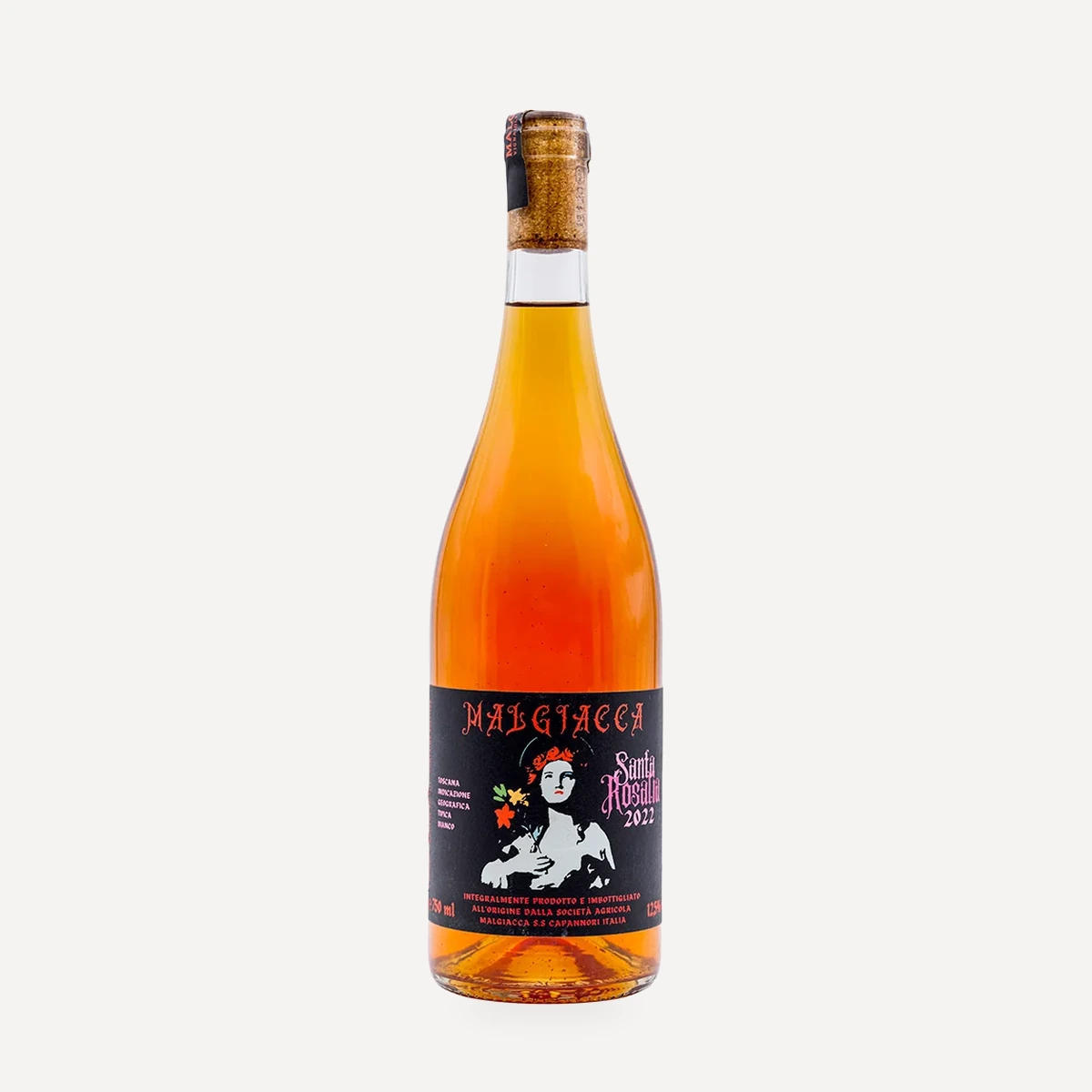
Santa Rosalia
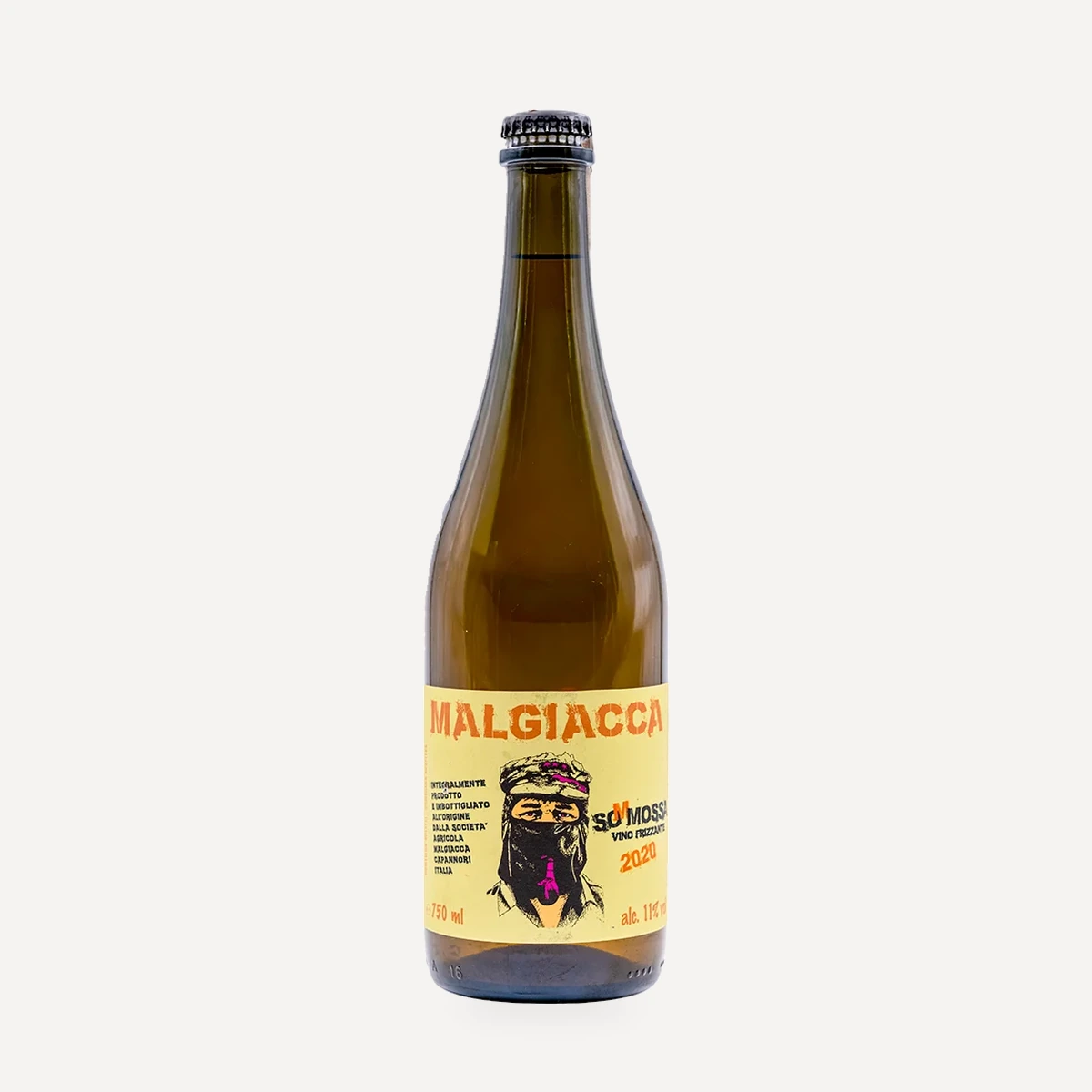
Sommossa