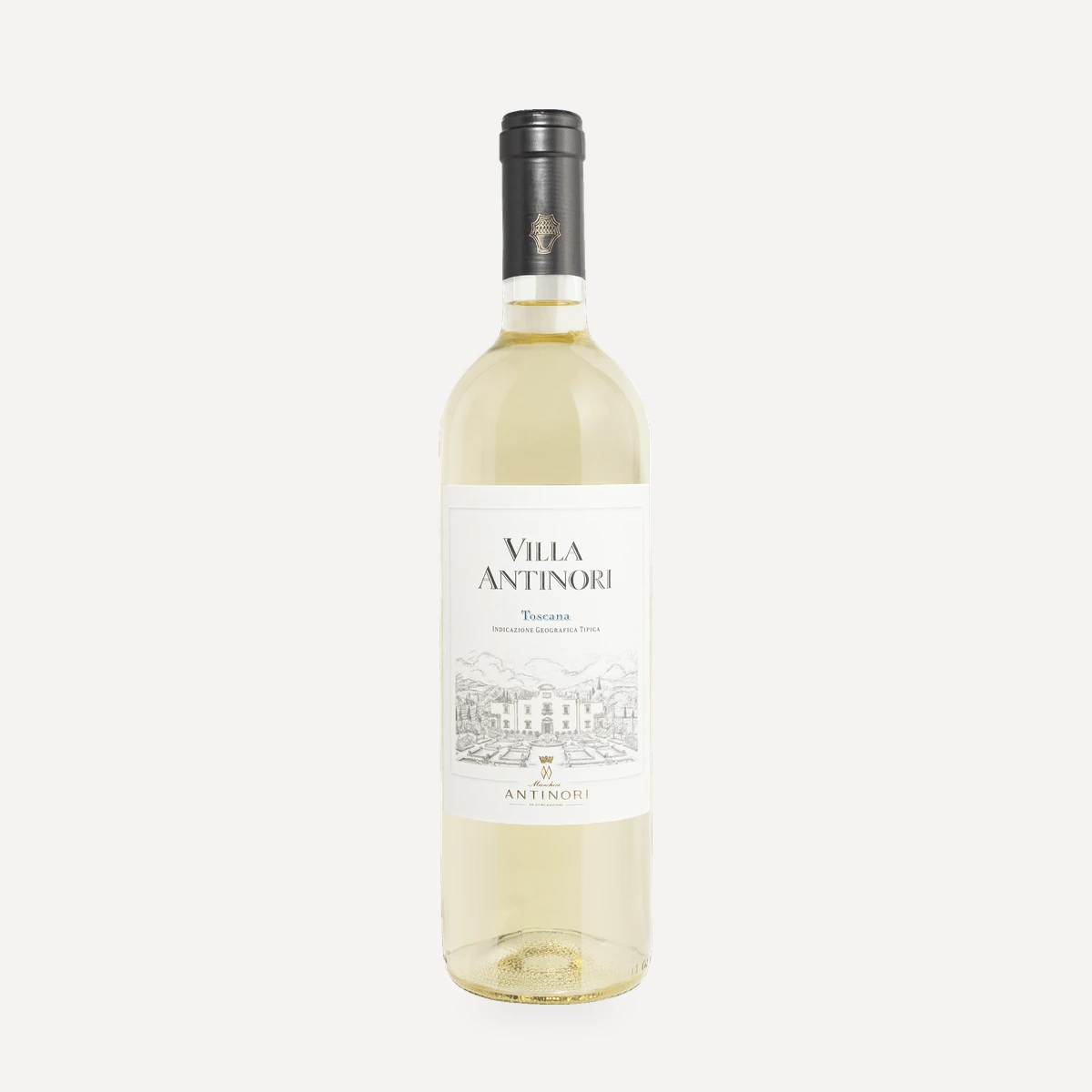
Questo vino
Vineyard and terroir
A Tuscan white blending traditional local grapes with other white varieties, shaped to express the origin of the fruit.
Grapes
The 2025 harvest account identifies Pinot Grigio, Pinot Bianco and Vermentino.
Vinification
The freshly harvested grapes were destemmed and gently pressed. The must was chilled to 10 °C to promote natural clarification. After 48 hours, it was transferred to stainless-steel tanks, where alcoholic fermentation took place at no more than 17 °C.
Ageing
The wine was held in stainless-steel tanks at a controlled 10 °C until bottling began in January 2026.
Tasting profile
Straw yellow with greenish hues. The intense nose offers citrus fruit, green apple and pear alongside orange blossom. The palate is fresh, enveloping, pleasant and savory.
Vintage notes
The 2025 season began with mild, wet winter and spring weather that built substantial groundwater reserves. Summer was generally dry and regular, with beneficial rainfall and brief heat peaks in late June and August. Stored water reserves prevented vine stress and supported steady ripening. Harvest was approximately one week earlier than in 2024: Pinot Grigio was picked from mid-August, Pinot Bianco between late August and early September, and later-ripening Vermentino from early to mid-September.
Label / history
Niccolò Antinori first produced Villa Antinori Bianco in the 1931 vintage from traditional Trebbiano grapes. Chardonnay was introduced in a small proportion during the 1980s to add structure. The label has remained virtually unchanged since the wine’s debut, as has the philosophy of expressing the place where its grapes are grown.