Questo vino
Vineyard and terroir
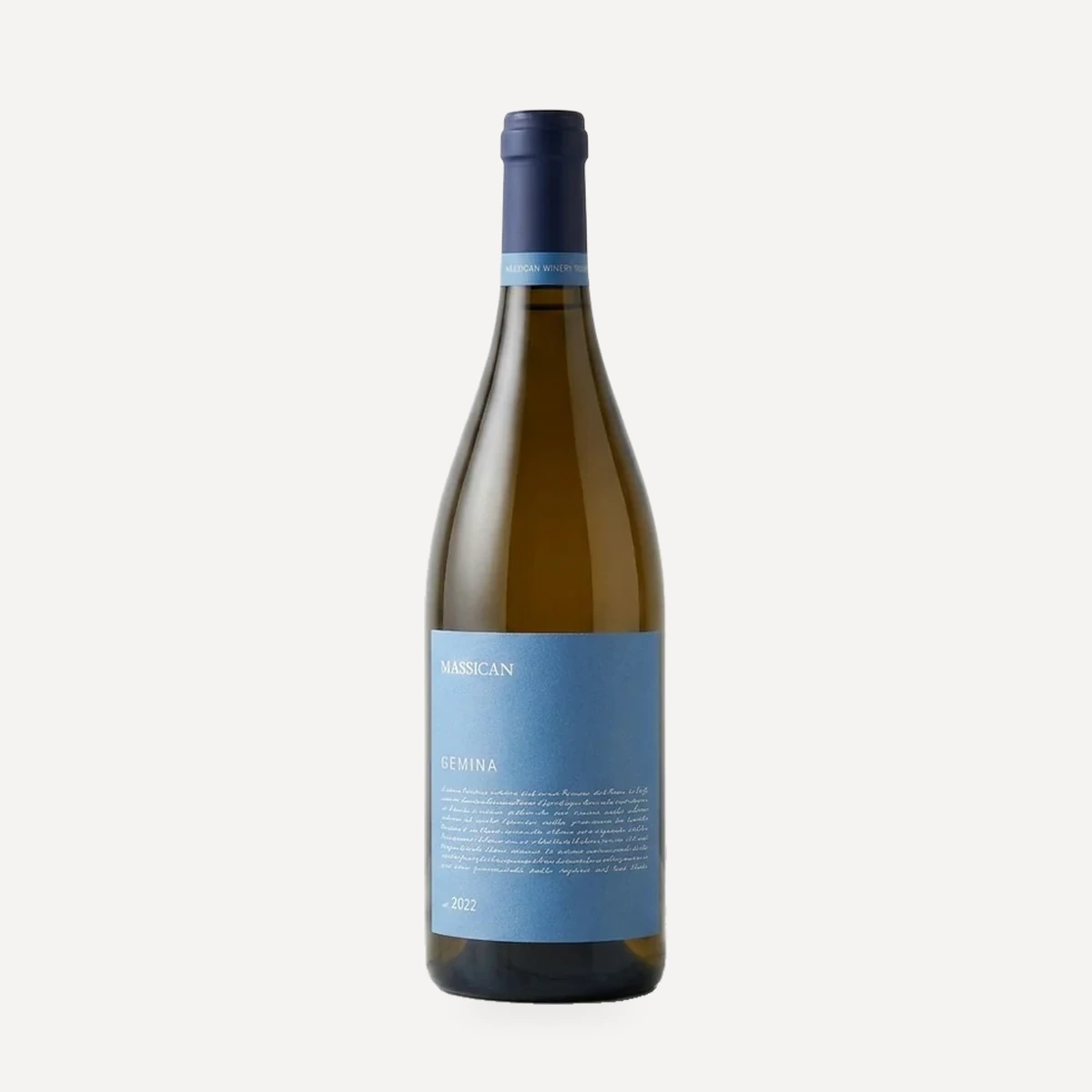
Gemina carries a California appellation. Its fruit is distributed across Dunnigan Hills (38%), Clarksburg (34%) and Sonoma (28%). Greco comes from Ferrendelli in Dunnigan Hills and Bowland in Russian River. Falanghina is grown at Lost Slough in Lodi, while Fiano comes from Bowland. All contributing vineyards are organically farmed, and none uses glyphosate for weed control.
Grapes
Blend proportions vary by vintage. Latest published vintage (2025): 50% Greco, 34% Falanghina and 16% Fiano.
Vinification
Every vineyard and grape variety is hand-harvested and fermented separately. Picking takes place at daybreak, followed by whole-cluster pressing. The juice settles overnight and is decanted the next morning. Fermentation uses native or cultured yeast according to the requirements of each lot. Gemina was fermented in 76% neutral French oak, 12% stainless steel and 12% concrete egg. Blending takes place in January and bottling in late February. The wine is sterile-filtered without fining or cold stabilization.
Technical data
Alcohol is 12.0%, pH 3.1 and total acidity 9.3 g/L, including 3.3 g/L malic acid. Residual grape sugar is 1.5 g/L. Sulfur represents approximately 0.002% of the wine’s composition. Production totals 20,640 bottles. A 118 ml serving contains 91 calories and three grams of carbohydrates.
Tasting profile
A high-acid southern Italian-inspired white with fresh citrus and pronounced saline character. Its maritime quality is likened to Mediterranean coral from the waters around the Amalfi Coast.
Serving and pairing
Designed for youthful drinking, especially during the year following the vintage. The recommended pairing is eggplant parmigiana.
Label / history
The name derives from Aminea Gemina, an ancient Greek grape planted in Italy around 600 and identified as the genetic equivalent of modern Greco. Gemina is pronounced “JEH-mee-nah.”