Storia
Before Massican
Dan Petroski grew up in Brooklyn, New York, one of four children raised by his mother, Annia. His early ambition was to work in magazines. After graduating from Columbia University in 1995 with a history degree and having played college football, he joined Sports Illustrated and later moved to TIME. He worked across consumer marketing, finance, advertising and client management while completing an MBA at New York University. Restaurant entertaining in New York became his route into wine.
In 2005, aged 33, Petroski left TIME, declined an opportunity at The Wall Street Journal and moved to Sicily. The connection came through his NYU classmate Massimo Califiori, who introduced him to the family behind Valle dell’Acate. Petroski worked there three days a week for approximately a year, using the remainder of his time to travel and absorb Italian wine and food culture. Sicily established his attachment to young, saline, floral and citrus-led white wines, while visits farther north drew him toward the weight and perfume of northeastern Italian whites.
Petroski returned to New York hoping to work in wine sales or marketing, but found no suitable position. In 2006 he moved west, staying with Webster Marquez in Sonoma County while looking for cellar work. Andy Smith gave him a harvest internship at DuMOL and then sent him to complete the harvest at Larkmead. Smith hired him as Larkmead’s cellar master in 2007. Petroski immersed himself in production, tasting-room work, finance and marketing, eventually becoming Larkmead’s head winemaker with the 2012 vintage.
2009: the first vintage
Petroski initially prepared a conventional Napa Cabernet business plan. The model required expensive fruit and oak plus five or six years of investment before meaningful revenue. He therefore recast the plan around white wine, which could be released sooner and would answer what he saw as a gap for Mediterranean-style whites suited to Napa’s warm climate. Massimo Califiori encouraged him to make wine in 2009.
The project began without an estate, using purchased grapes. The first vintage amounted to approximately 400 cases and included two Italian-inspired blends and Sauvignon Blanc. Petroski assembled Tocai Friulano, Viognier, Sauvignon Blanc and Ribolla Gialla with the intention of creating a broad, Friuli-inspired blend. The Tocai and Ribolla were affected by virus and did not ripen as intended, the Sauvignon Blanc retained extremely high acidity, and the Viognier proved too waxy. Instead of one blend, he divided the material into three wines.
What Petroski regarded as a compromised first attempt became an early commercial turning point. Master sommelier Dennis Kelly, then beverage director at the French Laundry, offered to buy all 50 cases of the inaugural Sauvignon Blanc. It remained on the restaurant’s by-the-glass list for ten years, giving the young brand sustained exposure.
The first harvest also included one ton of fruit from George Vare’s vineyard. Vare had championed Ribolla Gialla in Napa after bringing cuttings to California in 2000 and grafting 2.5 acres. Ribolla was not part of Petroski’s original plan, but became central to Massican’s identity.
2010–2020: building the brand and its vineyard network
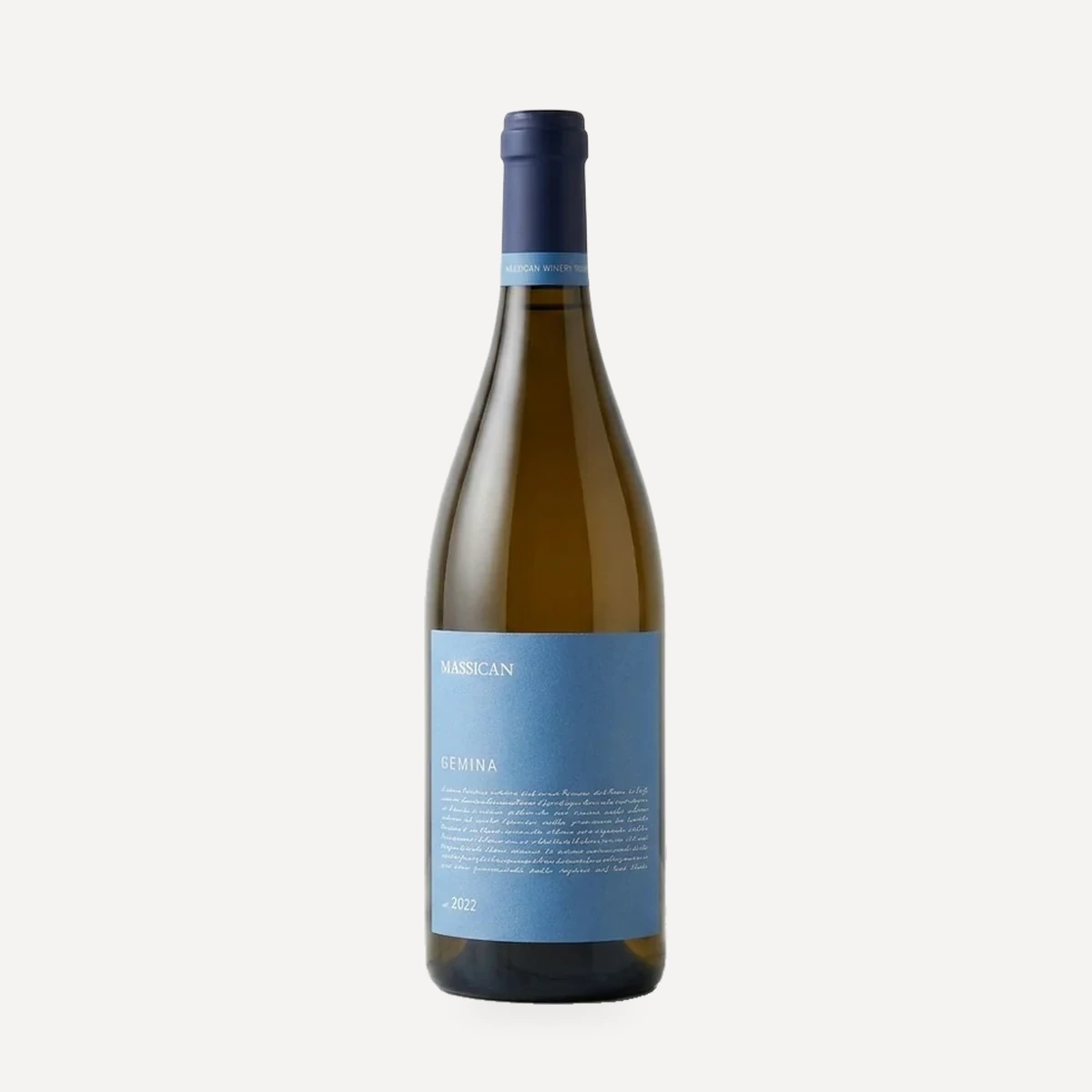
The inaugural wines were released in 2010. They included Sauvignon Blanc, Annia—named for Petroski’s mother and based on Ribolla Gialla, Tocai Friulano and Chardonnay—and an early Gemina. The Massican name derives from Monte Massico in Campania, near the place where Petroski’s maternal great-grandparents lived.
Access to uncommon varieties grew through personal relationships. Andy Smith connected Petroski with Chardonnay from Hyde Vineyards. Tegan Passalacqua directed him to old Tocai vines at Nichelini in Chiles Valley. Steve Matthiasson introduced him to George Vare and the Oak Knoll vineyard planted to Friulian varieties. Petroski later persuaded Russian River Valley grower Chris Bowland to plant Ribolla Gialla and Tocai Friulano specifically for Massican; Bowland also planted Greco and Fiano. Hyde Vineyard Chardonnay, previously used within Gemina and briefly bottled as a 100% Gemina Chardonnay, became a separately named wine with the 2014 vintage.
Massican remained Petroski’s side project for twelve years while he continued at Larkmead. Production grew from roughly 400 cases through intermediate levels of 700 and 2,000 cases. Beyond the core wines, the brand made dry white and sweet vermouths from 2011 through 2019, and Belgian witbier and pilsner between 2015 and 2022; the beers were made in used Massican wine barrels.
Petroski was named the San Francisco Chronicle Winemaker of the Year in 2017. The 2017 Annia subsequently entered Wine Spectator’s 2018 Top 100. In August 2020, Massican began a digital magazine in collaboration with Phaidon Press, initially exploring the brand’s blue color and later architecture, art, cooking, design, fashion, photography, restaurants and travel.
2021–2022: full-time focus and expansion
Petroski left Larkmead in 2021 after nearly fifteen years and made Massican his full-time work. Contemporary accounts place production near 3,000 cases during the transition, while later retrospectives describe the project as having grown from 400 to 2,000 cases before expanding toward 10,000 cases under his full-time direction.
Growth made sourcing more difficult. Several Pinot Bianco vineyards changed ownership and Massican lost their contracts; for one vintage Petroski gently pressed Pinot Noir to make a white wine when Pinot Bianco and Pinot Grigio were unavailable. He also began looking farther afield for fruit.
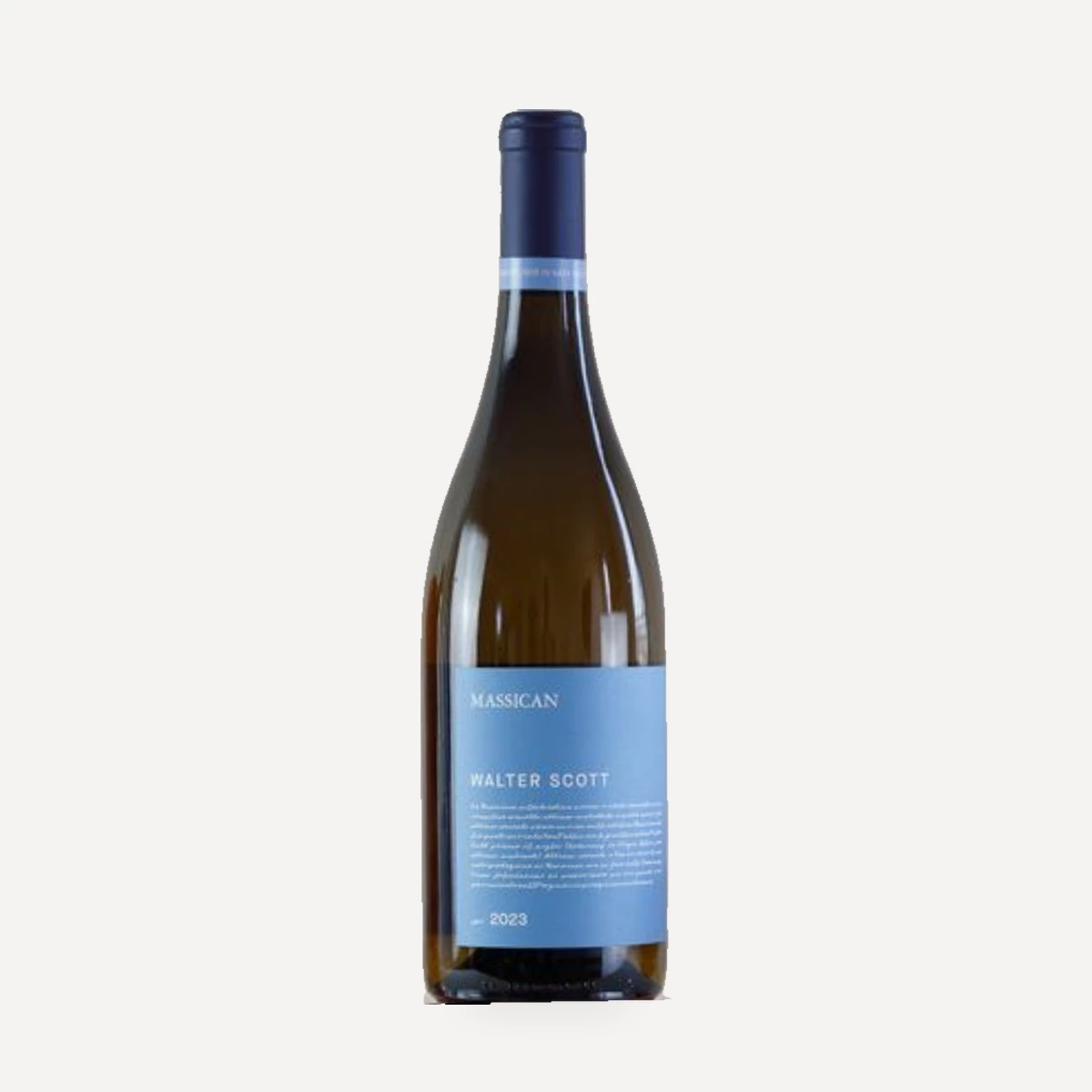
The Collaboration Series, also called the B-Sides, expanded Massican beyond its core cellar. Petroski invited other winemakers to create their own interpretation of the Massican idea, with white wine as the only absolute requirement. Early collaborators included Sam Bilbro, Ken Pahlow, Erin Pooley, Maryam Ahmed, Tyler Thomas and Mitja Sirk. The collaborators selected sources and worked in their own facilities; Massican purchased the finished wine and supplied packaging. Most lots were below 160 cases. The collaborations were intended both as creative exchanges and as a way to grow without placing all production demands on Massican’s own operation.
In 2022, core production rose from approximately 4,500 to 6,500 cases. The variety palette expanded beyond the historical Tocai Friulano, Ribolla Gialla, Chardonnay and Sauvignon Blanc to encompass Pinot Grigio, Pinot Bianco, Greco, Falanghina, Fiano, Cortese and Muscat. Petroski was named a Food & Wine Drinks Innovator of the Year.
Massican also worked with artist Amber Vittoria on a new visual emblem. Vittoria tasted the wines and translated their flavors and style into color and digital compositions. The collaboration initially included digital collectibles that buyers could mint as NFTs.
2023 onward: acquisition and a larger platform
E. & J. Gallo announced its acquisition of Massican in September 2023. Gallo acquired the brand and inventory; Massican owned no vineyards. Petroski agreed to remain for the long term, continuing to direct both winemaking and the brand’s creative vision. The initial growth objective was 50,000 cases within five years. The 2023 wines were the first produced with Gallo’s facilities and vineyard network, without an intended departure from the established style. Pinot Grigio entered the core range as a new avenue for broader growth.
The Vittoria emblem—a rising or setting sun or moon above water—debuted on the 2023 labels. On the back label, the image also functions as a QR code. Petroski received VinePair’s Winemaker of the Year recognition in 2024.
The range now draws ten varieties from a stated sixteen vineyards. For the 2025 vintage, 65% of those sources were organically farmed. Packaging was also lightened to 468-gram bottles made in California with 50% recycled glass, reducing bottle weight by 20%. Over two years, the change saved almost 45,359 kg of glass and approximately 40 metric tons of carbon associated with glass production. Future plans include an intimate tasting experience and an Italian aperitivo-style bar concept.
Terroir
Massican is an estate-less producer whose geographical identity comes from a network of grower vineyards rather than one contiguous property. The current range draws ten grape varieties from a stated sixteen vineyards distributed across California. The core geographical frame is the California North Coast north of San Francisco, but current sourcing also reaches Dunnigan Hills, Clarksburg and Lodi.
Napa sources include Nichelini in Chiles Valley, Vare/Bengier in Oak Knoll, Yountmill in Napa, Fish in Calistoga, Morganlee in Yountville, John Anthony in Carneros and Hyde Vineyards on the Napa side of Carneros. Sonoma sources include Bowland and Shone Farms in Russian River Valley and Thompson in Dry Creek. Fox Hill and Barra are in Mendocino; Ferrendelli is in Dunnigan Hills; Heringer and Silt are in Clarksburg; and Mio Vigneto is in Lodi. Lost Slough supplies varieties associated with both Clarksburg and Lodi in the current descriptions.
The individual wines are consequently labeled either California or Napa. Annia combines fruit from Napa, Mendocino and Sonoma. Gemina combines Dunnigan Hills, Clarksburg and Sonoma. Pinot Grigio draws from Sonoma, Clarksburg and Napa. Sauvignon Blanc combines Napa, Sonoma, Clarksburg and Lodi. Hyde Vineyard Chardonnay is a Napa wine because its Carneros site lies on the Napa side of the appellation.
The project began from Petroski’s observation that Napa’s summer climate could feel Mediterranean even though the region’s prevailing wine culture emphasized powerful reds and rich whites. Some northeastern Italian varieties naturally favor colder, wetter settings than California’s hot, dry conditions. Massican responds by harvesting toward the earlier side of the acid curve, seeking to retain freshness and varietal character.
Vinificazione
Massican purchases fruit rather than farming an estate. Its minimum sourcing threshold is sustainable farming, while the upper end of the network is certified organic. Organically farmed sources accounted for 65% of the vineyards used in the 2025 vintage. The proportion varies by blend: the current Annia sources are 72% organic, Pinot Grigio and Sauvignon Blanc sources are 54% organic, and the vineyards used for Gemina and Hyde Vineyard Chardonnay are 100% organic. Glyphosate is not used for weed control in the vineyards supplying the listed 2025 wines.
Every lot is harvested by hand at daybreak. Petroski generally favors the earlier side of the acid profile, particularly for northeastern Italian varieties growing under California’s warmer, drier conditions. His aim is to preserve the balance of sugar, acidity and the variety’s inherent flavor profile. Selection of the picking date relies heavily on accumulated familiarity with vineyards worked for ten to thirteen years and on the season’s development rather than extensive routine chemistry sampling. He rejects the idea of a single perfect harvest moment.
Preference is given to organic growers, though historically the amount of suitable organic fruit has not always met production needs. Growers avoiding glyphosate have been prioritized where possible. The expanding network—Napa, Sonoma, Mendocino, Dunnigan Hills, Clarksburg and Lodi—also reflects the difficulty of finding sufficient quantities of uncommon Italian varieties as demand and production increased.
Massican’s cellar approach combines low intervention with pragmatic control. Every vineyard and grape lot is fermented separately. Hand-picked clusters arrive after a daybreak harvest and are pressed whole-cluster. The freshly pressed juice settles overnight and is decanted the following morning into its fermentation vessel.
Fermentations use either native or cultured yeast. Native fermentation is chosen when the fruit is judged suitable; lots that need greater security are inoculated. Vessels include 303-litre French oak barrels, 284-litre stainless-steel barrels, larger oak formats and stainless-steel tanks of several sizes. Neutral French oak is the principal wood choice for the blends, while stainless steel is central to Sauvignon Blanc. The broader current program also includes a concrete egg and a large neutral French oak foudre of approximately 6,246 litres. Hyde Vineyard Chardonnay is fermented in new French oak. Malolactic conversion is commonly blocked to retain acidity.
The ingredients are grapes, yeast, nitrogen as a yeast nutrient, and sulfur added after fermentation for antioxidant and antimicrobial protection. Natural grape sugars are fermented rather than supplemented with added sugar. No egg, milk, fish protein or other allergen-based fining materials are used; the wines are vegan and gluten-free.
Blending takes place in January. Before bottling in late February, the wines are sterile-filtered to remove active and dead yeast cells, prevent refermentation and obtain clarity. They receive no fining agents and are not cold-stabilized, so tartrate crystals may remain possible after exposure to low temperatures.
The bottles weigh 468 g, contain 50% recycled glass and are manufactured in California. This format is 20% lighter than the preceding bottle. Across two years, the change eliminated almost 45,359 kg of glass and approximately 40 metric tons of production-related carbon.
Filosofia
Massican was conceived to make fresh Mediterranean-style white table wines for California’s climate. Petroski’s reference point is the young wine he drank directly from tanks while living in Italy: floral on the nose, citrus- and salt-led on the palate, light, bright and intended to be enjoyed young. He generally favors the calendar year after the stated vintage, when the wines retain their most vivid freshness; with additional months, he expects them to gain weight and texture.
The brand’s governing discipline is to focus exclusively on white wine. Petroski frames the wines as accessible table companions rather than objects that require specialist knowledge. Purity, directness and linearity take precedence over oxidative or deliberately reductive characters. Low intervention does not mean refusing practical controls: fermentations may be native or inoculated, malolactic conversion may be stopped, and sterile filtration is used to protect wines bottled without fining or cold stabilization.
Massican joins Italian memory to California agriculture. Its identity lies both in Petroski’s experience of Italy and in the California vineyards where the wines were born. The original Friulian emphasis later broadened into a Mediterranean identity, allowing varieties from northern and southern Italy and potentially other Mediterranean traditions to serve the same goals of freshness, aroma, texture and moderate weight.
Climate change is part of the variety and harvest strategy. Petroski considers white grapes less dependent than reds on the complete maturation of skins and seeds. Earlier picking can preserve the balance of sugar and acid, while a broader Mediterranean variety palette provides room to explore grapes adapted to changing conditions.
Beyond production, Petroski treats Massican as a cultural publishing and design project. Magazines, food, art, music, collaborations and experiments in digital ownership are intended to invite audiences into wine through multiple points of access. Collaboration wines apply a publisher’s model: other winemakers receive creative freedom to interpret the Massican vocabulary rather than reproduce a fixed recipe.
Vini
Massican Collaboration Series — Walter Scott