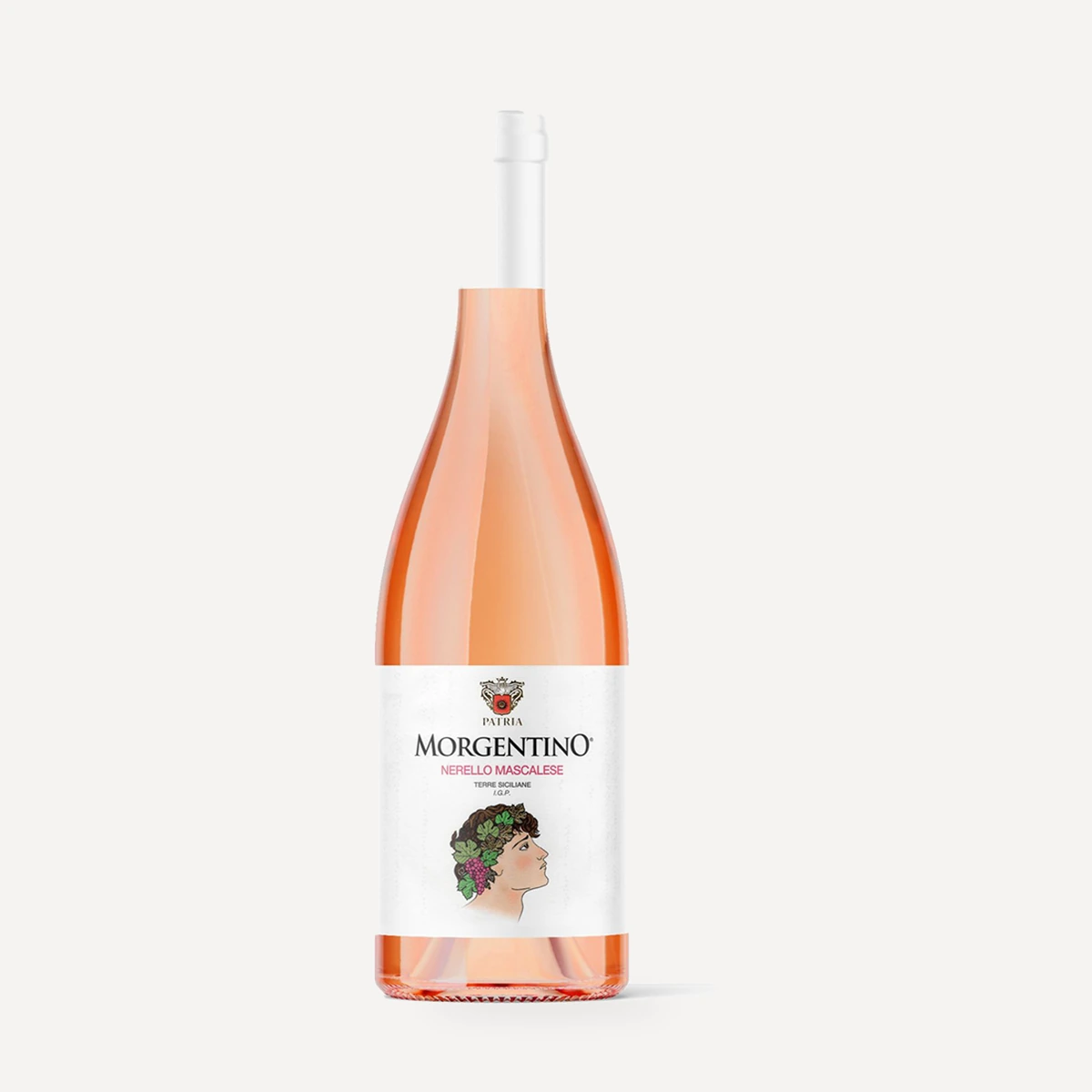
Questo vino
Vineyard and terroir
The Nerello Mascalese is grown in Contrada Pontale Palino on Etna’s northern slope. The wine page places the vineyard at 650 metres above sea level, while the technical sheet gives 600 metres. Its volcanic soil is rich in potassium and iron. The vines average 12 years of age and are trained to spur-pruned cordon. Harvest takes place in September.
Grapes
100% Nerello Mascalese.
Vinification
The grapes undergo approximately four hours of skin contact. The free-run must is then separated from the skins and fermented with selected yeasts in stainless-steel tanks for around 10–15 days at 18–20°C. Secondary fermentation takes place in an autoclave, followed by at least three months of maturation. Malolactic fermentation is not carried out.
Ageing
At least 30 days in bottle.
Technical data
IGT Terre Siciliane. Residual sugar: 6 g/L. The wine page gives an alcohol content of 11.5% vol., while the technical sheet states 12% vol.
Tasting profile
Clear, bright cherry pink with fine, persistent effervescence. The nose is floral, recalling Mediterranean scrub, with mineral nuances and delicate berry notes. The palate is youthful, fresh and savoury, with gentle effervescence.
Serving and pairing
Serve at 8–10°C. Suitable as an aperitif and with light fish-based first courses, fried fish, soft or briefly aged cheeses, and lightly structured Mediterranean vegetable and seafood dishes.
Label / history
The Morgentino name evokes the legend of King Morgete and the Morgeti, portrayed as ancient custodians of eastern Sicily and early practitioners of viticulture. The story also recalls their alberello vine cultivation and the later cultural influence of Chalcidian settlers, with Bacchus representing the connection between wine and the divine.