Questo vino
Vineyard and terroir
The Spergola comes from the upper Reggio Emilia plain within the municipality of Reggio Emilia. The soils are loamy, with clay and sand. The 18-year-old vines are trellised and Guyot trained. Yield is 10 tonnes per hectare, and harvesting is performed by hand from mid to late August. Production is certified organic under EU Regulations 848/18 and 203/12.
Grapes
100% Spergola, a white-skinned variety.
Vinification
Whole bunches are gently pressed, followed by spontaneous fermentation with native yeasts. The first fermentation takes place in stainless steel. Clarification is achieved only through racking, and the wine is not filtered. Secondary fermentation takes place in bottle.
Ageing
Traditional-method white sparkling wine aged for at least 18 months in bottle. It is finished without dosage in a pas dosé, brut nature style.
Technical data
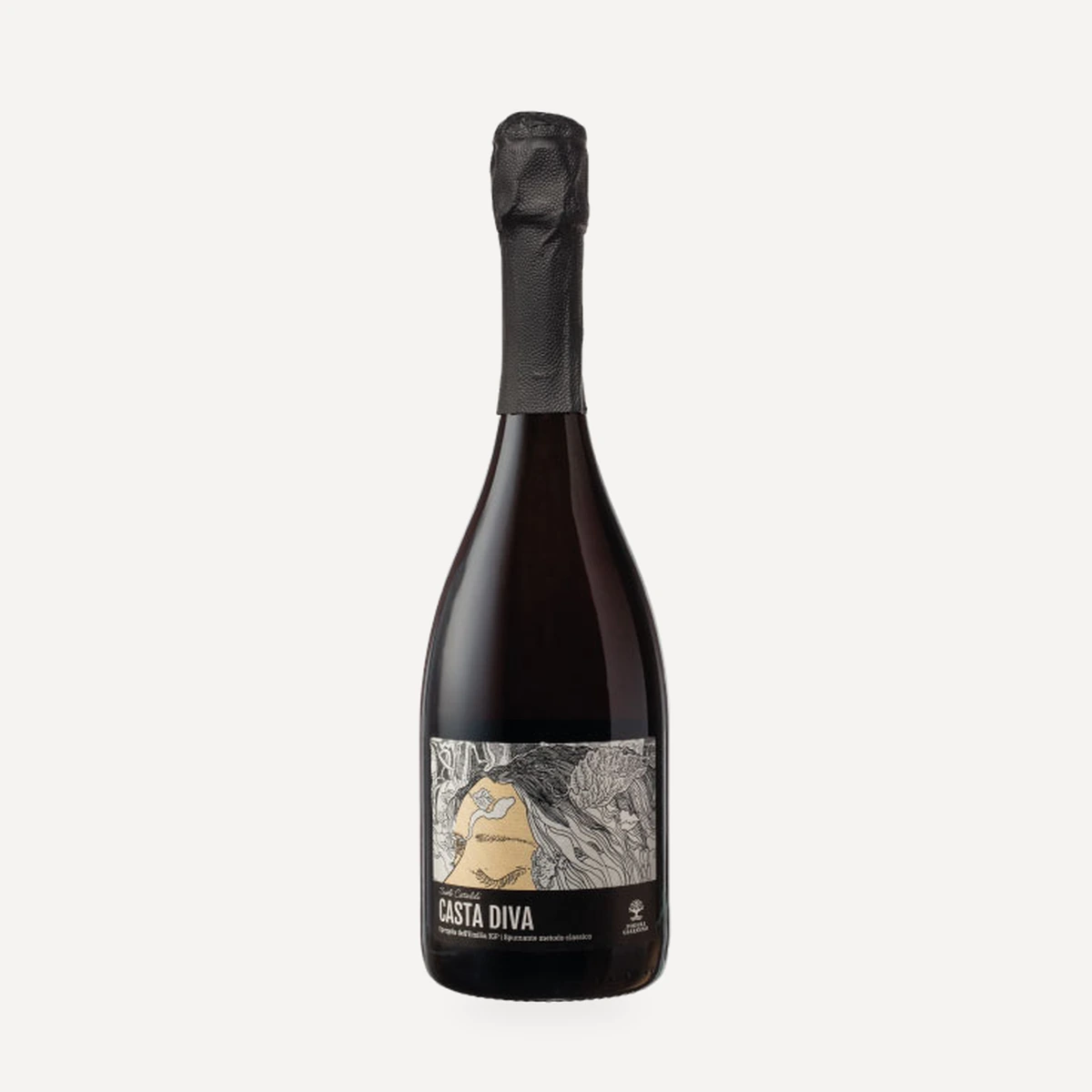
Spergola Emilia IGP Spumante. Alcohol is 12% vol., total acidity 6.70 g/L and residual sugar 0 g/L. Total sulphur dioxide is below 20 mg/L. Bottle size is 750 ml.
Tasting profile
Pale yellow, with a fine, persistent mousse. Delicate apple aromas lead into a particularly fresh, light and easy-drinking palate.
Serving and pairing
Serve at 8–10°C. Pair with fish, including more elaborate fish dishes, mixed land or seafood starters, and traditional Emilia cured meats. Its versatility also suits service throughout a meal or as an aperitif.
Label / history
The name refers to the celebrated “Casta Diva” aria from Bellini’s opera Norma, connecting this traditional-method Spergola with the opera’s central invocation.