Questo vino
Vineyard and terroir
Brio is a Toscana Rosso IGT based on Sangiovese and other indigenous Tuscan varieties. Its character is conceived as a youthful expression of the local terroir. Fruit from Scansano may form a small component in some years, although the generous 2024 harvest allowed the wine to be made without it. The 2024 profile includes a lightly saline, sanguine nuance associated with the thick skins and slower ripening conditions in Montalcino.
Grapes
Sangiovese. The wine is described more broadly as being made from indigenous Tuscan grape varieties; exact proportions are not specified.
Vinification
The 2024 vintage was vinified exclusively in stainless steel, a method chosen to retain freshness and the intensity of its fruit.
Technical data
Toscana Rosso IGT. Production amounted to 20,000 bottles in 2024. The 2023 release totalled 1,900 cases, of which 300 cases were imported.
Tasting profile
Fresh, fruity, balanced and elegant, with energetic movement and persistent flavour. The 2024 vintage shows polished cherry and redcurrant fruit, a smooth texture and a slightly salty, sanguine accent. The 2023 vintage is vibrant and expressive, combining strawberry and cherry with mineral and wild-herb notes. Its light, finely woven texture carries good intensity into a lingering finish.
Serving and pairing
Designed for flexible drinking at the table, especially with pasta and meat dishes. The 2023 vintage may be enjoyed through 2032.
Vintage notes
The 2024 release received 91/100 from Monica Larner and had a production of 20,000 bottles. The 2023 received 92/100 from Bruce Sanderson; 1,900 cases were produced, including 300 cases for import.
Label / history
Brio was first produced in 1991, discontinued after 1999 and revived in 2021.
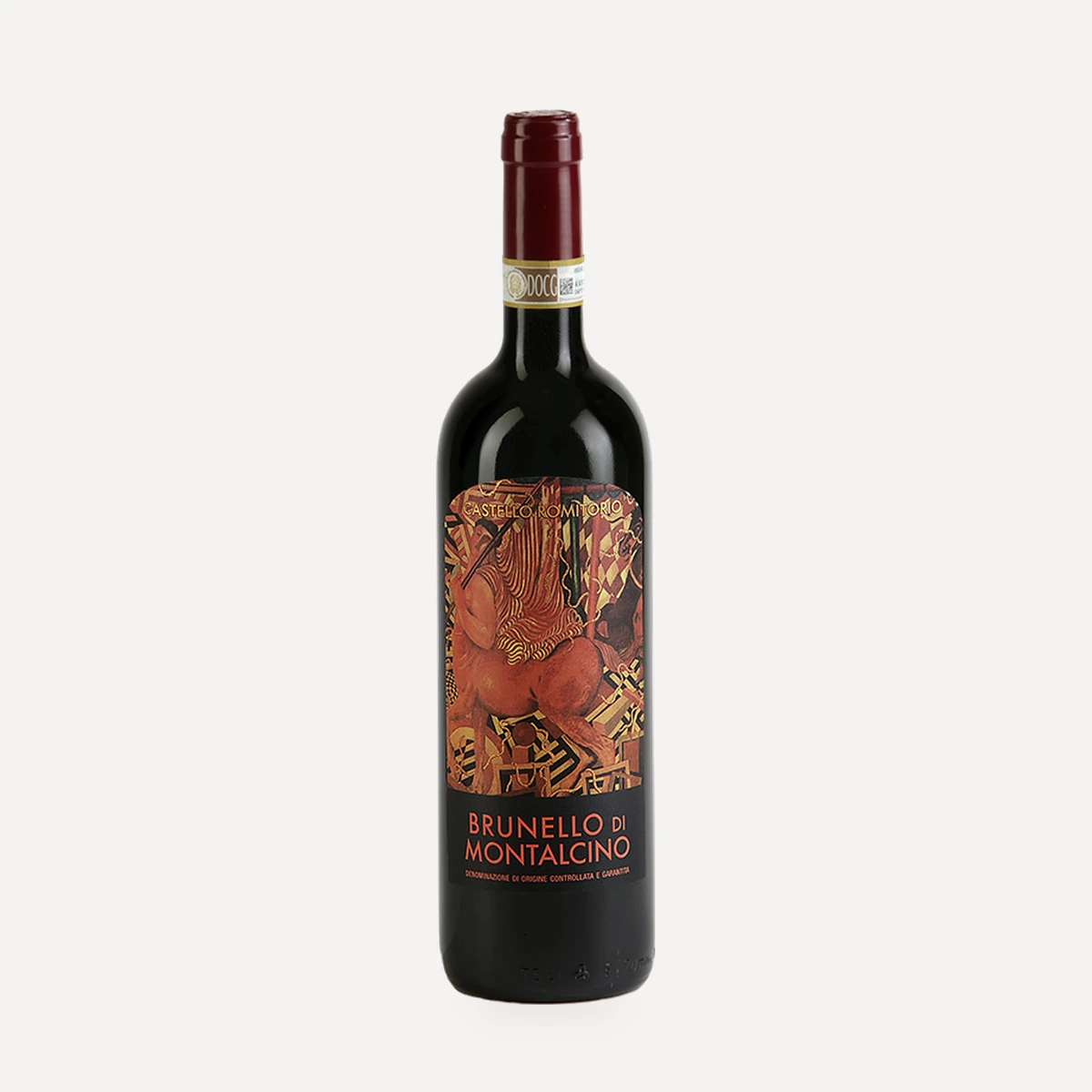
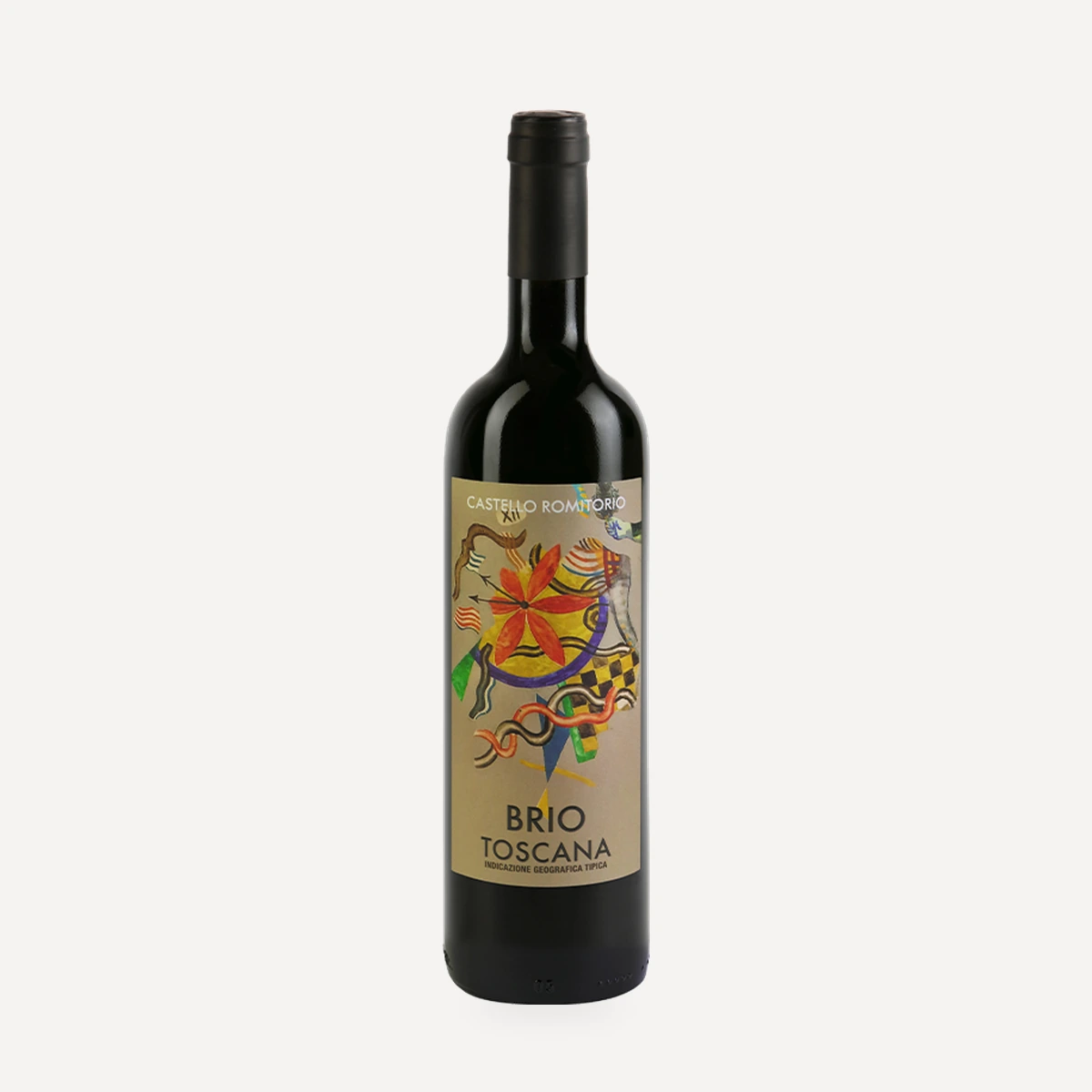
Its label reproduces a large fresco by Sandro Chia from the main dining room at Castello Romitorio in Montalcino. Archaic, dreamlike symbols structure the composition: a chessboard evokes existence, a violin represents the sound of souls, and a clock signifies both life's cycle and the transience of time, as well as order and structure. These motifs parallel the wine's vibrant, musical identity and its interplay of nature, soul and time.