Questo vino
Vineyard and terroir
Filo di Seta comes from old Sangiovese vines in the north-western area of Montalcino. It expresses the bold yet elegant character associated with the darker, wilder side of this terroir. The vines are carefully tended to maintain harmonious, balanced yields and enable the grapes to reach optimal ripeness.
Grapes
Sangiovese.
Vinification
The grapes undergo two rounds of hand sorting at the winery: one before destemming and another afterward. Fermentation takes place in temperature-controlled cement tanks with maceration on the skins. Spontaneous malolactic fermentation follows. The wine is then allowed to rest so that it separates from the lees.
Ageing
Maturation in oak lasts for at least 24 months. After bottling, the wine remains for a minimum of four months in Castello Romitorio’s temperature-controlled cellars.
Tasting profile
The wine combines a bold character with elegance, reflecting the wild, dark-toned identity of north-western Montalcino.
Label / history
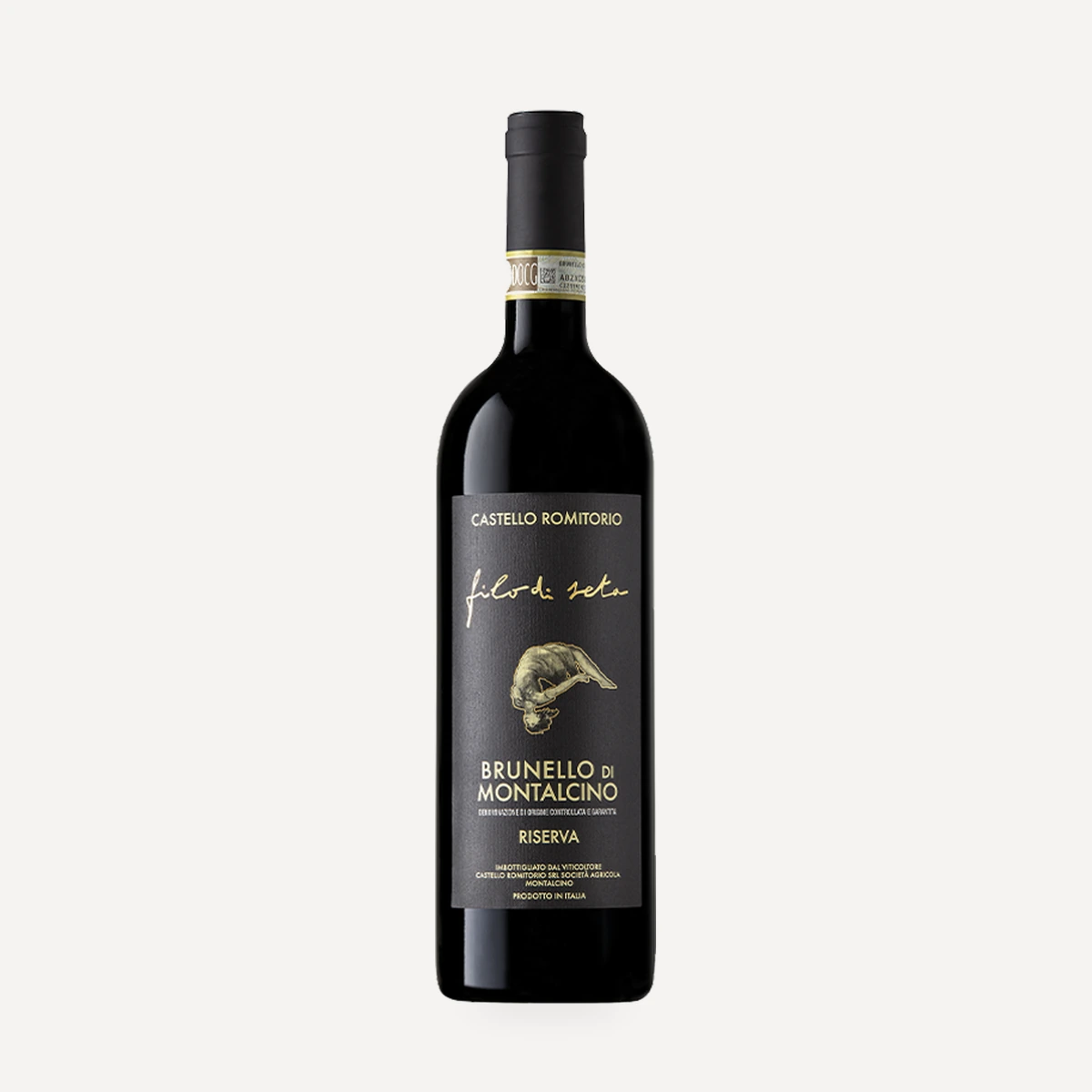
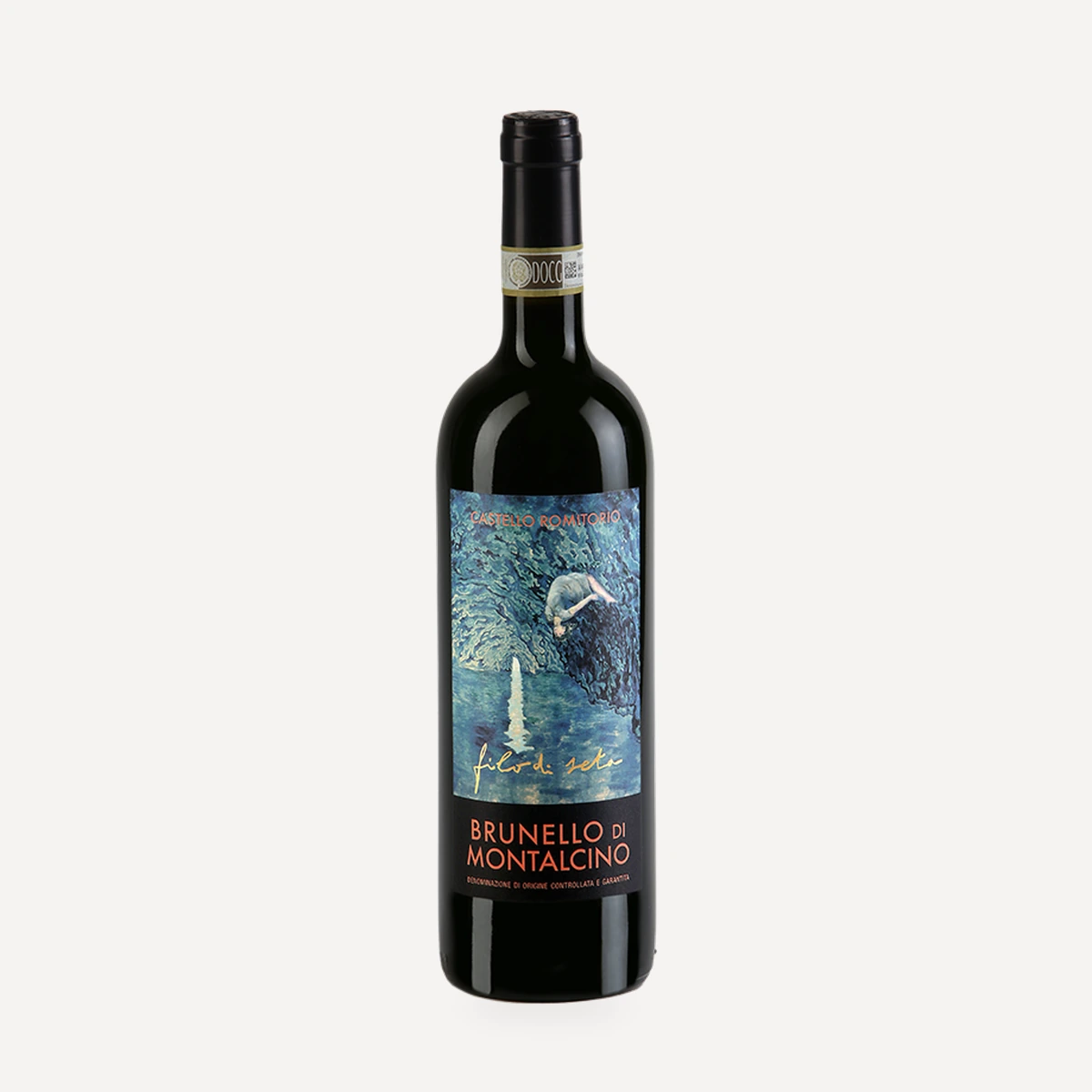
“Filo di Seta” means “silk thread.” The name refers to a small creek running through the undisturbed woodland of the Castello Romitorio hill. Filippo Chia conceived the idea of bottling this wine separately during the 2010 harvest and chose the nearby creek as its namesake.
The label reproduces an early-1980s oil painting by Sandro Chia, In acqua strana e cupa, se brilla un punto bianco, se salta una pupa, al volo suo m’affianco, now held in the collection of Amsterdam’s Stedelijk Museum. It portrays an androgynous figure performing a backflip into Capri’s Grotta Azzurra. The image explores flight, suspension between sky and water, temporary freedom from gravity, and the relationship between visible surfaces and what lies beneath—ideas connected here with the search for a profound expression of Romitorio’s terroir.