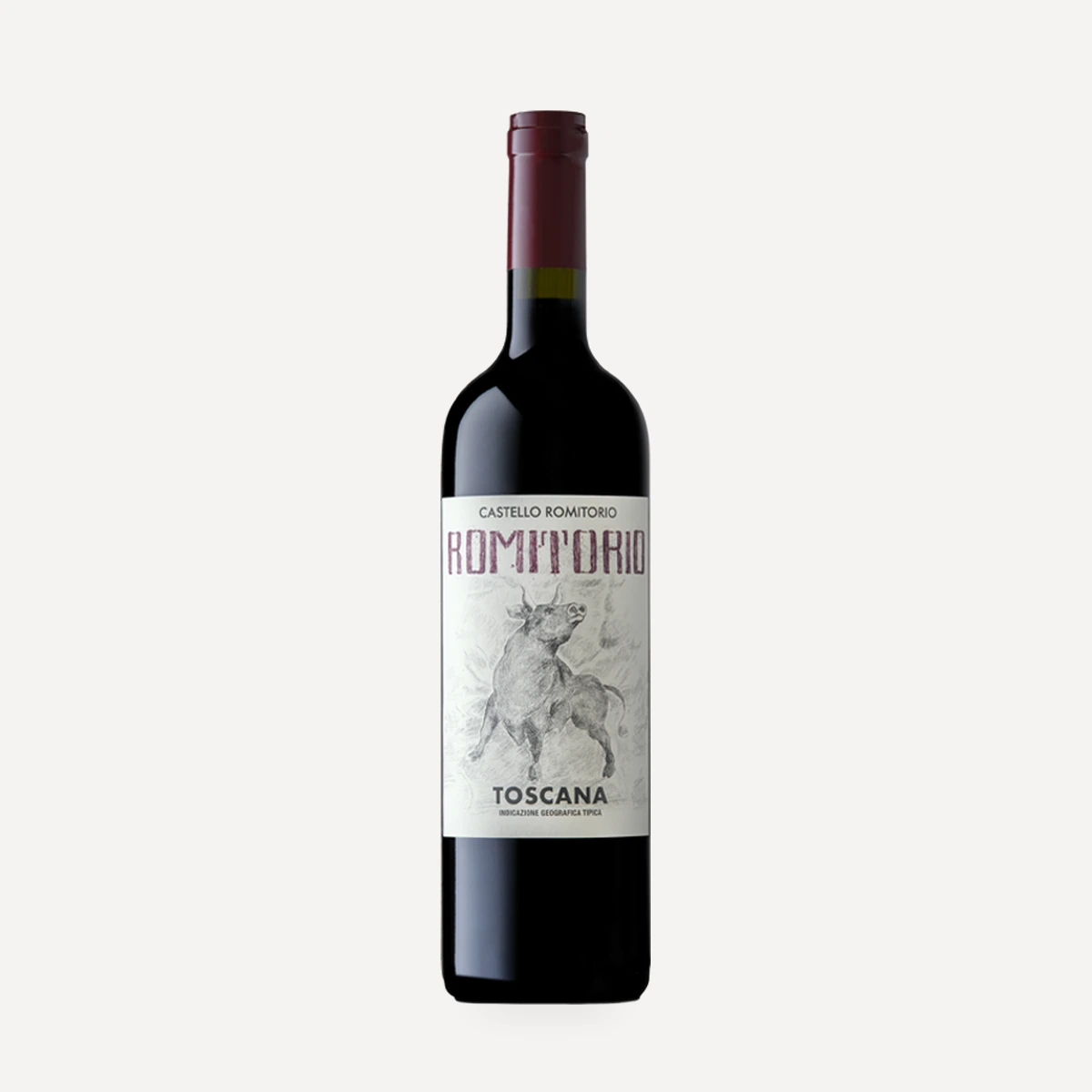
Questo vino
Vineyard and terroir
The 2022 fruit comes from the Scansano area of Maremma and is processed at Castello Romitorio’s Montalcino winery. The wine explores Tuscan-grown varieties of both local and non-indigenous origin.
Grapes
Blend proportions vary by vintage. The latest published vintage, 2022, is an equal blend of Syrah and Petit Verdot.
Vinification
Fermentation takes place in stainless-steel tanks.
Ageing
The wine spends a period in concrete before bottling.
Technical data
Toscana IGT. The 2022 release comprised 37,000 bottles, although another published assessment gives production as 4,160 cases.
Tasting profile
A modern Super Tuscan characterized by energy, balance, elegance and persistence. The 2022 has blackberry, boysenberry, violet and a savory bacon-fat nuance. Its supple palate combines polished tannins with lively acidity and a fruit-marked finish. A second assessment describes layers of black fruit and smoke, complemented by cracked white pepper, garrigue and juniper. The wine retains racy freshness and lingering tannins.
Serving and pairing
The suggested drinking window for the 2022 is 2026–2038.
Vintage notes
The 2022 received 94/100 from Bruce Sanderson for Wine Spectator and 92/100 from Monica Larner for Wine Advocate.
Label / history
First produced in 2008, the wine has previously appeared under the names Il Toro and RomiTòro before becoming Romitorio. The label reproduces a small pencil drawing by Sandro Chia of a bull raising its head toward the sky while standing firmly on the earth. The bull connects the image to ancient Greek and Roman agricultural cults and their symbolism of fertility and fecundity. It also evokes the Maremma’s ancient Maremmana cattle breed, thought to have originated in Mesopotamia.