Questo vino
Vineyard and terroir
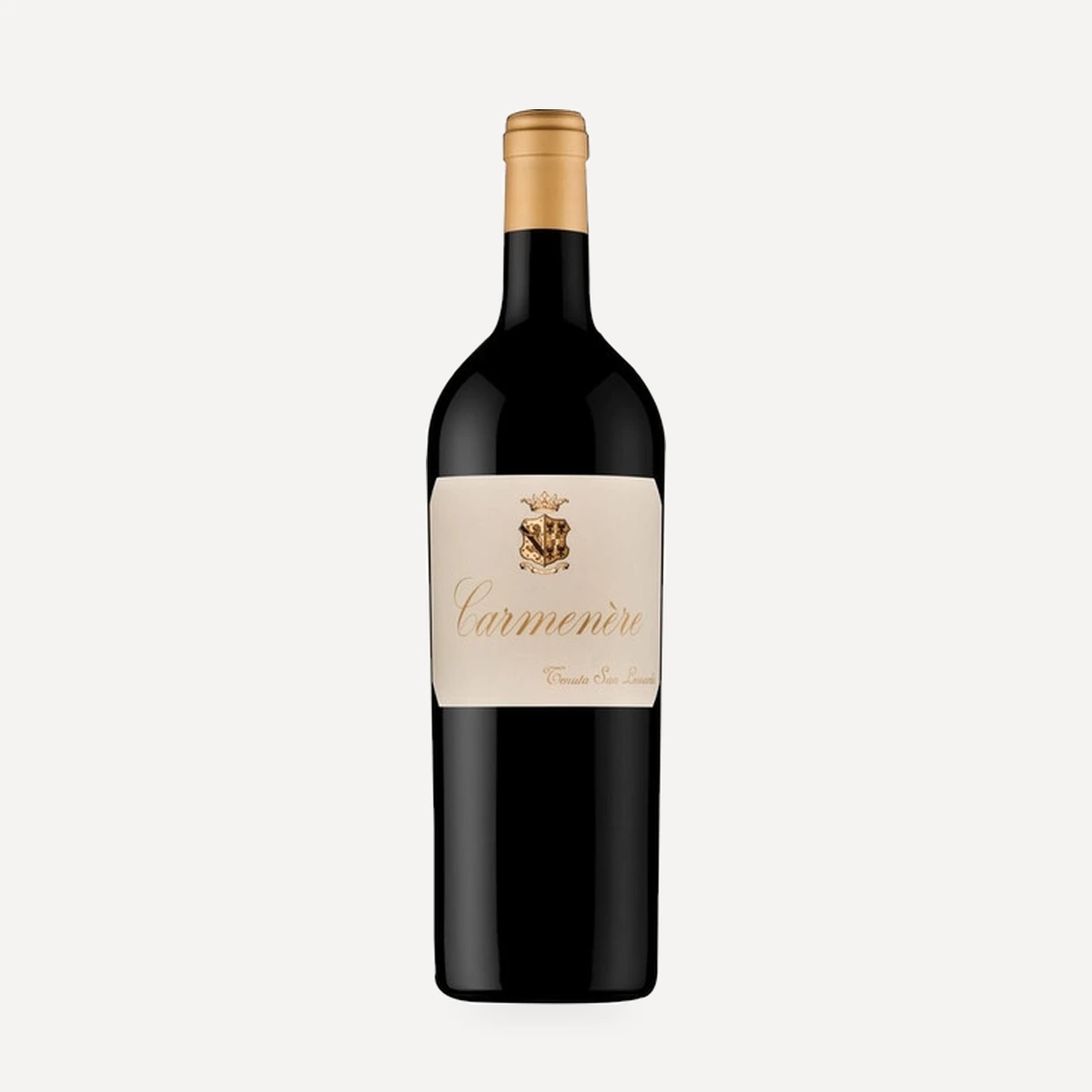
This varietal wine comes from the estate’s oldest Carmenère vineyards, planted inside the ancient monastery walls. The light, sandy sites lie at 120–300 metres above sea level and face from southwest to northwest. Vine age ranges from 25 to 75 years.
Guyot-trained vines are planted at 5,100 vines per hectare, double Trentino pergola at 1,800 vines per hectare and simple Trentino pergola at 2,500 vines per hectare. Guyot parcels yield 50–60 quintals per hectare; the two pergola systems yield 80–90 quintals per hectare.
Grapes
100% Carmenère.
Vinification
Spontaneous fermentation and maceration lasting 12–15 days take place in small concrete vats. Extraction involves several daily pump-overs and occasional délestage. After racking, malolactic fermentation occurs in the same vats, where the wine settles for several months.
Ageing
The wine matures for 24 months, with 70% in barriques and 30% in medium-toast French oak tonneaux. First-, second- and third-use vessels are employed. Final blending is followed by bottling and at least 24 months of cellar rest before release.
Tasting profile
The colour is intense ruby red. Cherry and strawberry provide the aromatic core, accompanied by black pepper, rosemary and sage. The palate is complex, savoury, gently sweet-fruited, spicy and fresh, with an elegant, refined expression. Its inherent ability to develop over time is a defining part of its style.
Serving and pairing
Serve at 16 °C.
Label / history
Carmenère is considered the estate’s oldest cultivated grape variety. Oddone de Gresti introduced it at the end of the nineteenth century through his interest in international varieties. It was long mistaken for Cabernet Franc. In the late 1980s, Carlo Guerrieri Gonzaga planted new Cabernet Franc vines for comparison and recognised the older plantings as the nearly forgotten Carmenère. Years of experimentation followed, and the variety became central to the identity of San Leonardo and a source of character in all of the estate’s red wines.