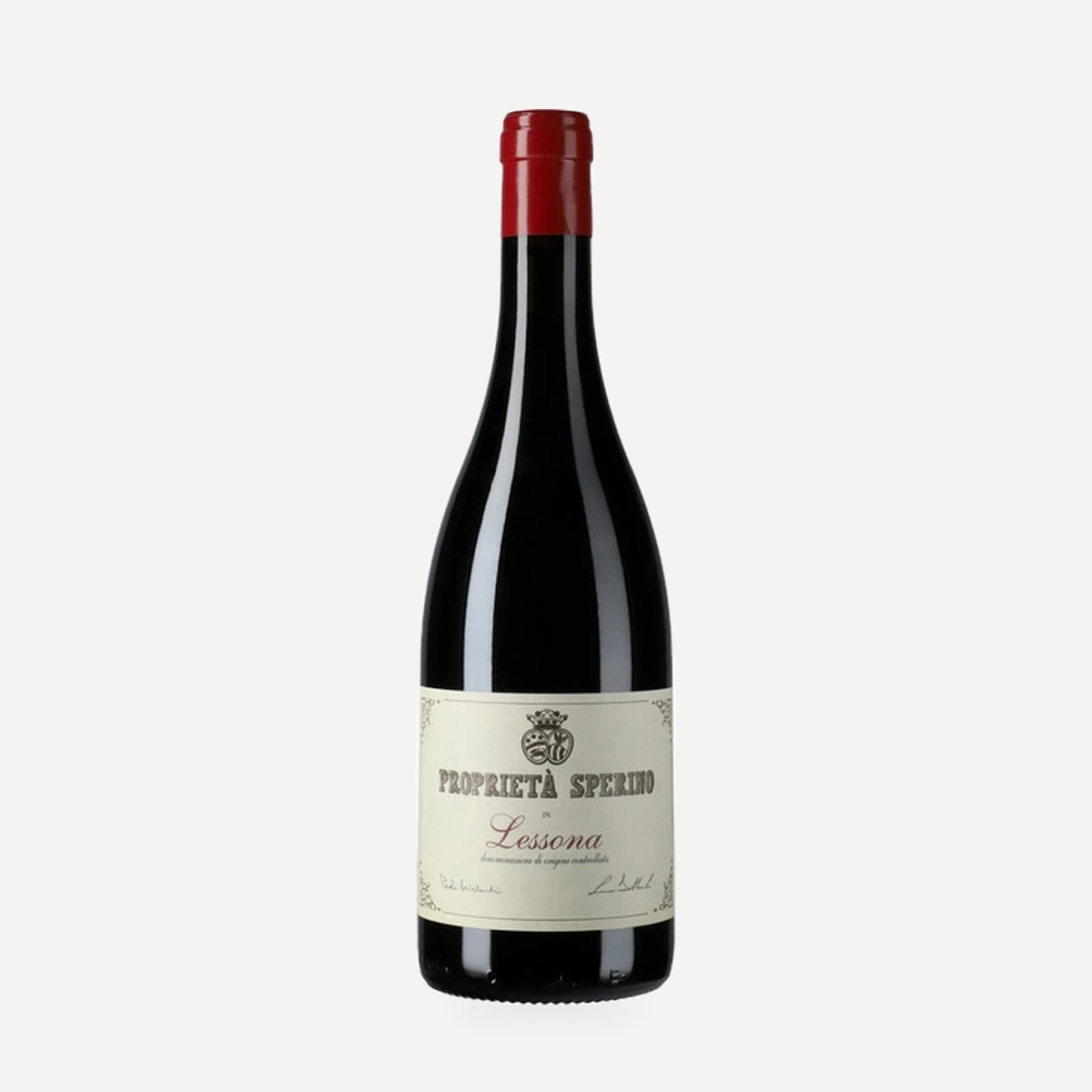
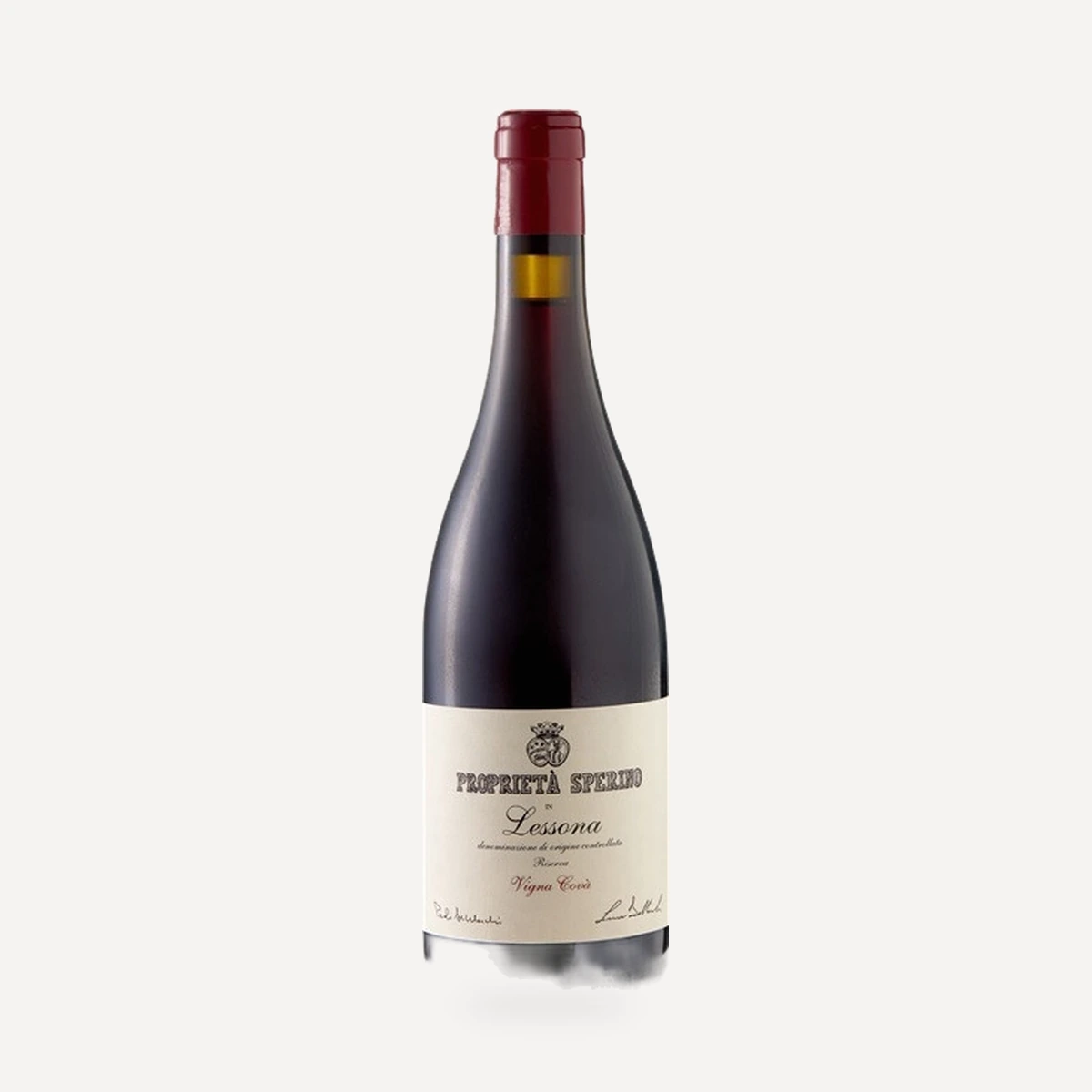
Questo vino
Vineyard and terroir
San Sebastiano allo Zoppo comes from the historic hill of the same name in the upper part of Lessona. Vines have grown there since 1436. The hillside vineyard faces southwest at 330 m above sea level; its Nebbiolo and Vespolina vines average 75 years of age and are trained to classic Guyot. The acidic soil consists of yellow-orange Pliocene marine sands.
Lessona has a subcontinental climate moderated by hillside microclimates. Warm, dry summers ease into generally mild autumns, while marked day–night temperature variation supports slow ripening. Annual rainfall is slightly above 1,000 mm and is concentrated mainly in spring. The freely draining sands make summer rainfall important. Iron and manganese contribute to the soils’ mineral character.
Vineyard work is predominantly manual. The vines are Guyot-pruned to 8–12 buds; their age naturally restricts yields, generally to 250–1,000 g per vine across the Lessona vineyards. Soil cultivation is normally limited to once a year to reduce erosion, while manure and cut grass are used for fertility.
Grapes
Blend proportions vary by release. The latest technical sheet gives 90% Nebbiolo and 10% Vespolina.
Vinification
The grapes are selected in the vineyard and cooled before destemming and crushing. Fermentation takes place in stainless-steel tanks with pump-overs and rack-and-return. Post-fermentation submerged-cap maceration brings the average maceration period to 45 days. Malolactic fermentation occurs during alcoholic fermentation.
Ageing
The wine matures for 36 months in medium-toasted French oak, divided between 50 hl casks and barriques.
Technical data
The vineyard lies at 330 m, and harvest takes place in the first half of October. Production is 2,000 bottles. Cellaring potential exceeds 30 years.
Label / history
First produced in 1993, the wine takes its name from a hill that has been associated with Lessona’s viticultural history since 1436.