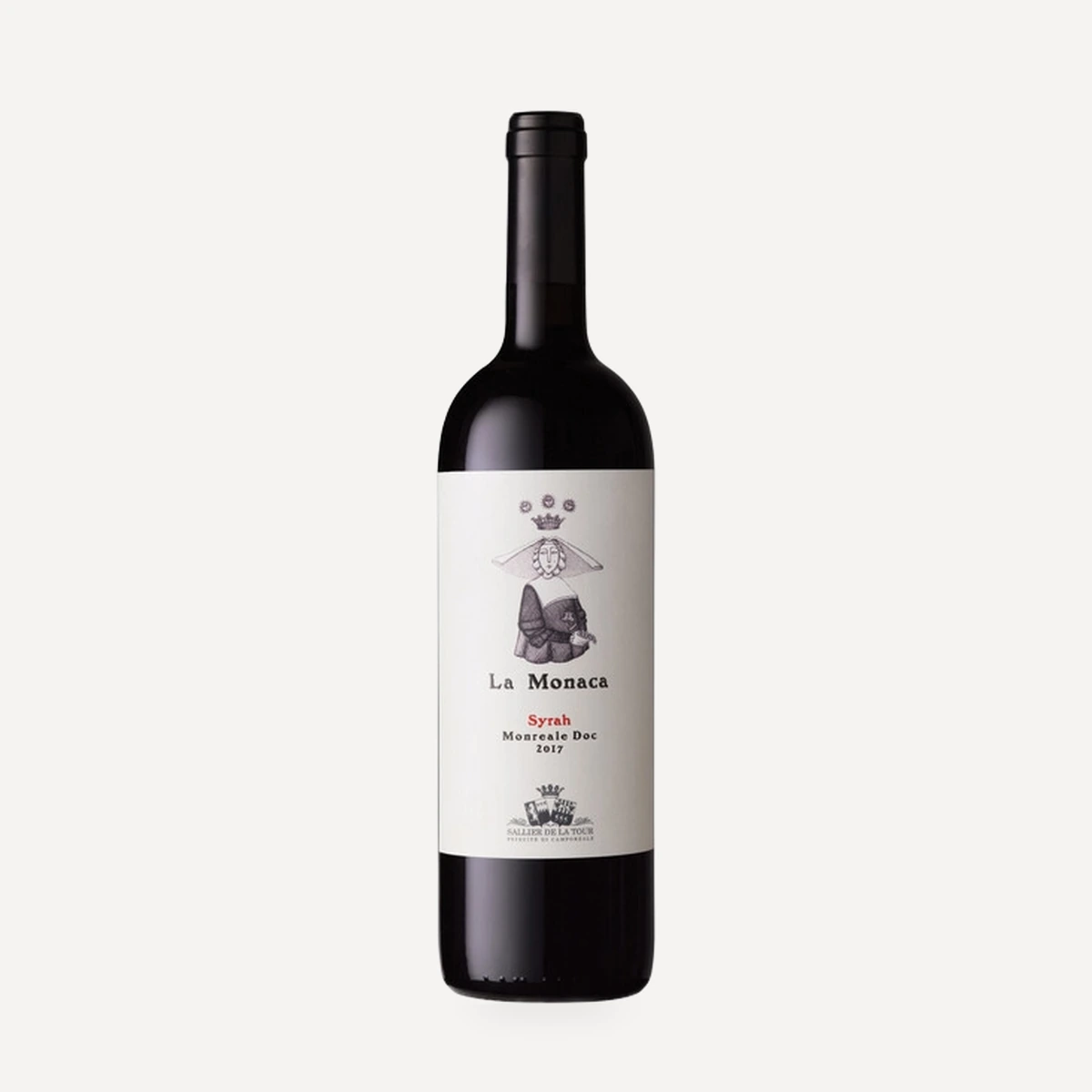
Questo vino
Vineyard and terroir
The selected fruit comes from the oldest vineyard at the Sallier de La Tour estate in the Monreale area of Sicily. The site lies at 320 metres above sea level, has a north-eastern exposure and is surrounded by olive and almond trees and wheat fields. Abundant sunshine and moderate rainfall create a Mediterranean climate that helps prevent rot and mould, while coastal breezes moderate temperature changes and ventilate the vines. The vineyard is managed organically, without chemicals or herbicides, and according to sustainable-agriculture principles.
Grapes
The grapes are selected from the vineyard.
Vinification
The grapes were harvested by hand on 5–7 September. Fermentation lasted 15 days at a controlled temperature of 25–30 °C, followed by malolactic fermentation.
Ageing
The wine matured for 14 months in 350-litre French oak barrels.
Tasting profile
The palate is fruity and well balanced.
Vintage notes
The 2020 growing season began with a mild, dry winter. Spring temperatures were moderate, with heavy rainfall in March. A hot, dry summer provided ideal conditions for ripening Syrah.
Label / history
La Monaca takes its name from the historic winery. The Sallier de La Tour winemaking project began in 2008, when Filiberto Sallier de La Tour, Prince of Camporeale, asked his cousin, the owner of Tasca d’Almerita, to manage his “Tascase” estate a few kilometres from Palermo. From the outset, the project focused on Syrah as an expression of the estate’s terroir and character. As part of a subsequent expansion of the vineyard area, the estate also began growing Grillo, Inzolia and Nero d’Avola.