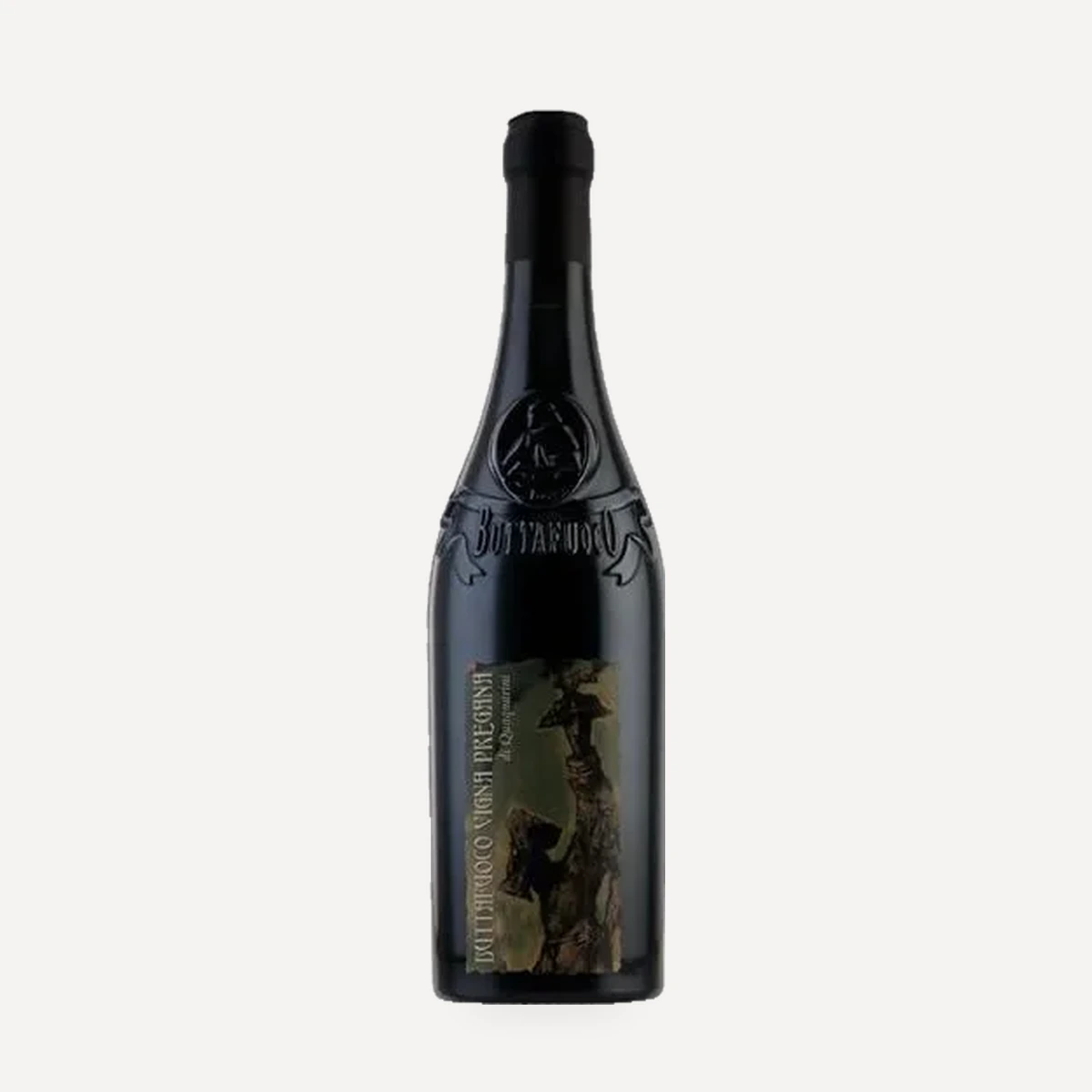
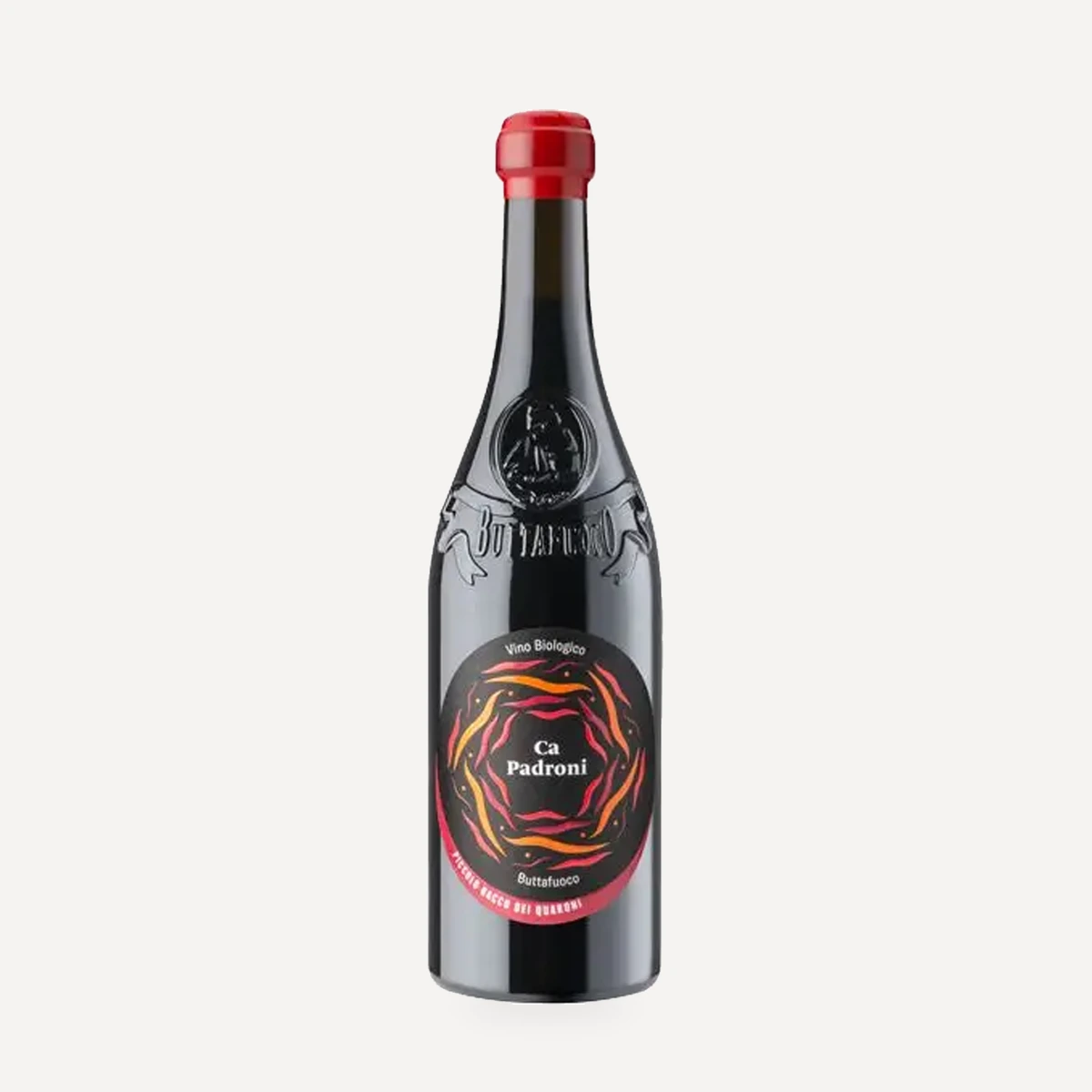
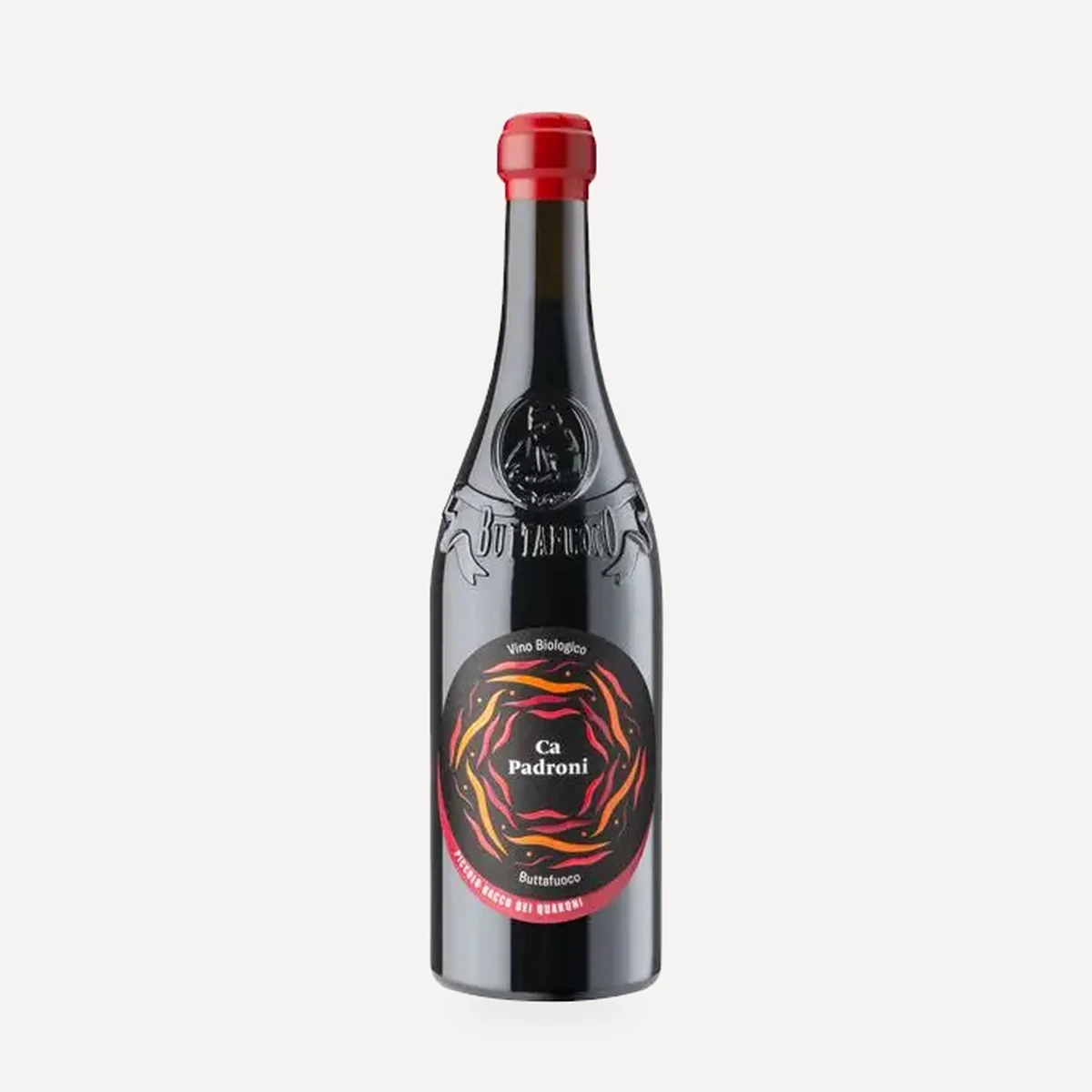
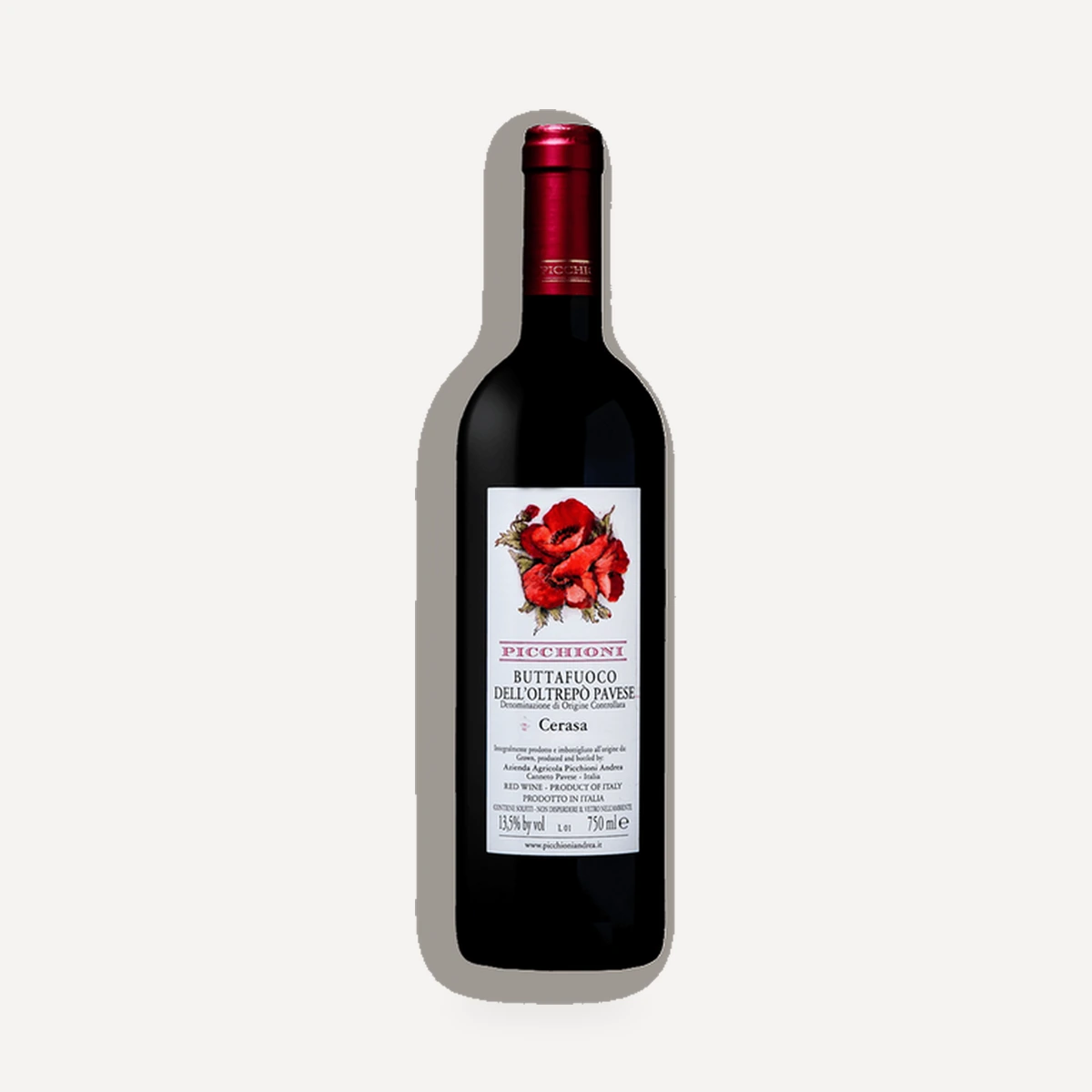
Questo vino
Vineyard and terroir
The four varieties come from old vineyards in Canneto Pavese, within Oltrepò Pavese. The vines grow at 270 m with south-to-southwest exposure, on clay and silt containing a small proportion of sand. Planting density ranges from 4,000 to 6,300 vines per hectare. Organic and biodynamic cultivation is combined with the “Vigneti & Natura” project. The slightly late harvest is carried out by hand into crates.
Grapes
Croatina, Barbera, Uva Rara and Ughetta.
Vinification
All four varieties ferment together in stainless-steel tanks. Alcoholic fermentation is spontaneous and relies exclusively on indigenous yeasts from the grapes; maceration on the skins lasts about two weeks. The wine is neither clarified nor filtered and is made without additives. No sulphites are added, leaving only those formed naturally during fermentation.
Ageing
After several months in stainless steel, the wine continues ageing in large Slavonian oak casks.
Technical data
Still red Buttafuoco DOP Oltrepò Pavese; 13.5% alcohol. Certified organic and estate-produced.
Tasting profile
Intense red with purple highlights. Aromas evoke macerated red fruit, small forest berries, violet and morello cherry. The palate is well structured, balanced and moderately persistent.
Serving and pairing
Serve at 16–18 °C. Pair with lasagna, cured meats, roasts, braised meats and stews.
Label / history
Caccialupo takes its name from a small locality within Buttafuoco’s restricted production area. The label grew from a story told to the winemaker’s daughter Alice: long ago, local inhabitants supposedly drove away a dangerous wolf. Her drawing instead portrayed a captured wolf with a puzzled, almost innocent expression.