Questo vino
Vineyard and terroir
The vineyards occupy natural alluvial rises close to waterways in the Po Valley. Their predominantly sandy soils contain varying proportions of silt and clay and have been shaped and enriched by historic flooding.
The vines are managed manually. Harvest takes place in September and October, exclusively by hand, with the fruit placed in crates holding no more than 15 kg. Vineyard parcels are harvested and vinified separately.
Grapes
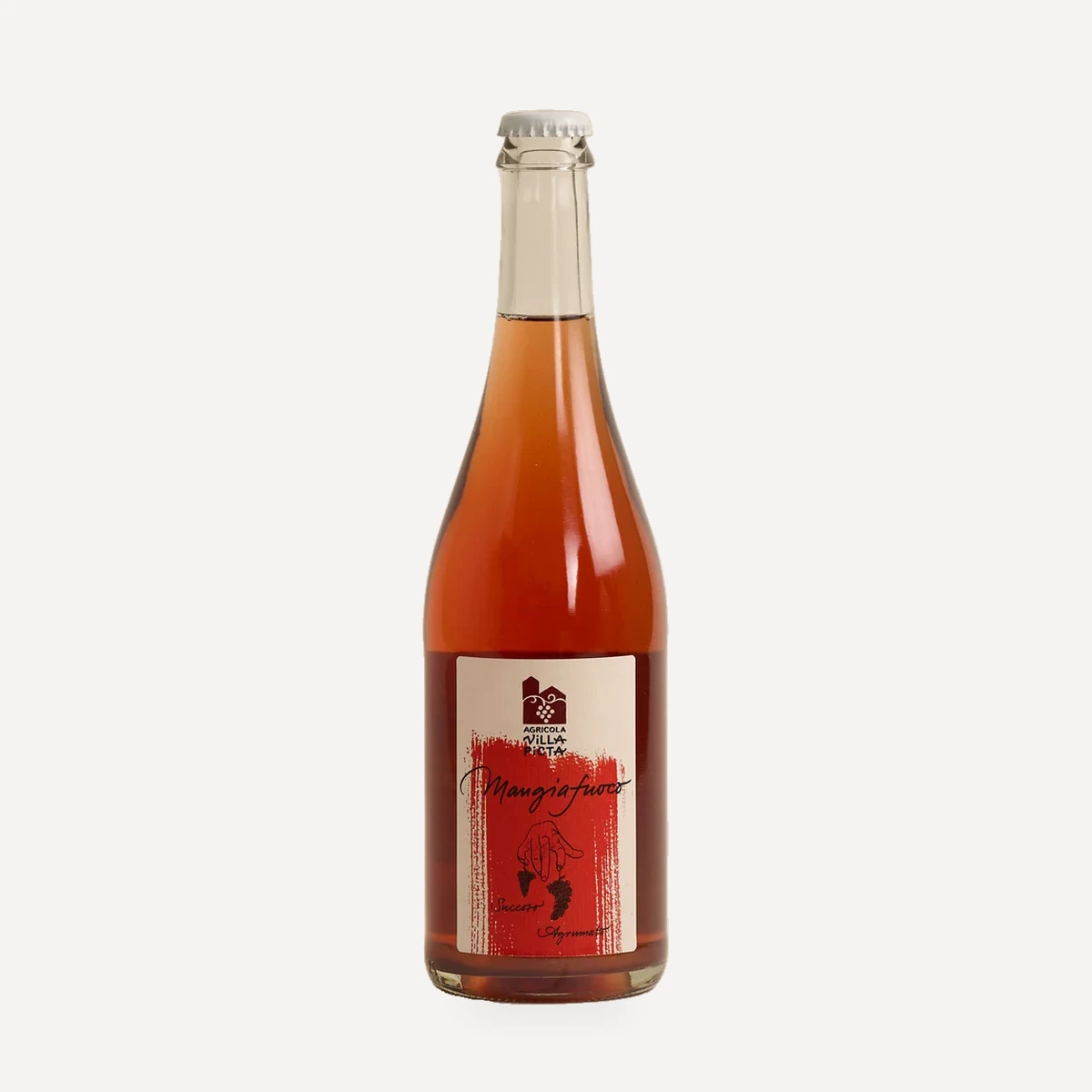
Lambrusco di Sorbara and Pinot Meunier. The two varieties are harvested at different times, with Pinot Meunier picked at slight overripeness.
Vinification
A naturally sparkling rosé made through traditional secondary fermentation in bottle and retained on its lees. Alcoholic fermentation is driven exclusively by indigenous yeasts. The spontaneous fermentation starters originate from grapes grown in Vigna Madre, the mother vineyard planted with all the varieties cultivated by the estate.
Tasting profile
Lambrusco di Sorbara gives the wine a taut, saline profile. The slightly overripe Pinot Meunier broadens the palate with citrus-fruit character reminiscent of blood orange. Freshness remains the defining feature, complemented by the Pinot's fuller fruit.
Label / history
Mangiafuoco emerged from an experiment joining two varieties associated with cool alluvial valleys: Lambrusco di Sorbara from the Po Valley and Pinot Meunier from the Marne Valley. Its guiding idea is expressed as “playing without joking.”